

Capping what you pay for prescription drugs
If you have Medicare drug coverage (Part D), your yearly out-of-pocket
Part D drugs are capped at $2,100 in 2026. Once you reach this cap, you won’t have to pay a copayment or coinsurance for covered Part D drugs for the rest of the calendar year (page 83).
Negotiating drug prices
Learn how Medicare prescription drug prices are changing in 2026 (page 81).
Meeting your health care needs
Medicare now pays for Advanced Primary Care Management services each month where your doctor or other health care provider coordinates and tailors care to your needs. Providers that offer these services must give you 24/7 access to your care team or provider and more (page 31).
Early detection matters
Medicare covers a wide range of colorectal cancer screenings, including computed tomography (CT) colonography. Getting screened is an important part of cancer prevention and early detection (page 36).
Help Medicare fight fraud and cut waste
Protect yourself from fraud and medical identity theft by checking your Medicare Summary Notices (MSNs), and your receipts and statements, for errors or services you didn’t get. If you think your Medicare Number has been used fraudulently, call 1-800-MEDICARE (1-800-633-4227). TTY users can call 1-877-486-2048 (pages 105–106).
Go digital with Medicare
You can get Medicare resources at your fingertips! Start by logging into (or creating) your secure Medicare.gov account. There, you can manage your prescriptions, get your Medicare Summary Notices (MSNs) electronically, switch to the electronic version of this handbook, and more. You can also sign up for emails on the latest Medicare news. There’s never been a better time to switch from paper to digital.
Symbol key


Important!
Look for these symbols to help you understand your Medicare coverage.
Compare: Shows how key features differ between Original Medicare and Medicare Advantage Plans.
Cost & coverage: Gives you information about costs and coverage for services.
Preventive service: Gives you details about preventive services.
Important: Highlights key information.
New! New: Highlights
information that’s been added or changed.
Discover: Helps you find information you need on Medicare.gov.
Review your Medicare options on pages 10–14.
What are the parts of Medicare?
Part A – Hospital Insurance
Helps cover:
- Inpatient care in hospitals
- Skilled nursing facility care
- Hospice care
- Home health care
Part B – Medical Insurance

Helps cover:
- Services from doctors and other health care providers
- Outpatient care
- Home health care
- Durable medical equipment (like wheelchairs, walkers, hospital beds, and other equipment)
- Many preventive services (like screenings, shots or vaccines, and yearly “Wellness” visits)
Go to pages 30–55.
Part D – Drug Coverage


Helps cover the cost of prescription drugs (including many recommended shots or vaccines).
Plans that offer Medicare drug coverage (Part D) are run by private insurance companies that follow rules set by Medicare.
Your Medicare options
When you first sign up for Medicare, and during certain times of the year, you can choose how you get your Medicare coverage. There are 2 main ways to get Medicare:
Original Medicare
- Includes Medicare Part A (Hospital Insurance) and Part B (Medical Insurance).
- You can join a separate Medicare drug plan to get Medicare drug coverage (Part D).
- You can use any doctor or hospital that takes Medicare, anywhere in the U.S.
- You can also use or shop for and buy supplemental coverage that helps pay your out-of-pocket costs (like your 20% coinsurance).

Part A 
Part B

You can add:


You can also add:

Supplemental coverage

It can help pay some costs that Original Medicare doesn’t. This includes Medicare Supplement Insurance (Medigap). Go to page 75 to learn more about Medigap. Or you can use coverage from a current or former employer or union, or Medicaid (if you qualify).
Go to page 57 to learn more about Original Medicare.
Medicare Advantage (also known as Part C)
- A Medicare-approved plan from a private company that offers an alternative to Original Medicare
for your health and drug coverage. These plans bundle together your Part A, Part B, and usually Part D.
- You may need to use doctors in its network and get approval for certain drugs or services.
- Usually have different out-of-pocket costs than Original Medicare, including a limit on out-of-pocket costs so you don’t need to buy supplemental coverage like Medigap.
- Most plans offer extra benefits that Original Medicare doesn’t cover— like vision, hearing, dental, and more.

Part A 
Part B

Most plans include:


Extra benefits
Go to page 61 to learn more about Medicare Advantage.
At a glance: Original Medicare vs. Medicare Advantage Plan

Doctor & hospital choice
|
Original Medicare |
Medicare Advantage (Part C) |
|
You can use any doctor or hospital that takes Medicare, anywhere in the U.S.* You may pay more if your doctor doesn’t accept assignment. *Includes the 50 states, the District of Columbia, Puerto Rico, the U.S. Virgin Islands, Guam, the Northern Mariana Islands, and American Samoa. |
You may need to use doctors and other providers who are in the plan’s network and service area (for non-emergency care). Some plans offer non-emergency coverage out of network, but typically at a higher cost. |
|
In most cases, you don’t need a referral to use a specialist. |
You may need to get a referral to use a specialist. |

Cost
|
Original Medicare |
Medicare Advantage (Part C) |
|
For Part B-covered services, you usually pay 20% of the Medicare-approved amount after you meet your deductible. This amount is called your coinsurance. |
Out-of-pocket costs vary. Plans may have different out-of-pocket costs for certain services. |
|
You pay the monthly premium for Part B. If you choose to join a Medicare drug plan, you’ll pay a separate premium for your Medicare drug coverage (Part D). |
You pay the monthly Part B premium and may also have to pay the plan’s premium. Some plans may have a $0 premium and may help pay all or part of your Part B premium. Most plans include Medicare drug coverage (Part D), so you don’t have a separate Part D premium. |
|
There’s no yearly limit on what you pay out of pocket, unless you have supplemental coverage—like Medicare Supplement Insurance (Medigap), Medicaid, employer, retiree, or union coverage. |
Plans have a yearly limit on what you pay for covered Medicare services (which may include different limits for in-network and out-of-network services). Once you reach your plan’s limit, you’ll pay nothing for covered services for the rest of the year. |
|
You can choose to buy Medigap to help pay your out-of-pocket costs that Medicare doesn’t cover, like your 20% coinsurance (page 77). Or, you can use coverage from a current or former employer or union, or Medicaid (if you qualify). |
You can’t buy Medigap to cover your out-of-pocket costs. However, you may be able to use coverage from a current or former employer or union, or Medicaid (if you qualify). |
|
Original Medicare |
Medicare Advantage (Part C) |
|
Covers most medically necessary services and supplies in hospitals, doctors’ offices, and other health care facilities. Original Medicare doesn’t cover some services, like routine physical exams, eye exams, and most dental care (page 55). |
Plans must cover all medically necessary services that Original Medicare covers. Plans may also offer extra benefits that Original Medicare doesn’t. |
|
In most cases, you don’t need approval (prior authorization) for Original Medicare to cover your services or supplies. |
You may need to get approval (prior authorization) from your plan before it covers certain services or supplies. |
|
You can join a separate Medicare drug plan to get Medicare drug coverage (Part D). |
Most Medicare Advantage Plans include Part D and you don’t need to join a separate Medicare drug plan. |
Foreign travel
|
Original Medicare |
Medicare Advantage (Part C) |
|
Original Medicare generally doesn’t cover medical care outside the U.S. You may be able to buy a Medicare Supplement Insurance (Medigap) policy that covers emergency care outside the U.S. |
Plans generally don’t cover medical care outside the U.S. Some plans may offer an extra benefit that covers emergency and urgently needed services when traveling outside the U.S. |
Get started with Medicare
Make sure you:
- Understand your Medicare coverage options. There are 2 main ways to get your Medicare coverage—Original Medicare (Part A and Part B) and Medicare Advantage (Part C). Go to pages 10–12 to learn more and compare.
- Find out how and when you can sign up. If you don’t have Medicare Part A or Part B, go to page 15. If you don’t have Medicare drug coverage (Part D), go to page 79.
- Know how Medicare works with other insurance if you have it. Go to pages 19–22 to learn more.
- Review your Medicare health and drug coverage each year. Make sure it still meets your needs, and decide if you want to make a change. You don’t need to sign up for Medicare each year, but you should still review your options.
Mark your calendar with these key dates!

|
January 1, 2026 |
New coverage begins if you made a change. If you kept your existing coverage and your plan’s costs or benefits changed, those changes also start on this date. (Contact your plan if these changes aren’t in your account after 10 days.) |
|
January 1 to March 31, 2026 |
If you’re in a Medicare Advantage Plan, you can change to a different Medicare Advantage Plan or switch to Original Medicare (and join a separate Medicare drug plan) during this Medicare Advantage Open Enrollment Period. Any changes you make will be effective the first day of the month after the plan gets your request (page 63). During this period, you can’t switch from Original Medicare to a Medicare Advantage Plan, join a Medicare drug plan if you’re in Original Medicare, or switch from one Medicare drug plan to another if you’re in Original Medicare. |
|
October 1, 2026 |
Start comparing your current Medicare health or drug coverage with options for 2027 before Open Enrollment starts. You may be able to save money or get extra benefits.
|
|
October 15 to December 7, 2026 |
It’s Open Enrollment. You can change your Medicare health or drug coverage for 2027, if you decide to. You can join, switch or drop a Medicare Advantage Plan or Medicare drug plan, or switch to Original Medicare during 2027 Open Enrollment. |

Important! You may pay more if you don’t sign up for Medicare when you’re first eligible. Go to pages 22–23 (Part A and Part B) and page 83–85 (Part D) for more on late enrollment penalties.
- Find and compare health and drug plans:

- Call 1-800-MEDICARE (1-800-633-4227). TTY users can call 1-877-486-2048.
- Get free, personalized health insurance counseling from your State Health Insurance Assistance Program (SHIP). Go to pages 114–117 for the phone number of your local SHIP, or visit shiphelp.org.
- A trusted agent or broker may also be able to help. Visit Medicare.gov/health- drug-plans/health-plans/your-coverage-options/plan-marketing-rules to learn more.
Get help paying for health care
There are multiple programs available to help with costs. Many people with Medicare qualify (pages 91–95).
Go digital
Log into (or create) your secure Medicare account at Medicare.gov to switch to the electronic handbook. We’ll email you a link to a PDF version instead of sending a paper copy in the mail each fall. If you have a smart phone or an e-reader, you’ll be able to take the handbook with you anywhere you go.
Signing up for Medicare
Will I get Part A and Part B automatically?
If you’re already getting benefits from Social Security or the Railroad Retirement Board (RRB), you’ll automatically get Part A and Part B starting the first day of the month you turn 65. If your birthday is on the first day of the month, your Part A and Part B starts the first day of the prior month.
If you’re under 65 and have a disability, you’ll get Part A and Part B automatically after getting 24 months of disability benefits, either from Social Security or certain disability benefits from the RRB.
If you live in Puerto Rico and get benefits from Social Security or RRB,
you don’t get Part B automatically. You must sign up for it (page 16).
If you have ALS (amyotrophic lateral sclerosis, also called Lou Gehrig’s disease), you’ll get Part A and Part B automatically the month your Social Security disability benefits begin.
If you get Medicare automatically, you’ll get your red, white, and blue Medicare card in the mail 3 months before your 65th birthday or 25th month of disability benefits, and you don’t need to pay a premium for
Part A (sometimes called “premium-free Part A”). Most people choose to keep Part B. If you don’t want Part B, let us know before the coverage start date on your Medicare card. If you do nothing, you’ll keep Part B and pay Part B premiums through your Social Security or RRB benefits. If you have other coverage and need help deciding if you should keep Part B, go to page 19.
If you choose not to keep Part B but decide you want it later, you may have a delay in getting Medicare Part B coverage because you can only sign up at certain times. You may also have to pay a late enrollment penalty (that’s added to your monthly premium) for as long as you have Part B (page 23).
Will I have to sign up for Part A and/or Part B?
If you’re close to 65, but AREN’T getting Social Security or RRB benefits, you’ll need to sign up for Medicare. Visit SSA.gov/medicare/sign-up to apply for Part A and Part B. You can also contact Social Security 3 months before you turn 65 to set up an appointment. If you worked for a railroad, visit RRB.gov, or call the RRB at 1-877-772-5772. TTY users can call 1-312-751-4701.
In most cases, if you don’t sign up for Part B when you’re first eligible, you may have a delay in getting Medicare Part B coverage in the future because you can only sign up at certain times. You may also have to pay a late enrollment penalty (that’s added to your monthly premium) for as long as you have Part B (page 23).
Note: Go to pages 119–122 for definitions of blue words.
If you have End-Stage Renal Disease (ESRD) and want Medicare, you’ll need to sign up for it. The dialysis facility can help you complete an “End Stage Renal Disease Medical Evidence Report” (Form CMS-2728) in the ESRD Quality
Reporting System. Once the form is complete, the facility will give you a copy of the form and/or help you submit it to Social Security. Contact Social Security to get more information on signing up for Part A and Part B. You can also learn more by visiting Medicare.gov/publications to review the booklet, “Medicare Coverage of Kidney Dialysis & Kidney Transplant Services.”
Important! If you live in Puerto Rico and get benefits from Social Security or the Railroad Retirement Board (RRB), you’ll get Part A automatically starting on the first day of the month you turn 65 or after you get disability benefits for 24 months. However, if you want Part B, you’ll need to sign up for it by completing an “Application for Enrollment in Part B” form (CMS-40B). To get this form, visit Medicare.gov/basics/forms-publications-mailings/forms/ enrollment, or call 1-800-MEDICARE (1-800-633-4227) to have a copy mailed to you. TTY users can call 1-877-486-2048. If you don’t sign up for Part B when you’re first eligible, you may have a delay in getting Part B coverage in the
future because you can only sign up at certain times. You may also have to pay a late enrollment penalty (that’s added to your monthly premium) for as long as you have Part B (page 23).
Where can I get more information?
Visit SSA.gov/medicare/sign-up for more information about your Medicare eligibility and to sign up for Part A and/or Part B if you don’t get them automatically. If you worked for a railroad or get RRB benefits, visit RRB.gov or call the RRB at 1-877-772-5772. TTY users can call 1-312-751-4701.
You can also get free, personalized, and unbiased health insurance counseling from your State Health Insurance Assistance Program (SHIP). Go to pages 114–117 for the phone number of your local SHIP, or visit shiphelp.org.
After you’ve signed up for Medicare Part A and/or Part B, it’s time to look at your coverage options. People get Medicare coverage in different ways. To get the most out of your coverage, review your options and decide what best meets your needs (pages 11–13).
If I didn’t get Part A and Part B automatically, when can I sign up?
If you didn’t get premium-free Part A automatically (for example, because you’re still working and aren’t getting Social Security or RRB benefits) but you qualify for it, you can sign up for it any time after you’re first eligible for Medicare (page 22).
In this example, your Part A coverage will go back (retroactively) 6 months from when you signed up for Part A or applied for Social Security or RRB benefits, but no earlier than the first month you’re eligible for Medicare. Depending on how you become eligible for Part A, the retroactive period may be different.
You can only sign up for Part B during the enrollment periods on pages 17–18.
Important! Remember, in most cases, if you don’t sign up for Part A (if you have to buy it) and Part B when you’re first eligible, your enrollment may be delayed and you may have to pay a late enrollment penalty that’s added to your monthly premium (pages 22–23).
What are the Part A and Part B enrollment periods?
You can only sign up for Part B (and/or Part A if you have to buy it) during these enrollment periods.
Initial Enrollment Period
Generally, you can first sign up for Part A and/or Part B during the 7-month period that begins 3 months before the month you turn 65 and ends 3 months after the month you turn 65. If your birthday is on the first of the month,
your 7-month period starts 4 months before the month you turn 65 and ends 2 months after the month you turn 65.
Example: If you turn 65 on June 2, your 7-month period would begin in March and end in September. If you turn 65 on June 1, your 7-month period would begin in February and end in August.
If you sign up for Part A and/or Part B during the first 3 months of your Initial Enrollment Period, in most cases, your coverage begins the first day of your birthday month. However, if your birthday is on the first day of the month, your coverage starts the first day of the prior month.
If you sign up the month you turn 65 or during the last 3 months of your Initial Enrollment Period, your coverage starts the first day of the month after you sign up.
Special Enrollment Period
After your Initial Enrollment Period is over, you may have a chance to sign up for Medicare during a Special Enrollment Period. For example, if you didn’t sign up for Part B (or Part A if you have to buy it) when you were first eligible because you have group health plan coverage based on current employment (your own, a spouse’s, or a family member’s if you have a disability), you can sign up for Part A and/or Part B:
- Any time you’re still covered by the group health plan
- During the 8-month period that begins the month after the employment ends or the coverage ends, whichever happens first
Your coverage generally starts the first day of the month after you sign up.
If you sign up for Part B while you (or your spouse) are still working and you have coverage, or within the first full month after employer coverage ends, you can ask to delay your Part B start date up to 3 months. Usually, you won’t have to pay a late enrollment penalty if you sign up during a Special Enrollment Period. This Special Enrollment Period doesn’t apply if you’re eligible for Medicare based on End-Stage Renal Disease (ESRD), or you’re still in your Initial Enrollment Period.
To sign up for Part A and/or B, visit SSA.gov/medicare/sign-up.
Important! COBRA (Consolidated Omnibus Budget Reconciliation Act) coverage isn’t considered coverage based on current employment and doesn’t count as current employer coverage for this Special Enrollment Period. The same is true for retiree health plans, VA coverage, and individual health insurance coverage (like coverage through the Health Insurance Marketplace®). If you’re considering COBRA, there may be reasons why
you should take Part B instead of, or in addition to, COBRA coverage. After coverage based on current employment ends, you have 8 months to sign up for Part B without a penalty, whether or not you choose COBRA.
However, if you have COBRA and you’re eligible for Medicare, COBRA may only pay a small portion of your medical costs. You generally aren’t eligible for a Special Enrollment Period to sign up for Medicare when that COBRA coverage ends. Go to page 89 for more information about COBRA coverage. To avoid paying a penalty, make sure you sign up for Medicare when you’re first eligible.
If you have retiree coverage, it may not pay for your health services if you don’t have both Part A and Part B.
Exceptional situations for a Special Enrollment Period
There are other circumstances where you may be able to sign up for Medicare during a Special Enrollment Period. You may be eligible if you miss an enrollment period because of certain circumstances, like being impacted by a natural disaster or an emergency, incarceration, employer or health plan error, losing Medicaid coverage, or other circumstances outside of your control that Medicare determines are exceptional. For more information, visit Medicare.gov or call
1-800-MEDICARE (1-800-633-4227). TTY users can call 1-877-486-2048.
Important! Recently lost Medicaid? If you now qualify for Medicare, but didn’t sign up for Medicare when you first became eligible, you can sign up for Part A and Part B without paying a late enrollment penalty. If you already have Medicare but lost Medicaid, you also have coverage options. For more information, check out the “Losing Medicaid?” fact sheet at Medicaid.gov/ resources-for-states/downloads/medicare-sep-factsheet.pdf.
General Enrollment Period
You can sign up for Part B during the General Enrollment Period
(January 1–March 31 each year) if you missed your Initial Enrollment Period and don’t qualify for a Special Enrollment Period. You can also buy Part A during this time if you don’t qualify for premium-free Part A and missed your Initial
Enrollment Period. You may have to pay a higher Part A and/or Part B premium for late enrollment (pages 22–23).
When you sign up during the General Enrollment Period, your coverage starts the first day of the month after you sign up.
Not sure if you qualify for an enrollment period? Visit Medicare.gov, or call 1-800-MEDICARE.
I have other health coverage. Should I get Part B?
This information can help you decide if you should get Part B based on the type of health coverage you may have.
Employer or union coverage
If you or your spouse (or family member if you have a disability) are still working and you have health coverage through that employer or union, go to page 21 to find out how your coverage works with Medicare. You can also contact the employer or union benefits administrator for information. This
includes federal or state employment and active-duty military service. It might be to your advantage to delay Part B enrollment while you still have health coverage based on your or your spouse’s current employment.
Coverage based on current employment doesn’t include:
- COBRA (or similar continuation coverage after employment ends)
- Retiree coverage
- VA coverage
- Individual health insurance coverage (like through the Health Insurance Marketplace®)
- Former employer coverage you get through severance or a layoff
TRICARE
If you have TRICARE (health care program for active-duty and retired service members and their families), you generally must sign up for Part A and Part B when you’re first eligible. However, if you’re an active-duty service member or an active-duty family member, you don’t have to sign up for Part B to
keep your TRICARE coverage. For more information, contact your TRICARE contractor (page 90).
If you have CHAMPVA coverage, you must sign up for Part A and Part B to keep it. Call 1-800-733-8387 for more information about CHAMPVA.
Medicaid
In many cases, your state Medicaid program will pay your Part B premiums. If your Medicaid program doesn’t pay your Part B premiums, you may be able to get help from your state to pay for Part A and Part B premiums through a Medicare Savings Program (pages 91–92). To learn more about signing up for Part B, go to page 15. If you have Medicaid and don’t have Part B, Medicare will pay first for the Part A services Medicare covers.
For more information on Medicaid and to find out if you qualify, visit
Medicaid.gov/about-us/where-can-people-get-help-medicaid-chip, or call
1-800-MEDICARE (1-800-633-4227) to get the phone number for your state’s Medicaid office. TTY users can call 1-877-486-2048.
Health Insurance Marketplace®
Even if you have Marketplace coverage (or other individual health coverage that isn’t based on current employment), you should sign up for Medicare when you’re first eligible to avoid the risk of a delay in Medicare coverage and the possibility of a Medicare late enrollment penalty.
If you have Marketplace coverage:
- You should end your Marketplace coverage in a timely manner when you become eligible for Medicare to avoid an overlap in coverage.
- Once you’re considered eligible for premium-free Part A, or already have
Part A with a premium, you won’t qualify for help from the Marketplace to pay your Marketplace plan premiums or other medical costs. If you continue to get help paying for your Marketplace plan premiums, you may have to pay back some or all of the help you got when you file your federal income taxes.
To find out how to end your Marketplace plan or Marketplace savings when your Medicare coverage begins, visit HealthCare.gov/medicare/changing-from- marketplace-to-medicare. You can also call the Marketplace Call Center at
1-800-318-2596. TTY users can call 1-855-889-4325.
Health Savings Account (HSA)
You aren’t eligible to make contributions to an HSA after you have Medicare. Consider making your last HSA contribution the month before your Part A coverage begins—this may help you avoid a tax penalty. Premium-free Part A coverage will go back (retroactively) 6 months from when you sign up for Part A or apply for benefits from Social Security or the Railroad Retirement Board (RRB), but no earlier than the first month you’re eligible for Medicare.
Depending on how you become eligible for Part A, the retroactive period may be different. Review the chart below to help decide when it’s best to stop your HSA contributions.
|
If you sign up for Medicare: |
During your Initial Enrollment Period |
You can avoid a tax penalty by making your last HSA contribution the month before you turn 65. |
|
2 months after your Initial Enrollment Period ends |
||
|
And your birthday is on the 1st day of the month |
Generally, your Medicare coverage starts the first day of the month before you turn 65. You can avoid a tax penalty by making your last HSA contribution 2 months before you turn 65. |
|
|
If you wait to sign up for Medicare: |
Less than 6 months after you turn 65 |
You can avoid a tax penalty by stopping HSA contributions the month before you turn 65. |
|
6 or more months after you turn 65 |
You can avoid a tax penalty by stopping HSA contributions 6 months before the month you apply for Medicare. |
Note: A Medical Savings Account (MSA) Plan is similar to an HSA (page 67).
How does my other insurance work with Medicare?
When you have other insurance (like group health plan, retiree health, or Medicaid coverage) and Medicare, there are rules for whether Medicare or your other coverage pays first.
|
If you have retiree health coverage, like insurance from your or your spouse’s former employment… |
Medicare pays first. |
|
If you’re 65 or older, have group health plan coverage based on your or your spouse’s current employment, and the employer has 20 or more employees OR your employer has fewer than 20 employees but is part of a multi-employer plan that has other employers with 20 or more employees… |
Your group health plan pays first. |
|
If you’re 65 or older, have group health plan coverage based on your or your spouse’s current employment, and the employer has fewer than 20 employees… |
Medicare pays first. |
|
If you’re under 65 and have a disability, have group health plan coverage based on your or a family member’s current employment, and the employer has 100 or more employees OR the employer has fewer than 100 employees and is part of a multi-employer plan where other employees have 100 or more employees… |
Your group health plan pays first. |
|
If you’re under 65 and have a disability, have group health plan coverage based on your or a family member’s current employment, and the employer has fewer than 100 employees… |
Medicare pays first. |
|
If you have group health plan coverage based on your or a family member’s employment or former employment, and you’re eligible for Medicare because of End-Stage Renal Disease (ESRD)… |
Your group health plan pays first for the first 30 months after you become eligible for Medicare. Medicare pays first after this 30-month period. |
|
If you have TRICARE… |
Medicare pays first, unless you’re on active duty, or get items or services from a military hospital or clinic, or other federal health care provider. |
|
If you have Medicaid… |
Medicare pays first. |
Important! If you’re still working and have employer coverage through work, contact your employer to find out how your employer’s coverage works with Medicare.
- The insurance that pays first (primary payer) pays up to the limits of its coverage.
- The insurance that pays second (secondary payer) only pays if there are costs the primary payer didn’t cover.
- The secondary payer (which may be Medicare) might not pay all of the uncovered costs.
- If your group health plan or retiree health coverage is the secondary payer, you’ll likely need to sign up for Part B before your insurance will pay.
Visit Medicare.gov/health-drug-plans/coordination or Medicare.gov/ publications to review the booklet, “How Medicare Works with Other Insurance” or call 1-800-MEDICARE (1-800-633-4227) to learn more. TTY users can call 1-877-486-2048.
Important! If your group health plan coverage ends, call
1-800-MEDICARE to update your record. If you have other changes to your insurance, you can also call Medicare’s Benefits Coordination & Recovery Center at 1-855-798-2627. TTY users can call 1-855-797-2627. If you’re retiring, call 1-800-MEDICARE to make sure your primary insurance information is correct.
If you have Part A, you may get a “Health Coverage” form (IRS Form 1095-B) from Medicare. This form verifies that you had health coverage in the past year. Keep the form for your records. Not everyone will get this form. If you don’t get Form 1095-B, don’t worry. Even though you don’t need it to file your taxes, you can ask for a copy from Medicare.
Do I have to pay for Part A?
You usually don’t pay a monthly premium for Part A coverage if you or your spouse paid Medicare taxes while working for a certain amount of time. This is sometimes called premium-free Part A. If you aren’t eligible for premium-free Part A, you may be able to buy it. Go to page 24 for more information about how to pay your Part A premium.
If you buy Part A, you’ll pay a premium of either $311 or $565 each month in 2026 depending on how long you or your spouse worked and paid Medicare taxes. If you need help paying your Part A premium, go to pages 91–92.
If you have questions about paying for Part A, visit Medicare.gov or call 1-800-MEDICARE.
In most cases, if you choose to buy Part A, you must also have Part B and pay monthly premiums for both. If you choose NOT to buy Part A, you can still buy Part B if you’re eligible.
What’s the Part A late enrollment penalty?
If you aren’t eligible for premium-free Part A, and you don’t buy it when you’re first eligible, your monthly premium may go up 10%. You’ll have to pay the higher premium for twice the number of years you could have had Part A but didn’t sign up. For example, if you were eligible for Part A for 2 years but didn’t sign up, you’ll have to pay a 10% higher premium for 4 years.
How much does Part B coverage cost?
The standard Part B premium amount in 2026 is $202.90. Most people pay the standard Part B premium amount every month.
Medicare uses the modified adjusted gross income reported on your IRS tax return from 2 years ago to determine if you’ll pay an extra charge, called the Income-Related Monthly Adjustment Amount (IRMAA).
For 2026, if your modified adjusted gross income for 2024 was above
$109,000 if you file individually or $218,000 if you’re married and file jointly, then you may pay an IRMAA. Visit Medicare.gov to learn more about IRMAA. If you have limited income and resources and need help paying your premium, go to pages 91–92 for information on programs that may help pay for costs.
Note: You may also pay an extra amount for your Medicare drug coverage (Part D) premium if your modified adjusted gross income is above a certain amount (page 82).
If you have to pay an extra amount and you disagree (for example, your income is lower due to a life event), visit SSA.gov/medicare/lower-irmaa.
What’s the Part B late enrollment penalty?
Important! If you don’t sign up for Part B when you’re first eligible, you may have to pay a late enrollment penalty for as long as you have Part B. Your monthly Part B premium may go up 10% for each full 12 months in the period that you could’ve had Part B, but didn’t sign up. If you’re allowed to sign up for Part B during a Special Enrollment Period, or you enroll in a Medicare Savings Program, you may not have to pay a late enrollment penalty.
Example: Mr. Smith’s Initial Enrollment Period ended December 2021. He waited until March 2024 (during the General Enrollment Period) to sign up for Part B. His Part B premium penalty is 20%, and he’ll have to pay this penalty in addition to his standard Part B premium for as long as he has Part B. (Even though Mr. Smith didn’t have Part B for 27 months, this included only 2 full 12-month periods.)
Cost & coverage: To learn how to get help with Medicare costs, go to page 91.
How can I pay my Part B premium?

If you get Social Security or Railroad Retirement Board (RRB) benefits, your Part B premium will be deducted from your monthly benefit payment.
Note: If you get a bill from the RRB, mail your premium payments to: RRB Medicare Premium Payments
PO Box 979024
St. Louis, MO 63197-9000
If you have questions about bills you get from the RRB, call 1-877-772-5772. TTY users can call 1-312-751-4701.
If you’re a federal retiree with an annuity from the Office of Personnel Management and you aren’t entitled to Social Security or Railroad Retirement Board (RRB) benefits, you can ask to have your Part B premiums deducted from your annuity. Contact your local Social Security office to make your request. Visit SSA.gov/locator to find your local office.
If you don’t get Social Security or RRB benefit payments, you’ll get a bill for your Part B premium. Typically, Part B premiums are billed quarterly (every
3 months). If you also pay for Part A or Part D IRMAA, or use Medicare Easy Pay to pay your premiums, you’ll get a monthly bill (pages 23 and 82).
There are 4 ways to pay your premium bill:
- Online through your secure Medicare account: Visit Medicare.gov/ account/login to log into (or create) your Medicare account. Then, select “Pay my premium” to make a payment by credit card, debit card, Health Savings Account (HSA) card, or from your checking or savings account. You’ll get a confirmation number when you make your payment. This free service is the fastest way to pay your premium.
- Medicare Easy Pay: This free service automatically deducts your payment from your savings or checking account each month. Visit Medicare.gov/ medicare-easy-pay, or call 1-800-MEDICARE (1-800-633-4227) to find out how to sign up. TTY users can call 1-877-486-2048.
- Your bank: Contact your bank to set up a one-time or recurring payment from your checking or savings account. Not all banks offer this service, and some charge a fee. Enter your information carefully to make sure your payment goes through on time. Give the bank this information:
- Your 11-character Medicare Number: Enter the numbers and letters without dashes, spaces, or extra characters.
- Payee name: CMS Medicare Insurance
- Payee address:
Medicare Premium Collection Center PO Box 790355,
St. Louis, MO 63179-0355
- The amount of your payment
- The mail: You can pay by check, money order, credit card, debit card, or HSA card. Fill out the payment coupon at the bottom of your bill and
include it with your payment. Payments made by mail take longer to process than payments made quickly and securely through your online Medicare account. Use the return envelope that came with your bill, and mail your Medicare payment coupon and payment to Medicare Premium Collection Center, PO Box 790355, St. Louis, MO 63179-0355.
If you have questions about your premiums, call 1-800-MEDICARE or visit
Medicare.gov/basics/costs/pay-premiums.
If you need to change your address on your bill, visit SSA.gov/personal- record/update-contact-information.
Important! If you get a notice from Social Security about retroactive benefit payments, you might need to adjust how you pay your Medicare premiums. Visit Medicare.gov/basics/costs/pay-premiums to learn more.
Find out what Medicare covers
What services does Medicare cover?
In this section, you’ll find information about the items, tests, and services that Original Medicare (Part A and Part B) covers in hospitals, doctors’ offices, and other health care facilities. You may be eligible for the Medicare-covered services in this section if you have both Part A and Part B.
If you have Original Medicare, you’ll use your red, white, and blue Medicare card to get your Medicare-covered services. Your Medicare card shows whether you have Part A (listed as HOSPITAL), Part B (listed as MEDICAL), or both, and the date your coverage begins.
Important! If you join a Medicare Advantage Plan or other Medicare health plan, make sure to share your plan’s card with your provider to get Medicare-covered services.
Note: You must be either a U.S. citizen or national, a lawful permanent resident, a Cuban-Haitian entrant, or a Compact of Free Association migrant to get Part A and Part B benefits or join a Medicare health or drug plan.
What does Part A cover?
Part A (Hospital Insurance) helps cover:
- Inpatient care in a hospital
- Skilled nursing facility care
- Hospice care
- Home health care
Pages 26–29 list common services Part A covers and general descriptions. For more information about Part A-covered services, visit
Note: Go to pages 119–122 for definitions of blue words.
What do I pay for Part A-covered services?
What you pay for Part-A covered services depends on where you’re getting care, how long you get care, and if you have other coverage (in addition to Medicare). Pages 26–29 list common services Part A covers.
What you pay may be different if you’re in a Medicare Advantage Plan or have other coverage (like Medigap, Medicaid, or coverage through an employer, union, or retiree coverage). Contact your plan if you have more questions.
For more information about Part A costs, visit Medicare.gov/basics/costs/ medicare-costs. You can also call 1-800-MEDICARE (1-800-633-4227). TTY users can call 1-877-486-2048.
Part A-covered services
Blood
If the hospital gets blood from a blood bank at no charge, you won’t have to pay for it or replace it. If the hospital has to buy blood for you, you must either pay the hospital costs for the first 3 units of blood you get in a calendar year, or you or someone else can donate the blood.
Home health services
Part A and/or Part B covers home health benefits (page 43).
Hospice care
To qualify for hospice care, a hospice doctor and your doctor (if you have one) must certify that you’re terminally ill, meaning you have a life expectancy of
6 months or less. When you agree to hospice care, you’re agreeing to comfort care (palliative care) instead of care to cure your terminal illness. You also must sign a statement choosing hospice care instead of other Medicare-covered treatments for your terminal illness and related conditions.
Coverage includes:
- All items and services you need for pain relief and symptom management
- Medical, nursing, and social services
- Drugs for pain and symptom management
- Durable medical equipment for pain relief and symptom management
- Aide and homemaker services
- Other covered services you need to manage your pain and other symptoms, as well as spiritual and grief counseling for you and your family
Medicare-certified hospice care is usually given in your home or other facility where you live, like an assisted living facility or a nursing home.
Original Medicare will still pay for covered benefits for any health problems that aren’t part of your terminal illness and related conditions, but hospice should cover most of your care.
Medicare won’t pay room and board for your care in a facility, unless the hospice medical team decides you need short-term inpatient care to manage pain and other symptoms. This care must be in a Medicare-approved facility, like a hospice facility, hospital, or skilled nursing facility that contracts with the hospice provider.
Medicare also covers inpatient respite care, which is care you get in a Medicare-approved facility so your caregiver (family member or friend) can rest. You can stay for up to 5 days each time you get respite care. Your hospice provider will arrange this for you.
You pay:
- Nothing for hospice care.
- A copayment of up to $5 per prescription for outpatient drugs for pain and symptom management.
- Five percent of the Medicare-approved amount for inpatient respite care.
Original Medicare will be billed for your hospice care, even if you’re in a Medicare Advantage Plan (and you aren’t required to switch back to
Original Medicare for it to cover hospice care). When you get hospice care, your Medicare Advantage Plan can still cover services that aren’t part of your terminal illness or any conditions related to your terminal illness. For more on hospice care and to find Medicare-approved providers, contact your plan or visit Medicare.gov/care-compare.
Inpatient hospital care
Medicare covers care you get in acute care hospitals, critical access hospitals, inpatient rehabilitation facilities, long-term care hospitals, psychiatric care
in inpatient psychiatric facilities, and inpatient care for a qualifying clinical research study.
Medicare also covers inpatient hospital services, like semi-private rooms, meals, general nursing, certain drugs, and other services and supplies that are part of your inpatient treatment. Medicare doesn’t cover private-duty nursing, a television or phone in your room (if there’s a separate charge for these items), personal care items (like razors or slipper socks), or a private
room unless it’s necessary to diagnose or treat your illness, injury, condition, or disease.
If you also have Part B, it generally covers 80% of the Medicare-approved amount for doctors’ services you get while you’re in a hospital.
Important! When you get inpatient hospital care, your care is measured in benefit periods, which are related to the number of days in a row you get care. Each time you start a new benefit period, you must pay $1,736 (in 2026) before Medicare starts to pay. During a benefit period, what you pay depends on how long you’re getting inpatient hospital care:
- Days 1–60: After you pay the $1,736 Part A deductible, you pay $0 each day.
- Days 61–90: You pay $434 each day.
- Days 91–150: You pay $868 each day while using your 60 lifetime reserve days. These are additional days that Medicare will pay for when you’re in a hospital for more than 90 days. You have a total of 60 reserve days that can be used once during your lifetime.
- After Day 150: You pay all costs.
Your benefit period ends once you’ve been out of the hospital for 60 days in a row. If you’re admitted to the hospital again after those 60 days, a new benefit period will start. You must pay the Part A deductible each time you start a new benefit period. This could be multiple times in a calendar year (January–December).
Visit Medicare.gov/coverage/inpatient-hospital-care to learn more about benefit periods and how they might work in your situation.
Note: Hospitals are now required to share the standard charges for all of their items and services (including the standard charges negotiated by
Medicare Advantage Plans) on their website to help you make more informed decisions about your care.
Am I an inpatient or outpatient?
Whether you’re an inpatient or an outpatient affects how much you pay for hospital services and if you qualify for Part A skilled nursing facility care.
- You’re an inpatient when the hospital formally admits you with a doctor’s order.
- You’re an outpatient if you’re getting emergency or observation services (which may include an overnight stay in the hospital or services in an outpatient clinic), lab tests, or X-rays, without a formal inpatient admission (even if you spend the night in the hospital).
Important! Each day you have to stay, you or your caregiver should ask the hospital and/or your doctor, a hospital social worker, or a patient advocate if you’re an inpatient or outpatient.
Sometimes doctors will keep you as an outpatient for observation services while they decide whether to admit you as an inpatient or release (discharge) you. If you’re under observation more than 24 hours, the hospital must give you a “Medicare Outpatient Observation Notice” (also called “MOON”). This notice tells you why you’re an outpatient (in a hospital or critical access hospital) getting observation services, and how it affects what you pay in the hospital and for care after you leave.
You now have appeal rights when a hospital changes your status from inpatient to outpatient if you meet certain conditions. Go to page 101 for more information, or visit Medicare.gov/providers-services/claims- appeals-complaints/appeals/original-medicare.
Religious non-medical health care institution (inpatient care)
If you qualify for inpatient hospital or skilled nursing facility care in these facilities, Medicare will only cover inpatient, non-religious, non-medical items and services, like room and board, and items or services that don’t need a doctor’s order or prescription (like unmedicated wound dressings or use of a simple walker). Medicare doesn’t cover the religious portion of this type of care.
Skilled nursing facility care
Medicare covers short-term skilled nursing facility care after a 3-day minimum medically necessary inpatient hospital stay (not including the day you leave the hospital) for an illness or injury related to the hospital stay. Medicare covers semi-private rooms, meals, skilled nursing and therapy services, and other medically necessary services and supplies in a skilled nursing facility for a limited time.
To qualify for skilled nursing facility care, your doctor must certify that you need daily skilled care (like intravenous fluids/medications or physical therapy) which, as a practical matter, you can only get as a skilled nursing facility inpatient. Medicare doesn’t cover non-medical long-term care (page 56).
You may get skilled nursing care or therapy if it’s necessary to improve or maintain your current condition. If you disagree with your discharge, you can appeal. For example, if you’re discharged only because you aren’t improving, but still need skilled nursing care or therapy to keep your condition from getting worse, you can appeal (pages 99–101).
Important! When you get skilled nursing facility care, your care is measured in benefit periods, which are related to the number of days in a row you get care. Each time you start a new benefit period you must pay $1,736 (in 2026) before Medicare starts to pay. However, you don’t have to pay the Part A deductible for skilled nursing facility care if you already paid it for care you got in a hospital during the same benefit
period. During a benefit period, what you pay depends on how long you’re getting skilled nursing facility care:
- Days 1–20: You pay $0 each day after you pay the $1,736 amount.
- Days 21–100: You pay $217 each day.
- Days 101 and beyond: You pay all costs.
Your benefit period ends when you stop getting skilled nursing facility care for 60 days in a row. If you’re admitted to the SNF again after those 60 days, a new benefit period will start. You must pay the Part
A deductible each time you start a new benefit period. This could be multiple times in a calendar year (January–December).
Visit Medicare.gov/coverage/skilled-nursing-facility-care to learn more about benefit periods and how they might work in your situation.
Note: You may not need a 3-day minimum inpatient hospital stay if your doctor participates in an Accountable Care Organization (ACO) that’s approved for a Skilled Nursing Facility 3-Day Rule Waiver. If your provider participates in an ACO (pages 110–111), ask about benefits that may be available. Medicare Advantage Plans may also waive the 3-day minimum hospital stay. Contact your plan for more information.
What does Part B cover?
Medicare Part B (Medical Insurance) helps cover medically necessary doctor’s services, outpatient care, some home health services, durable medical equipment, mental health services, limited outpatient prescription drugs, and other medical services. Part B also covers many preventive services. Go to pages 30–55 for a list of common Part B-covered services. Medicare may cover some services and tests more often than the timeframes listed if needed to diagnose or treat a condition.
Find out if Medicare covers a service that isn’t on this list:

Or, call 1-800-MEDICARE (1-800-633-4227). TTY users can call 1-877-486-2048.
What do I pay for services Part B covers?
The list of covered services is in alphabetical order on the following pages. It gives general information about what you pay if you have Original Medicare and use doctors or other health care providers who accept assignment, which is an agreement to be paid by Medicare (pages 59–60). You’ll pay more if you use doctors or providers who don’t accept assignment. If you’re in a Medicare Advantage Plan or have other insurance (like Medigap, Medicaid, employer, retiree, or union coverage), your out-of-pocket costs like copayments, coinsurance, or deductibles may be different. Contact your plan for more information.
Under Original Medicare, if the Part B deductible ($283 in 2026) applies, you must pay all costs (up to the Medicare-approved amount) until you meet the yearly Part B deductible. After you meet your deductible, Medicare will pay its share and you typically pay 20% of the Medicare-approved amount (if the doctor or other health care provider accepts assignment). Go to page 60 for information about providers who don’t accept assignment. There’s no yearly
limit on what you pay out of pocket if you have Original Medicare. There may be limits on what you pay if you have supplemental coverage like Medigap, Medicaid, employer, retiree, or union coverage.
You pay nothing for most covered preventive services if you get the services from a doctor or other health care provider who accepts assignment. However, for some preventive services, you may have to pay a deductible, coinsurance, or both. These costs may also apply if you get a preventive service in the same visit as a non-preventive service.
Part B-covered services

This apple is next to the preventive services on pages 30–55.
Preventive service
 Abdominal aortic aneurysm screenings
Medicare covers an abdominal aortic aneurysm screening ultrasound once in
your lifetime, if you’re at risk and get a referral from your doctor or other health care provider. You’re considered at risk if you have a family history of abdominal aortic aneurysms, or you’re a man between 65–75 and have smoked at least 100 cigarettes in your lifetime. You pay nothing for the screening if your doctor or other health care provider accepts assignment.
Acupuncture
Medicare only covers acupuncture (including dry needling) for chronic low back pain. Medicare covers up to 12 acupuncture visits in 90 days for chronic low back pain defined as:
- Lasting 12 weeks or longer
- Having no known cause (for example, it isn’t related to cancer that has spread, or an infectious or inflammatory disease)
- Pain that isn’t associated with surgery or pregnancy
If you show improvement, Medicare covers an additional 8 sessions (for a maximum of 20 acupuncture treatments in a 12-month period). The
Part B deductible and coinsurance apply. If you aren’t showing improvement, Medicare won’t cover additional treatments.
Not all providers can give acupuncture, and Medicare can’t pay licensed acupuncturists directly for their services.
Advance care planning
Medicare covers voluntary advance care planning as part of your “Welcome to Medicare” and yearly “Wellness” visits (pages 54–55). This is planning for care you would get when you need help making decisions for yourself. As part of advance care planning, you may choose to complete an advance directive. This important legal document records your wishes about medical treatment in the future, if you aren’t able to make decisions about your care. You can talk about an advance directive with your health care provider, and they can help you start your paperwork and fill out your forms, if you prefer.
Consider carefully who you want to speak for you and what directions you want to give. You have the right to carry out your plans as you choose without discrimination based on your age or disability, or other factors. You can update your advance directive at any time.
You pay nothing if this service is given as part of the ”Welcome to Medicare” and yearly “Wellness” visit, and your doctor or other health care provider accepts assignment.
Medicare may also cover it as part of your medical treatment. When advance care planning isn’t part of your “Welcome to Medicare” or yearly “Wellness” visit, the Part B deductible and coinsurance apply.
Need help with your advance directive? Visit the Eldercare Locator at
eldercare.acl.gov to find help in your community.
Advanced Primary Care Management services
Medicare now pays for advanced primary care management services each month where your doctor or other health care provider coordinates and tailors care to your needs. Providers that offer these services must give you 24/7 access to your care team or provider, comprehensive care management, management of care transitions, and more. Check with your
New!
primary care provider to find out if they offer these services. You can also visit Medicare.gov/coverage/advanced-primary-care-management-services to learn more.

You pay 20% of the Medicare-approved amount for these services. The Part B deductible applies. If you have a Medicare Advantage Plan, your costs for these services might be different. Contact your plan for specific cost information.
Preventive service
Alcohol misuse screenings & counseling
Medicare covers an alcohol misuse screening for adults who use alcohol, but
don’t meet the medical conditions for alcohol dependency. If your primary care doctor or other health care provider determines you’re misusing alcohol, you can get up to 4 brief, face-to-face counseling sessions per year (if you’re competent and alert during counseling). You must get counseling in a primary care setting, like a doctor’s office. You pay nothing if your primary care doctor or other health care provider accepts assignment.
Ambulance services
Medicare covers ground ambulance transportation to a hospital, critical access hospital, rural emergency hospital, or skilled nursing facility for medically necessary services when traveling in any other vehicle could endanger your health. Medicare may pay for emergency ambulance transportation in an airplane or helicopter if you need immediate and rapid ambulance transport that ground transportation can’t provide.
In some cases, Medicare may pay for medically necessary, non-emergency ambulance transportation if you have a written order from your doctor stating that ambulance transportation is medically necessary. For example, if you’re discharged from the hospital, you may need a medically necessary ambulance transport to a facility that provides dialysis.
Medicare will only cover ambulance transportation to the nearest appropriate medical facility that’s able to give you the care you need.
You pay 20% of the Medicare-approved amount. The Part B deductible applies.
Ambulatory surgical centers
Medicare covers the facility service fees related to approved surgical procedures done in an ambulatory surgical center (outpatient facility that performs
surgical procedures), and you’re expected to be released within 24 hours. Except for certain preventive services (for which you pay nothing if your doctor or other health care provider accepts assignment), you pay 20% of the Medicare-approved amount to both the ambulatory surgical center and the doctor who treats you. The Part B deductible applies. You pay all of the facility service fees for procedures Medicare doesn’t cover in ambulatory surgical centers.
Cost & coverage: Find out what you might pay for these procedures:

Medicare.gov/procedure-price-lookup

Bariatric surgery
Medicare covers some bariatric surgical procedures, like gastric bypass surgery and laparoscopic banding surgery, when you meet certain conditions related to morbid obesity. For cost information, visit Medicare.gov/coverage/bariatric- surgery.
Behavioral health integration services
If you have a behavioral health condition (like depression, anxiety, or another mental health condition), Medicare may pay your provider to help manage that condition. Some providers that manage behavioral health conditions may offer integrated care services, like the Psychiatric Collaborative Care Model.
This model is a set of integrated behavioral health services, including care management support that may include:
- Care planning for behavioral health condition(s)
- Ongoing assessment of your condition
- Medication support
- Counseling
- Other treatment your provider recommends
Your health care provider will ask you to sign an agreement for you to get these services on a monthly basis. Your Part B deductible and coinsurance will apply to the monthly service fee.
Blood
If the provider gets blood from a blood bank at no charge, you won’t have to pay for it or replace it. However, you’ll pay a copayment for the blood processing and handling services for each unit of blood you get. The Part B deductible applies. If the provider has to buy blood for you, you must either pay the provider costs for the first 3 units of blood you get in a calendar year, or you or someone else can donate the blood.
 Preventive service
Bone mass measurements
This test helps to see if you’re at risk for broken bones. Medicare covers it
once every 24 months (more often if medically necessary) for people who have certain medical conditions (like possible osteoporosis) or meet certain conditions. You pay nothing for this test if your doctor or other health care provider accepts assignment.
Cardiac rehabilitation
Medicare covers comprehensive programs that include exercise, education, and counseling if you’ve had at least one of these conditions:
- A heart attack in the last 12 months
- Coronary artery bypass surgery
- Current stable angina pectoris (chest pain)
- A heart valve repair or replacement
- A coronary angioplasty (a medical procedure used to open a blocked artery) or coronary stenting (a procedure used to keep an artery open)
- A heart or heart and lung transplant
- Stable chronic heart failure
Medicare covers regular and intensive cardiac rehabilitation programs. Medicare covers services in a doctor’s office or hospital outpatient setting. You pay 20% of the Medicare-approved amount if you get the services in a doctor’s office, and a copayment in a hospital outpatient setting. The Part B deductible applies.

Cardiovascular behavioral therapy
Medicare covers one cardiovascular behavioral therapy visit each year with your
 primary care doctor or other primary care provider in a primary care setting (like their office) to help lower your risk for cardiovascular disease. During this visit, your doctor may discuss aspirin use (if appropriate), check your blood pressure, and give you tips on diet and exercise. You pay nothing if your primary care doctor or other primary care provider accepts assignment.
Preventive service
Cardiovascular disease screenings
These screenings include blood tests for cholesterol, lipid, and triglyceride levels
that help detect conditions which may lead to a heart attack or stroke. Medicare covers these screening blood tests once every 5 years. You pay nothing for the tests if the doctor or other health care provider accepts assignment.
Caregiver training services
Medicare covers training for your family or unpaid caregiver to learn and develop skills to help you with your treatment plan (like giving medications, personalized care, and more). If your health care provider determines that caregiver training is appropriate for your treatment plan, your caregiver can get individual or group training sessions from a qualified provider without requiring you to be present. These services are available in person and through telehealth. Training must focus on your health goals, and your treatment must require a caregiver’s help to succeed. You pay 20% of the Medicare-approved amount.

The Part B deductible applies.
Preventive service
Cervical & vaginal cancer screenings
Medicare covers Pap tests and pelvic exams to check for cervical and vaginal
cancers. As part of the pelvic exam, Medicare also covers a clinical breast exam to check for breast cancer. Medicare covers these screening tests once every 24 months in most cases. Medicare covers these screening tests once every
12 months if you’re at high risk for cervical or vaginal cancer, or if you’re of child-bearing age and had an abnormal Pap test in the past 36 months.
Medicare also covers Human Papillomavirus (HPV) tests (as part of a Pap test) once every 5 years if you’re between 30–65 and don’t have HPV symptoms.
You pay nothing for the lab Pap test, lab HPV with the Pap test, Pap test specimen collection, and pelvic and breast exams if your doctor or other health care provider accepts assignment.
Chemotherapy
Medicare covers chemotherapy in a doctor’s office, freestanding clinic, or hospital outpatient setting if you have cancer. You pay a copayment for chemotherapy in a hospital outpatient setting. The copayment can’t be more than the Part A hospital stay deductible.
You pay 20% of the Medicare-approved amount for chemotherapy in a doctor’s office or freestanding clinic. The Part B deductible applies.
For Part A-covered chemotherapy costs in an inpatient hospital setting, go to inpatient hospital care on pages 27–28.
Chiropractic services
Medicare only covers manipulation of the spine to correct a subluxation (when the spinal joints fail to move properly but the contact between the joints remains intact). You pay 20% of the Medicare-approved amount. The Part B deductible applies.
Chronic care management services
If you have 2 or more serious chronic conditions (like arthritis and diabetes) that you expect to last at least a year, Medicare may pay for a health care provider’s help to manage those conditions. This includes a comprehensive care plan that lists your health problems and goals, other providers, medications, community services you have and need, and other health information. It also includes 24/7 access for urgent care needs, support when you go from one health care setting to another, review of your medicines and how to take them, and help with other chronic care needs.
If you agree to get this service, your provider will prepare the care plan for you or your caregiver that explains the care you need and how your providers will coordinate it.
The Part B deductible and coinsurance apply. If you have supplemental insurance, including Medicaid, it may help cover the monthly fee.
Chronic pain management and treatment services
Medicare covers monthly services for people living with chronic pain (persistent or recurring pain lasting longer than 3 months). Services may include pain assessment, medication management, and care coordination and planning. The Part B deductible and coinsurance apply.
Clinical research studies
Clinical research studies test how well different types of medical care work and if they’re safe, like how well a cancer drug works. For certain clinical research studies, Medicare covers some costs, like office visits and tests. You may pay 20% of the Medicare-approved amount, depending on the treatment you get. The Part B deductible may apply.
Note: If you’re in a Medicare Advantage Plan, Original Medicare may cover some costs along with your Medicare Advantage Plan. Contact your plan for details about coverage for clinical research studies.
Cognitive assessment & care plan services
When you visit your provider (including your yearly “Wellness” visit), they may perform a cognitive assessment to look for signs of dementia,
including Alzheimer’s disease. Signs of cognitive impairment include trouble remembering, learning new things, concentrating, managing finances, and making decisions. Conditions like depression, anxiety, and delirium can also cause confusion, so it’s important to understand why you may be having symptoms.
Medicare covers a separate visit with a doctor or health care provider to do a full review of your cognitive function, establish or confirm a diagnosis like dementia or Alzheimer’s disease, and develop a care plan. You can bring someone with you, like a spouse, friend, or caregiver, to help provide information and answer questions.
During this visit, the doctor or health care provider may:
- Perform an exam, talk with you about your medical history, and review your medications.
- Identify your social support, including care that your usual caregiver can provide.
- Create a care plan to help address and manage your symptoms.
- Help you develop or update your advance care plan (page 31).
- Refer you to a specialist, if needed.
- Help you understand more about community resources, like rehabilitation services, adult day health programs, and support groups.
The Part B deductible and coinsurance apply.

Some people living with dementia and their unpaid caregivers may be able to get additional support through the “Guiding an Improved Dementia Experience Model” without paying coinsurance. Talk to your provider for more information and to find out if they participate. For more information on covered treatments for Alzheimer’s disease, visit Medicare.gov.
Preventive service
Colorectal cancer screenings
Medicare covers these screenings to help find precancerous growths (growths
in the colon) or find cancer in the colon and rectum early, when treatment is most effective. Medicare may cover one or more of these screening tests:
- Screening colonoscopies: Medicare covers this screening test once every 120 months (or every 24 months if you’re at high risk) or 48 months after a previous flexible sigmoidoscopy. There’s no minimum age requirement. If you initially have a non-invasive stool-based screening test (fecal occult blood tests or multi-target stool DNA test), or a blood-based biomarker
screening test and receive a positive result, Medicare also covers a follow-up colonoscopy as a screening test. You pay nothing for the screening test(s) if your doctor or other health care provider accepts assignment.
- Computed tomography (CT) colonography: Medicare covers this screening test once every 24 months if you’re 45 or older and at high risk for colorectal cancer. If you aren’t at high risk, Medicare covers the test once every 60 months, or 48 months after a previous sigmoidoscopy or colonoscopy. You pay nothing if your doctor or other health care provider accepts assignment.
- Flexible sigmoidoscopies: Medicare covers this test once every 48 months if you’re 45 or older, or 120 months after a previous screening colonoscopy if you aren’t at high risk. You pay nothing for the test if your doctor or other health care provider accepts assignment.
If your doctor finds and removes a polyp or other tissue during the colonoscopy or flexible sigmoidoscopy, you pay 15% of the Medicare- approved amount for your doctors’ services. In a hospital outpatient setting, you also pay the hospital a 15% coinsurance. The Part B deductible doesn’t apply.
- Fecal occult blood tests: Medicare covers this screening test once every 12 months if you’re 45 or older. You pay nothing for the test if your doctor or other health care provider accepts assignment.
- Multi-target stool DNA & blood-based biomarker tests: Medicare covers these screening tests once every 3 years if you meet all of these conditions:
- You’re between 45–85.
- You show no symptoms of colorectal disease including, but not limited to, lower gastrointestinal pain, blood in stool, a positive guaiac fecal occult blood test or fecal immunochemical test.
-
You’re at average risk for developing colorectal cancer, meaning:
- You have no personal history of adenomatous polyps, colorectal cancer, or inflammatory bowel disease, including Crohn’s Disease and ulcerative colitis.
- You have no family history of colorectal cancer or adenomatous polyps, familial adenomatous polyposis, or hereditary nonpolyposis colorectal cancer.
Multi-target stool DNA tests are at-home lab tests. Blood-based biomarker tests are conducted in a lab. You pay nothing for these tests if your doctor or other health care provider accepts assignment.
Continuous Positive Airway Pressure (CPAP) therapy
Medicare may cover a 12-week trial of CPAP devices (including accessories) and therapy if you’ve been diagnosed with obstructive sleep apnea. After the trial period, Medicare may continue to cover CPAP therapy if you meet with your doctor in person, and your doctor documents in your medical record that you meet certain conditions and the CPAP is helping you.
You pay 20% of the Medicare-approved amount for the machine rental and purchase of related supplies (like masks and tubing). The Part B deductible applies. Medicare pays the supplier to rent the machine for 13 months if you’ve been using it without interruption. After you’ve rented the machine for 13 months, you’ll own it.
Note: Medicare may cover a rental or replacement CPAP machine and/or CPAP accessories if you had a CPAP machine before you got Medicare, and you meet certain requirements.
 Preventive service
Counseling to prevent tobacco use & tobacco-caused disease Medicare covers up to 8 face-to-face visits in a 12-month period to help you stop smoking or using tobacco. You pay nothing for the counseling sessions if your doctor or other health provider accepts assignment.
Defibrillators
Medicare may cover an implantable cardioverter defibrillator if you’ve been diagnosed with heart failure. If the surgery takes place in an outpatient setting, you pay 20% of the Medicare-approved amount for your doctors’ services. You also pay a copayment. In most cases, the copayment can’t be more than the Part A hospital stay deductible. The Part B deductible applies. Part A covers surgeries to implant defibrillators in an inpatient hospital setting (pages 27–28).

Depression screening
Medicare covers one depression screening per year. During the screening, your doctor or other health care provider will ask you a series of questions to find out if you have depression. The screening must be done in a primary care setting (like a doctor’s office) where you can get follow-up treatment and/or referrals to a mental health provider. You pay nothing for this screening if your doctor accepts assignment.
If you or someone you know is struggling or in crisis and would like to talk to a trained crisis counselor, call or text 988, the free and confidential Suicide & Crisis Lifeline. You can also connect with a counselor through web chat at 988lifeline.org.
Diabetes equipment, supplies & therapeutic shoes
Medicare covers insulin used with the pump and the pump itself as durable medical equipment. Medicare also covers glucose monitors and continuous glucose monitors used to measure your blood glucose (blood sugar) levels, and related supplies. In addition, Medicare covers one pair of extra-depth or custom-molded shoes per year, and inserts or shoe modifications for people with specific diabetes-related foot problems.
You pay 20% of the Medicare-approved amount if your supplier accepts assignment. The Part B deductible applies.
Important! Medicare drug coverage (Part D) may cover insulin you inject yourself, certain medical supplies used to inject insulin (like syringes), disposable pumps, and some oral diabetes drugs. Check with your plan for more information. The cost of a one-month supply of each covered insulin product is capped at $35 (page 88). Similar caps on costs apply for traditional insulin used in Part B-covered insulin pumps.
 Preventive service
Diabetes screenings
Medicare covers up to 2 blood glucose (blood sugar) laboratory test screenings each year if your doctor determines you’re at risk for developing diabetes. These screenings may be fasting or non-fasting glucose tests, A1C tests, or other glucose tests approved by Medicare as appropriate. You pay nothing for the test if your doctor or other health care provider accepts assignment.
 Preventive service
Diabetes self-management training
Medicare covers diabetes outpatient self-management training to teach you to
manage your diabetes. The program may include tips for eating healthy, being active, monitoring blood glucose (blood sugar), taking prescription drugs,
and reducing risks. You must have been diagnosed with diabetes and have a written order from your doctor or other health care provider. You may also be eligible for medical nutrition therapy services (page 45). You pay 20% of the Medicare-approved amount. The Part B deductible applies.
Note: You may be able to get diabetes self-management training from a doctor or other health care provider through telehealth. Visit adces.org/program-finder to find certified programs near you.
Doctor & other health care provider services
Medicare covers medically necessary doctor services (including outpatient services and some inpatient hospital doctor services) and many
preventive services. Medicare covers services you get from doctors and other health care providers, like dentists, podiatrists, optometrists, chiropractors, physician assistants, nurse practitioners, clinical nurse specialists, clinical social workers, physical therapists, occupational therapists, speech-language pathologists, and clinical psychologists. Except for certain preventive services (for which you may pay nothing if your doctor or other health care provider
accepts assignment), you pay 20% of the Medicare-approved amount for most services. The Part B deductible applies.
Important! If you haven’t received services from your doctor or group practice in the last 3 years, they may consider you a new patient. Check with the doctor or group practice to find out if they’re accepting new patients.
Drugs
Part B covers a limited number of outpatient prescription drugs, like:
- Most injectable and infused drugs when a licensed medical provider gives them
- Certain oral anti-cancer drugs and anti-nausea drugs for cancer treatment
- Drugs used with some types of durable medical equipment (like a nebulizer or external infusion pump)
- Intravenous Immune Globulin for use in the home
- FDA-approved pre-exposure prophylaxis (PrEP) medication for HIV prevention
- Certain drugs you get in a hospital outpatient setting (under very limited circumstances)
- All renal dialysis drugs and biological products (page 44)
Note: If you get non-covered prescription drugs, you pay 100% of the cost of the drugs, unless you have Medicare drug coverage (Part D) or other drug coverage. Go to pages 79–90 for more information about Medicare drug coverage.
For some drugs used with an external infusion pump, and for Intravenous Immune Globulin for use in the home, Medicare may also cover services (like nursing visits) under the home infusion therapy benefit and the Intravenous Immune Globulin benefit (page 44). Part B also covers certain drugs to treat substance use disorder when a provider administers them in a doctor’s office or in an outpatient hospital setting. You pay 20% of the Medicare-approved amount for these drugs. The Part B deductible applies. You won’t have to pay any copayments for these services if you get them from a Medicare-enrolled Opioid Treatment Program (page 47).
Doctors and pharmacies must accept assignment for Part B-covered drugs, so you should never be asked to pay more than the coinsurance or copayment for the Part B drug itself.
Important! Your coinsurance can change depending on your prescription drug’s price. You might pay a lower coinsurance for certain Part B-covered drugs and biologicals when you get them in a doctor’s office or pharmacy, or in a hospital outpatient setting, if their prices have increased higher than the rate of inflation. The specific drugs and potential savings change every quarter.
If the Part B-covered drugs you get in a hospital outpatient setting are part of your outpatient services, you pay a copayment for the services. Part B doesn’t cover “self-administered drugs” in a hospital outpatient setting. “Self-administered drugs” are drugs you’d normally take on your own.
What you pay for self-administered drugs in a hospital outpatient setting depends on whether you have Medicare drug coverage (Part D) or other drug coverage, and if the hospital’s pharmacy is in your drug plan’s network. If you have other drug coverage, your drug plan may cover drugs that Part B may not cover. Contact your drug plan to find out what you pay when Part B doesn’t cover the drugs you get in a hospital outpatient setting.
Durable medical equipment (DME)
Medicare covers medically necessary items like oxygen and oxygen equipment, walkers, and hospital beds when a doctor or other health care provider orders them for use in the home. You must rent most items, but you can also buy some items. Some items become your property after you’ve made a certain number of rental payments. More expensive equipment,
like wheelchairs and hospital beds, become yours after 13 months of rental payments. You pay 20% of the Medicare-approved amount. The Part B deductible applies.
Make sure your DME suppliers will accept assignment of your Medicare claims. It’s important to ask your suppliers if they participate in Medicare or will accept assignment of your claims before you get DME. If suppliers are participating suppliers, they must accept assignment of your claims (which means they can charge you only the Part B deductible and the coinsurance for the Medicare-approved amount). A non-participating provider doesn’t have
to accept assignment of your claims, but may choose to do so in your case. If DME suppliers aren’t participating suppliers or won’t accept assignment of your claims, you may be charged additional amounts. For rented DME, make sure the supplier is willing to accept assignment of your claims for all rental months. If the claim isn’t assigned, you must pay for the full cost of DME upfront. If this happens, Medicare will pay you later for the amount it covers after your claims have been submitted and processed by Medicare.
Electrocardiogram (EKG or ECG) screenings
Medicare covers a routine EKG/ECG screening if you get a referral from your doctor or other health care provider during your one-time “Welcome to Medicare” visit (page 54). After you meet the Part B deductible, you pay 20% of the Medicare-approved amount. Medicare also covers EKGs or ECGs as diagnostic tests (page 51). You also pay a copayment if you have the test at a hospital or a hospital-owned clinic.
Emergency department services
Medicare covers these services when you have an injury, a sudden illness, or an illness that quickly gets much worse. You pay a copayment for each emergency department visit and 20% of the Medicare-approved amount for doctors’ services. The Part B deductible applies. If your doctor admits you to the same hospital as an inpatient, your costs may be different.
E-visits
Medicare covers e-visits to allow you to talk with your provider using an online patient portal without going to the provider’s office. Providers who can give these services include doctors, nurse practitioners, clinical nurse specialists, physician assistants, physical therapists, occupational therapists, and speech- language pathologists. If you’re getting mental health care services, you can get these services from licensed clinical social workers, clinical psychologists, marriage and family therapists, and mental health counselors. E-visits are different than virtual check-ins and telehealth.
To get an e-visit, you must ask your doctor or other provider for one. You pay 20% of the Medicare-approved amount for your doctor’s or other provider’s services. The Part B deductible applies.
Eyeglasses
Medicare doesn’t usually cover eyeglasses or contact lenses. However, it does cover one pair of eyeglasses with standard frames (or one set of contact lenses) after each cataract surgery that implants an intraocular lens. Medicare will
only pay for contact lenses or eyeglasses from a supplier enrolled in Medicare, whether you or your provider submits the claim. After you meet the Part B deductible, you pay 20% of the Medicare-approved amount for corrective lenses after cataract surgery with an intraocular lens.
Federally Qualified Health Center services
Federally Qualified Health Centers provide many outpatient primary care and preventive health services. There’s no deductible, and you usually pay 20%

of the charges or the Medicare-approved amount. You pay nothing for most preventive services. Federally Qualified Health Centers may offer lower fees if your income is limited. Visit findahealthcenter.hrsa.gov to find a health center near you.
Preventive service
Flu shots
Medicare covers the seasonal flu shot (or vaccine). You pay nothing for the flu
shot if your doctor or other health care provider accepts assignment for giving you the shot.
Foot care
Medicare covers foot exams or treatment if you have diabetes-related lower leg nerve damage that can increase the risk of limb loss, or if you need medically necessary treatment for foot injuries or diseases, like hammer toe, bunion deformities, and heel spurs. You pay 20% of the Medicare-approved amount for medically necessary treatment your doctor approves. The Part B
deductible applies. You also pay a copayment for medically necessary treatment in a hospital outpatient setting.

Glaucoma screenings
Medicare covers this screening once every 12 months if you’re at high risk for the
eye disease glaucoma. You’re at high risk for developing glaucoma if you meet at least one of these conditions: You have diabetes, a family history of glaucoma, are African American and 50 or older, or are Hispanic and 65 or older. An eye doctor who’s legally allowed to do glaucoma screenings in your state must do or supervise the screening. You pay 20% of the Medicare-approved amount. The Part B deductible applies. You also pay a copayment in a hospital outpatient setting.
Hearing & balance exams
Medicare covers diagnostic hearing and balance (fall risk) exams if your doctor or health care provider orders them to see if you need medical treatment.
You can visit an audiologist once every 12 months without an order from a doctor or other health care provider, but only for non-acute hearing conditions (like hearing loss that occurs over many years) and for diagnostic services related to hearing loss that’s treated with surgically implanted hearing devices.
You pay 20% of the Medicare-approved amount. The Part B deductible applies. You also pay a copayment in a hospital outpatient setting.
 Note: Original Medicare doesn’t cover hearing aids or exams for fitting hearing aids.
Preventive service
Hepatitis B shots
Medicare covers hepatitis B shots (or vaccines) if you meet at least one of these
conditions:
- You’ve never gotten a complete series of hepatitis B shots.
- You don’t know your vaccination history.
- You have a condition or situation that puts you at medium or high risk for hepatitis B (like diabetes, End-Stage Renal Disease or ESRD, or living with someone who has hepatitis B).

Check with your doctor or other health care provider if you have questions about getting the vaccine. You pay nothing for the shot if your doctor or other health care provider accepts assignment for giving you the shot.
Preventive service
Hepatitis B virus infection screenings
Medicare covers hepatitis B virus infection screening tests if your doctor orders
it. Medicare also covers the screening tests:
- Yearly, only if you’re at continued high risk and don’t get a hepatitis B shot.
-
If you’re pregnant, at the following times, even if you previously got the hepatitis B shot or had negative screening results:
- First prenatal visit
- Time of delivery for those with new or continued risk factors
You pay nothing for the screening test if the doctor or other health care provider accepts assignment.

Hepatitis C virus infection screenings
Medicare covers a yearly hepatitis C screening test if you’re at high risk because
you’ve continued to use illicit injection drugs since your previous hepatitis C screening test. Medicare also covers this test once if:
- You’re at high risk because you had a blood transfusion before 1992, or you used illicit injection drugs in the past.
- You were born between 1945–1965 and aren’t considered high risk.

Medicare will only cover a hepatitis C screening test if your health care provider orders one. You pay nothing for the screening test if your primary care doctor or other health care provider accepts assignment.
Preventive service
HIV (Human Immunodeficiency Virus) screenings
Medicare covers HIV screening tests once per year if you’re:
- Between 15–65.
- Younger than 15 or older than 65, and at increased risk for HIV.
Medicare also covers this screening test up to 3 times during a pregnancy. You pay nothing for the HIV screening test if your doctor or other health care provider accepts assignment.
Medicare now covers more screenings and services if you’re at an increased risk for HIV (page 48).
Home health services
Medicare covers home health services under Part A and/or Part B. Medicare covers medically necessary part-time or intermittent skilled nursing care, physical therapy, speech-language pathology services, or continued occupational therapy services. Home health services may also include medical social services, part-time or intermittent home health aide services, durable medical equipment, and medical supplies for use at home. “Part-time or intermittent” means you may be able to get skilled nursing care and home health aide services up to 8 hours a day (combined), for a maximum of 28 hours each week (or up to 35 hours a week in some limited situations). A doctor or other health care provider (like a nurse practitioner, doctor, clinical nurse specialist, or physician assistant) must assess you face-to-face before certifying
that you need home health services. A doctor or other health care provider must order your care, and a Medicare-certified home health agency must provide it.
Medicare covers home health services as long as you need part-time or intermittent skilled services and as long as you’re “homebound,” which means:
- You have trouble leaving your home without help (like using a cane, wheelchair, walker, or crutches; special transportation; or help from another person) because of an illness or injury.
- Leaving your home isn’t recommended because of your condition.
- You’re normally unable to leave your home because it’s a major effort.
You pay nothing for covered home health services. However, for Medicare- covered durable medical equipment, you pay 20% of the Medicare-approved amount. The Part B deductible applies.
Home infusion therapy services, equipment & supplies
Medicare covers equipment and supplies (like pumps, IV poles, tubing, and catheters) for home infusion therapy to administer certain IV infusion drugs at home. Medicare covers certain equipment and supplies (like the infusion pump) and the infusion drug under durable medical equipment (page 40). Medicare also covers services (like nursing visits), training for caregivers, and patient monitoring. You pay 20% of the Medicare-approved amount for these
services and for the equipment and supplies you use in your home. The Part B
deductible applies for the equipment and supplies.
Kidney (renal) dialysis services & supplies
Generally, Medicare covers 3 dialysis treatments (or equivalent continuous ambulatory peritoneal dialysis) per week if you have End-Stage Renal Disease (ESRD). This includes renal dialysis drugs and biological products, laboratory tests, home dialysis training, support services, equipment, and supplies. The dialysis facility is responsible for coordinating your dialysis services (at home or in a facility). You pay 20% of the Medicare-approved amount. The Part B deductible applies.
Kidney disease education
Medicare covers up to 6 sessions of kidney disease education services if you have Stage 4 chronic kidney disease that will usually require dialysis or a kidney transplant, and your doctor or other health care provider refers you for the service. You pay 20% of the Medicare-approved amount per session if you get the service from a doctor or other health care provider. The Part B deductible applies.
Laboratory tests
Medicare covers medically necessary clinical diagnostic laboratory tests when your doctor or provider orders them. These tests may include certain blood tests, urinalysis, certain tests on tissue specimens, and some screening tests.
You generally pay nothing for these tests when you get it from a laboratory, pharmacy, doctor, or hospital that accepts assignment.
 Preventive service
Lung cancer screenings
Medicare covers lung cancer screening tests with low dose computed
tomography once per year if you meet these conditions:
- You’re between 50–77.
- You don’t have signs or symptoms of lung cancer (you’re asymptomatic).
- You’re either a current smoker or you quit smoking within the last 15 years.
- You have a tobacco smoking history of at least 20 “pack years” (an average of one pack—20 cigarettes—per day for 20 years).
- You get an order from your doctor or other health care provider.
You pay nothing for this screening test if your doctor accepts assignment.
Before your first lung cancer screening, you’ll need to schedule an appointment with a health care provider to discuss the benefits and risks of lung cancer screening to decide if the screening is right for you.
Lymphedema compression treatment items
If you’ve been diagnosed with lymphedema, Medicare may cover your prescribed gradient compression garments (standard and custom fitted) and gradient compression wraps with adjustable straps and compression
bandaging supplies. You pay 20% of the Medicare-approved amount. The Part B deductible applies.
 Preventive service
Mammograms
Medicare covers a mammogram screening to check for breast cancer once
every 12 months if you’re a woman 40 or older. Medicare covers one baseline mammogram in your lifetime if you’re a woman between 35–39. You pay nothing for the test if the doctor or other health care provider accepts assignment.
Part B also covers diagnostic mammograms more frequently than once a year when medically necessary. You pay 20% of the Medicare-approved amount for diagnostic mammograms. The Part B deductible applies.
Note: Medicare covers medically necessary breast ultrasounds only when your doctor or other health care provider orders them.
 Preventive service
Medical nutrition therapy services
Medicare covers medical nutrition therapy services if you have diabetes or
kidney disease, or if you’ve had a kidney transplant in the last 36 months and a doctor refers you for services. Only a registered dietitian or nutrition professional who meets certain requirements can provide medical nutrition therapy services. If you have diabetes, you may also be eligible for diabetes
self-management training (page 38). You pay nothing for these services if you qualify.
 Preventive service
Medicare Diabetes Prevention Program
If you have prediabetes and meet other eligibility requirements, Medicare
covers a health behavior change program to help you prevent type 2 diabetes. You can participate in the Medicare Diabetes Prevention Program once in your lifetime. The program begins with 16 weekly core sessions led by coaches in a group setting over a six-month period. Once you complete the core sessions, you’ll get six monthly follow-up sessions to help you maintain healthy habits.
You can attend sessions in-person, virtually, or both.
You can get these services from an approved Medicare Diabetes Prevention Program supplier. These suppliers may be traditional health care providers or organizations like community centers or faith-based organizations. To find a supplier or learn more about the program, visit Medicare.gov/coverage/ medicare-diabetes-prevention-program.
If you’re in a Medicare Advantage Plan, contact your plan to find out where to get these services.
Mental health care (outpatient)
Medicare covers mental health care services to help with mental health conditions, like depression and anxiety. These visits are often called counseling or psychotherapy, and can be done individually, in group psychotherapy or family settings, and in crisis situations. Coverage includes services generally provided in an outpatient setting (like a doctor’s or other health care provider’s office, hospital outpatient department, or by telehealth), including visits
with a psychiatrist or other doctor, clinical psychologist, marriage and family therapists, mental health counselors, clinical nurse specialist, clinical social worker, nurse practitioner, or physician assistant.
Medicare-covered mental health care includes:
- Partial hospitalization services that are given by a Community Mental Health Center or by a hospital to outpatients. This structured day program provides intensive psychiatric care in an outpatient setting, typically ranging from 4 to 8 hours a day, for patients who don’t require hospitalization.
- Intensive outpatient program services that include intensive psychiatric care, counseling, and therapy. These services may be given in hospitals, Community Mental Health Centers, Federally Qualified Health Centers, Rural Health Clinics, and Opioid Treatment Programs (when services are for treating Opioid Use Disorder). You may benefit from intensive outpatient program services if your care plan states you require at least 9 hours of therapeutic services per week.
Partial hospitalization and intensive outpatient services are for more hours a day than care you’d get in a doctor’s or therapist’s office. To learn more, visit Medicare.gov/coverage/mental-health-care-partial-hospitalization.
Generally, you pay 20% of the Medicare-approved amount, and the Part B deductible applies for mental health care services. You also pay coinsurance for each day of service you get in a hospital outpatient setting or community mental health center.

Part A covers inpatient mental health care services you get in a hospital. Go pages 27–28 for cost information.
Preventive service
Obesity behavioral therapy
If you have a body mass index (BMI) of 30 or more, Medicare covers obesity
screenings and behavioral counseling to help you lose weight by focusing on diet and exercise. Medicare covers this counseling if your primary care doctor or other primary care provider gives the counseling in a primary care setting (like a doctor’s office), where they can coordinate your personalized plan with your other care. You pay nothing for this service if your primary care doctor or other health care provider accepts assignment.
Occupational therapy services
Medicare covers medically necessary therapy to help you perform activities of daily living (like dressing or bathing). This therapy helps to improve or maintain current capabilities or slow your rate of decline, when your doctor or other health care provider, including a nurse practitioner, clinical nurse specialist,
or physician assistant, certifies you need it. You pay 20% of the Medicare- approved amount. The Part B deductible applies.
Opioid Use Disorder treatment services
Medicare covers Opioid Use Disorder treatment services you get from a doctor or other health care provider, or through a more comprehensive Opioid Treatment Program (including Opioid Treatment Program mobile units). The services include medication (like methadone, buprenorphine, naltrexone, naloxone, and nalmefene hydrochloride), dispensing and administering medications, substance use counseling, drug testing, individual and group therapy, intake activities, periodic assessments, and intensive outpatient services. Medicare covers counseling, therapy services, and periodic assessments both in-person and, in certain circumstances, virtually (using audio and video communication technology, like your phone or a computer).
Medicare pays doctors and other providers for office-based Opioid Use Disorder treatment, including management, care coordination, psychotherapy, counseling activities, and allotment and distribution of medications.
Under Original Medicare, you won’t have to pay any copayments for these services if you get them from an Opioid Treatment Program provider that’s enrolled in Medicare and meets other requirements. However, the Part B deductible still applies. Talk to your doctor or other health care provider
to find out where to go for these services. You can also visit Medicare.gov/ coverage/opioid-use-disorder-treatment-services to find a program near you.
Medicare Advantage Plans must also cover Opioid Treatment Program services, but may require that you go to an in-network Opioid Treatment Program. Since Medicare Advantage Plans can apply copayments to Opioid Treatment Program services, check with your plan to find out if you have to pay a copayment.
Outpatient hospital services
Medicare covers many diagnostic and treatment services you get as an outpatient from a hospital that takes Medicare. Generally, you pay 20% of the Medicare-approved amount for your doctor’s or other health care provider’s services. You may pay more for services you get in a hospital
outpatient setting than you’d pay for the same care in a doctor’s office. In addition to the amount you pay the doctor, you’ll also usually pay the hospital a copayment for each service you get in a hospital outpatient setting (except for certain preventive services that don’t have a copayment). In most cases, the copayment can’t be more than the Part A hospital stay deductible for each service. The Part B deductible applies, except for certain preventive services.
If you get hospital outpatient services in a critical access hospital, your copayment may be higher and may exceed the Part A hospital stay deductible.
Cost & coverage: Get cost estimates for hospital outpatient procedures done in hospital outpatient departments:


Medicare.gov/procedure-price-lookup
Outpatient medical & surgical services & supplies
Medicare covers approved procedures, like X-rays, casts, stitches, and outpatient surgeries. You pay 20% of the Medicare-approved amount for doctor or other health care provider services. You generally pay a copayment for each service you get in a hospital outpatient setting. In most cases, the copayment can’t be more than the Part A hospital stay deductible for each service you get. The Part B deductible applies, and you pay all costs for items or services that Medicare doesn’t cover.
Physical therapy services

Medicare covers medically necessary evaluation and treatment for injuries and diseases to improve or maintain current function, or slow your rate of decline, when your doctor or other health care provider, including a nurse practitioner, clinical nurse specialist, or physician assistant, certifies you need it. You pay 20% of the Medicare-approved amount. The Part B deductible applies.
Pneumococcal shots
Medicare covers pneumococcal shots (or vaccines) to help prevent pneumococcal

infections (like certain types of pneumonia). Talk with your doctor or other health care provider about this vaccine. You pay nothing for these shots if your doctor or other health care provider accepts assignment for giving you the shots.
Preventive service
Pre-exposure prophylaxis (PrEP) for HIV prevention
If you don’t have human immunodeficiency virus (HIV), but your doctor
determines you’re at an increased risk for HIV, Medicare will cover PrEP for HIV preventive services. This includes PrEP medication, up to 8 individual counseling services per year, up to 8 HIV screenings per year, and a one-time hepatitis B virus screening (you may be able to get more screenings if you’re at high risk for hepatitis B virus or you’re pregnant).
If you get PrEP medication from a Part B-enrolled pharmacy, you’ll pay nothing out of pocket for your medication. If your doctor or other health care provider accepts assignment, you’ll also pay nothing out of pocket for injectable PrEP drugs, HIV and hepatitis B virus screenings, and counseling sessions because they’re preventive services. Visit Medicare.gov/coverage/pre-exposure- prophylaxis-prep-for-hiv-prevention to learn more about PrEP and related services.
Note: If you have HIV and take medication for treatment (instead of prevention), your treatment will be covered through Medicare drug coverage (Part D).
Principal care management services
Medicare covers disease-specific services to help you manage a single, complex chronic condition that puts you at risk of hospitalization, physical or cognitive decline, or death. If you have one chronic high-risk condition that you expect to last at least 3 months (like cancer) and you aren’t being treated for any other complex conditions, Medicare may pay for a health care provider to help manage it. Your provider will create a disease-specific care plan and continuously monitor and adjust it, including the medicines you take. The Part B deductible and coinsurance apply.
 Note: Medicare may also cover principal illness navigation services for your chronic high-risk condition. These services can help you understand your medical condition(s) or diagnosis and navigate the health care system to find the care and providers you need. Visit Medicare.gov to learn more.
Preventive service
Prostate cancer screenings
Medicare covers digital rectal exams and prostate specific antigen (PSA)
tests once every 12 months if you’re over 50 (starting the day after your 50th birthday). For the digital rectal exam, you pay 20% of the
Medicare-approved amount. The Part B deductible applies. You also pay a
copayment in a hospital outpatient setting. You pay nothing for the PSA test.
Prosthetic & orthotic items
Medicare covers these prosthetics and orthotics when a doctor or other health care provider orders them: Arm, leg, back, and neck braces; artificial eyes; artificial limbs; and prosthetic devices needed to replace an internal body organ or function of the organ (including ostomy supplies, enteral and
parenteral nutrition, and some types of breast prostheses after a mastectomy).
For Medicare to cover your prosthetic or orthotic, you must get it from a supplier that’s enrolled in Medicare. You pay 20% of the Medicare-approved amount. The Part B deductible applies.
Pulmonary rehabilitation programs
Medicare covers a comprehensive pulmonary rehabilitation program if you have:
- Moderate to very severe chronic obstructive pulmonary disease (COPD) and have a referral from the doctor who’s treating it, or
- Had confirmed or suspected COVID-19 and experience persistent symptoms including respiratory dysfunction for at least 4 weeks.
You pay 20% of the Medicare-approved amount if you get the service in a doctor’s office. You also pay a copayment per session if you get the service in a hospital outpatient setting. The Part B deductible applies.
Rural Health Clinic services
Rural Health Clinics provide many outpatient primary care and preventive services to people located in medically underserved or shortage areas.
Generally, you pay 20% of the charges. The Part B deductible applies. You pay nothing for most preventive services.
Second surgical opinions
Medicare covers a second surgical opinion in some cases for medically necessary surgery that isn’t an emergency. In some cases, Medicare covers third surgical opinions, if the second opinion is different from the first opinion. You pay 20% of the Medicare-approved amount. The Part B deductible applies.

Sexually transmitted infection (STI) screenings & counseling
Medicare covers STI screenings for chlamydia, gonorrhea, syphilis,
and/or hepatitis B. Medicare covers these screenings if you’re pregnant or at increased risk for an STI when your primary care doctor or other health care provider orders the tests. Medicare covers these tests once every 12 months or at certain times during pregnancy.
Medicare also covers up to 2 individual, 20–30 minute, face-to-face,
high-intensity behavioral counseling sessions each year if you’re a sexually active adult at increased risk for STIs. Medicare will only cover these counseling sessions with a primary care doctor or health care provider in a primary care setting (like a doctor’s office). Medicare won’t cover counseling as a preventive service in an inpatient setting, like a skilled nursing facility.
You pay nothing for these services if your primary care doctor or other health care provider accepts assignment.
 Preventive service Shots (or vaccines) Part B covers:
Important! Medicare drug coverage (Part D) generally covers all other adult immunizations (recommended by the Advisory Committee on Immunization Practices) to protect you from diseases (like shingles, tetanus, diphtheria, pertussis, and respiratory syncytial virus (RSV))
at no cost to you. If the shot isn’t on your plan’s drug list yet, you can ask for a coverage exception or get reimbursed. Contact your plan for
details, and talk to your doctor or other health care provider about which vaccines are right for you. To learn more about covered vaccines, visit Medicare.gov/coverage.
Speech-language pathology services
Medicare covers medically necessary evaluation and treatment to regain and strengthen speech and language skills. This includes cognitive and swallowing skills, or to improve or maintain current function or slow decline, when your doctor or other health care provider certifies you need it. You pay 20% of the Medicare-approved amount. The Part B deductible applies.
Surgical dressing services
Medicare covers medically necessary treatment of a surgical or surgically treated wound. You pay 20% of the Medicare-approved amount for your doctor or other health care provider services. You pay a set copayment for these services when you get them in a hospital outpatient setting. The Part B deductible applies.
Telehealth
Medicare covers certain telehealth services you get (while in the U.S.) from a doctor or other health care provider who’s located somewhere else (in the U.S.) using technology to communicate with you in real time. Through
January 30, 2026, you can get telehealth services at any location in the U.S., including your home.
Important! Starting January 31, 2026, you must be in an office or medical facility located in a rural area (in the U.S.) for most telehealth services.
However, you can still get certain Medicare telehealth services without
being in a rural health care setting, including:
- Monthly End-Stage Renal Disease (ESRD) visits for home dialysis
- Services for diagnosis, evaluation, or treatment of symptoms of an acute stroke wherever you are, including in a mobile stroke unit
- Services for the diagnosis, evaluation, or treatment of a mental and/or behavioral health disorder (including a substance use disorder) in your home
Ask your doctor or other health care provider if a Medicare-covered service you need is available through telehealth.
You pay 20% of the Medicare-approved amount for your doctor or other health care provider or practitioner’s services. The Part B deductible applies. For most of these services, you’ll pay the same amount you would if you got the services in person.
Compare: Medicare Advantage Plans and some providers in Original Medicare may offer more telehealth benefits than the basic coverage in Original Medicare. For example, you may be able to get some
services from home, no matter where you live. If your Original Medicare provider participates in an Accountable Care Organization (ACO), check with them to find out what telehealth benefits may be available.
Go to pages 110–111 for more information about ACOs. If you’re in a Medicare Advantage Plan, check with the plan about available telehealth benefits.
Tests (non-laboratory)
Medicare covers X-rays, MRIs, CT scans, EKG/ECGs, and some other diagnostic tests. You pay 20% of the Medicare-approved amount. The Part B deductible applies.
If you get the test at a hospital as an outpatient, you also pay the hospital a copayment that may be more than 20% of the Medicare-approved amount. In most cases, this amount can’t be more than the Part A hospital stay deductible. Go to “Laboratory tests” on page 44 for other Part B-covered tests.
Note: If you get certain diagnostic non-laboratory tests (CT, MRI, nuclear medicine, or PET scans), Medicare will only pay for your test if you get it from an accredited provider. If Medicare doesn’t pay because the provider isn’t accredited, the provider can’t bill you for the test.
Transitional care management services
Medicare may cover this service if you’re returning to your community after an inpatient stay at certain facilities, like a hospital or skilled nursing facility. The health care provider who’s managing your transition back into the community will work with you and your caregiver to coordinate and manage your care for the first 30 days after you return home. The Part B deductible and coinsurance apply. Visit Medicare.gov/coverage/transitional-care-management-services to learn more.
Transplants & immunosuppressive drugs
Medicare covers doctor services for heart, lung, kidney, pancreas, intestine, and liver transplants under certain conditions, but only in Medicare-certified facilities. Medicare also covers bone marrow and cornea transplants under certain conditions.
Medicare covers immunosuppressive drugs if Medicare paid for the organ transplant. You must have Part A at the time of the covered organ transplant, and you must have Part B at the time you get immunosuppressive drugs
(or qualify for the immunosuppressive drug benefit described on this page). You pay 20% of the Medicare-approved amount for the drugs. The Part B deductible applies. Keep in mind, Medicare drug coverage (Part D) covers immunosuppressive drugs if Part B doesn’t cover them.
If you’re thinking about joining a Medicare Advantage Plan and are on a transplant waiting list or think you need a transplant, check with the plan before you join to make sure your doctors, other health care providers, and hospitals are in the plan’s network. Ask for information about covered drugs and their costs. Also, check the plan’s coverage rules for prior authorization and coverage for living donors.
Medicare may cover transplant surgery as a hospital inpatient service under Part A (pages 27–28).
Medicare pays the full cost of care for your kidney donor. You and your donor won’t have to pay a deductible, coinsurance, or any other costs for their hospital stay.
Immunosuppressive drug benefit
If you only have Medicare because of End-Stage Renal Disease (ESRD), your Medicare coverage (including immunosuppressive drug coverage) ends
36 months after a successful kidney transplant. Medicare offers a benefit to help you pay for your immunosuppressive drugs beyond 36 months if you don’t have certain types of other health coverage (like a group health plan, TRICARE, or Medicaid that covers immunosuppressive drugs). This benefit only covers your immunosuppressive drugs (including certain compounded immunosuppressive drugs) and no other items or services. It isn’t a substitute for full health coverage. You can sign up for this benefit any time after your Medicare Part A coverage ends, as long as you had Medicare because of ESRD at the time of your kidney transplant. To sign up, call Social Security at 1-877-465-0355. TTY users can call 1-800-325-0778.
You’ll pay a monthly premium of $121.60 (or higher based on your income) and $283 deductible for this immunosuppressive drug benefit in 2026. Once
you’ve met the deductible, you’ll pay 20% of the Medicare-approved amount for immunosuppressive drugs. If you have limited income and resources, you may be able to get help from your state to pay for this benefit. Go to page 94, or visit Medicare.gov/basics/end-stage-renal-disease to learn more.
Travel
Medicare generally doesn’t cover health care while you’re traveling outside the
U.S. (the “U.S.” includes the 50 states, the District of Columbia, Puerto Rico, the U.S. Virgin Islands, Guam, the Northern Mariana Islands, and American Samoa). There are some limited exceptions. Visit Medicare.gov/coverage/travel-outside- the-u.s. to learn more.
Medicare may cover medically necessary ambulance transportation to a foreign hospital only with admission for medically necessary covered inpatient hospital services. You pay 20% of the Medicare-approved amount. The Part B deductible applies.
Note: Some Medicare Advantage Plans may offer an extra benefit that covers emergency and urgently needed services when traveling outside the U.S.
Urgently needed care
Medicare covers urgently needed care to treat a sudden illness or injury that isn’t a medical emergency and/or life threatening. You pay 20% of the Medicare-approved amount for your doctor or other health care provider
services, and a copayment in a hospital outpatient setting. The Part B deductible applies.
Virtual check-ins
Medicare covers virtual check-ins with your doctor or certain other providers. Virtual check-ins allow you to briefly communicate with your health care providers using audio or video communication technology, like your phone or a computer, without going to the doctor’s office. Your doctor can also conduct remote assessments using photo or video images you send for review to determine whether you need to go to the doctor’s office. Your doctor or other provider can respond to you by phone, virtual delivery, secure text message, email, or patient portal.
Virtual check-ins are different from an e-visit visit because they’re usually 10 minutes or less and happen in real time.
You can have a virtual check-in if you meet these conditions:
- You talked to your health care provider about starting these types of visits.
- You verbally consent to the virtual check-in, and your doctor documents your consent in your medical record. Your doctor may get one consent for a year’s worth of these services.
Compare: You pay 20% of the Medicare-approved amount for your doctor or other health care provider services. The Part B deductible applies. Medicare Advantage Plans may offer more virtual check-in services than Original Medicare. Check with your plan to find out what they offer.

“Welcome to Medicare” preventive visit
During the first 12 months that you have Part B, you can get a “Welcome
to Medicare” preventive visit. This “Welcome to Medicare” visit isn’t a physical exam. The visit includes a review of your medical and social history related to your health. It also includes education and counseling about preventive services, including certain screenings, shots or vaccines (like flu, pneumococcal, and other recommended shots or vaccines), and referrals for other care, if needed.
When you make your appointment, let your doctor’s office know you’d like to schedule your “Welcome to Medicare” preventive visit. You pay nothing for the “Welcome to Medicare” preventive visit if the doctor or other health care provider accepts assignment.
If you have a current prescription for opioids, your provider will review your potential risk factors for Opioid Use Disorder, evaluate your severity of pain and current treatment plan, provide information on non-opioid treatment options, and may refer you to a specialist, if appropriate. Your provider will also review your potential risk factors for substance use disorders, depression, and alcohol and tobacco use, and refer you for treatment, if needed.
Important! If your doctor or other health care provider performs additional tests or services during the same visit that Medicare doesn’t cover under this preventive benefit, you may have to pay coinsurance, and the Part B deductible may apply. If Medicare doesn’t cover the additional tests or services (like a routine physical exam), you may have to pay the full amount.
 Preventive service
Yearly “Wellness” visit
If you’ve had Part B for longer than 12 months, you can get a yearly “Wellness”
visit. The yearly “Wellness” visit isn’t a physical exam—it’s a visit to develop or update your personalized plan to prevent disease or disability based
on your current health and risk factors. Medicare covers this visit once every 12 months.
Your doctor or health care provider will ask you to fill out a questionnaire, called a “Health Risk Assessment,” as part of this visit. Your visit may also include routine measurements, health advice, a review of your medical and family history, a review of your current prescriptions, advance care planning, and more. For more information, visit Medicare.gov/coverage/yearly-wellness- visits.
Your doctor or health care provider will also perform a cognitive assessment to look for signs of dementia, including Alzheimer’s disease. Signs of cognitive impairment include trouble remembering, learning new things, concentrating, managing finances, and making decisions about your everyday life. If your doctor or health care provider thinks you may have cognitive impairment, Medicare covers a separate visit to do a more thorough review of your cognitive function and check for conditions like dementia, depression, anxiety, or delirium, and design a care plan (page 35).
Your doctor or health care provider will also evaluate your potential risk factors for a substance use disorder and refer you for treatment, if needed. If you use opioid medication, your provider will review your pain treatment plan, share information about non-opioid treatment options, and refer you to a specialist, as appropriate.
Note: Your first yearly “Wellness” visit can’t take place within 12 months of your Part B enrollment or your “Welcome to Medicare” preventive visit.
However, you don’t need to have had a “Welcome to Medicare” preventive visit to qualify for a yearly “Wellness” visit.
You pay nothing for the yearly “Wellness” visit if the doctor or other health care provider accepts assignment.
Important! If your doctor or health care provider performs additional tests or services during your “Wellness” visit that Medicare doesn’t cover under this preventive benefit, you may have to pay a coinsurance, and the Part B deductible may apply. If Medicare doesn’t cover the additional tests or services (like a routine physical exam), you may have to pay the full amount.
What ISN’T covered by Part A and Part B?
Medicare doesn’t cover everything. If you need certain services Part A or Part B doesn’t cover, you’ll have to pay for them yourself unless:
- You have other coverage (including Medicaid) to cover the costs.
- You’re in a Medicare Advantage Plan or Medicare Cost Plan that covers these services. Medicare Advantage Plans and Medicare Cost Plans may cover some extra benefits, like fitness programs and vision, hearing, and dental services.
Some of the items and services that Original Medicare doesn’t cover include:
✖ Long-term care.
✖ Eye exams (for prescription eyeglasses and corrected contact lenses).
✖ Cosmetic surgery.
✖ Massage therapy.
✖ Routine physical exams.
✖ Hearing aids and exams for fitting them.
✖ Concierge care (also called concierge medicine, retainer-based medicine, boutique medicine, platinum practice, or direct care).
✖ Covered items or services you get from a doctor or other provider that has opted out of participating in Medicare, except in the case of an emergency or urgent need (page 60).
✖ Most dental care: In most cases, Original Medicare doesn’t cover dental services like routine cleanings, fillings, tooth extractions (removals), or items like dentures. However, in some cases, Original Medicare may pay for some dental services closely related to certain covered services like:
Paying for long-term care
Medicare and most health insurance, including Medicare Supplement Insurance (Medigap), don’t pay for non-medical long-term care services, including care in a nursing home or in the community (go to page 43 for home health services). This includes personal care assistance, like help with everyday activities, including dressing, bathing and using the bathroom.
Non-medical long-term care services may also include adult day heath care, personal care, transportation, home-delivered meals, and other home- and community-based services. You may be eligible for some of this care through Medicaid (if you meet eligibility requirements in your state), or through private long-term care insurance. You can also pay the costs for long-term care yourself.
You can get non-medical long-term care services at home, in the community, in an assisted living facility, or in a nursing home. It’s important to
start planning for non-medical long-term care now to maintain your independence and to make sure you get the care you may need, in the setting you want, now and in the future.
Long-term care resources
Use these resources to get more information about long-term care:
- Visit ACL.gov/ltc to learn more about planning for long-term care.
- Call the Eldercare Locator at 1-800-677-1116 to find help in your community.
- Call your Long-Term Care Ombudsman, or visit ltcombudsman.org for help with services you need and to be advised of your rights, and to find an Ombudsman program near you.
- Call your State Medical Assistance (Medicaid) office or visit Medicaid.gov/ about-us/where-can-people-get-help-medicaid-chip and use the map to find your state’s contact information.
- Call your State Health Insurance Assistance Program (SHIP). Go to pages 114–117 for the phone number of your local SHIP, or visit shiphelp.org.
- Call your State Insurance Department for information on long-term care insurance. Visit content.naic.org/state-insurance-departments to get the phone number for your State Insurance Department.
- Get a copy of “A Shopper’s Guide to Long-Term Care Insurance” from the National Association of Insurance Commissioners at content.naic.org/sites/ default/files/publication-ltc-lp-shoppers-guide-long-term.pdf.
Original Medicare
How does Original Medicare work?
Original Medicare is one of your Medicare health coverage choices. You’ll have Original Medicare unless you choose a Medicare Advantage Plan or other type of Medicare health plan. Original Medicare includes two parts: Part A (Hospital Insurance) and Part B (Medical Insurance).
You generally have to pay a portion of the cost for each service Original Medicare covers. There’s no limit to what you’ll pay out of pocket in a year unless you have other coverage (like Medigap, Medicaid, employer, retiree, or union coverage).
Original Medicare
|
Can I get my health care from any doctor, other health care provider, or hospital? |
In most cases, yes. You can go to any Medicare-enrolled doctor, other health care provider, hospital, or other facility that accepts Medicare patients anywhere in the U.S. Visit Medicare.gov/care-compare to find and compare providers, hospitals, and facilities in your area. |
|
Does it cover prescription drugs? |
Medicare Part B doesn’t cover most drugs. But there are some exceptions, like immunosuppressive drugs (page 52) or drugs for pain and symptom management for hospice care (pages 26–27). Part B may also cover some infused and injected drugs given in a doctor’s office and insulin used with a traditional pump (pages 38, 39, 44, and 47). You can add Medicare drug coverage (Part D) by joining a separate Medicare drug plan (pages 79–90). |
|
Do I need to choose a |
No. |
|
Do I have to get a referral to use a specialist? |
In most cases, no. |
Note: Go to pages 119–122 for definitions of blue words.
|
You may already have Medicaid, or employer, retiree or union coverage that may pay costs that Original Medicare doesn’t. If not, you may want to buy a Medicare Supplement Insurance (Medigap) policy if you’re eligible (pages 75–78). You can also check with your State Medical Assistance (Medicaid) office to check if you’re eligible for Medicaid. |
|
|
What else do I need to know about Original Medicare? |
Part B. This premium may change each year.
|
What do I pay?
Your out-of-pocket costs in Original Medicare depend on:
- Whether you have Part A and/or Part B. Most people have both.
- Whether your doctor, other health care provider, or supplier accepts
- The type of health care you need and how often you need it.
- If you choose to get services or supplies Medicare doesn’t cover. If so, you pay all costs unless you have other insurance that covers them.
- Whether you have other health insurance that works with Medicare (page 21).
- Whether you have full Medicaid coverage or get help from your state to pay your Medicare costs through a Medicare Savings Program (pages 91–92).
- Whether you have Medicare Supplement Insurance (Medigap).
- Whether you and your doctor or other health care provider sign a private contract (page 60).
How do I know what Medicare paid?
If you have Original Medicare, you’ll get a “Medicare Summary Notice” (MSN) that lists all the services billed to Medicare. The MSN isn’t a bill. It shows what Medicare paid and what you may owe the provider. Review your MSNs to be sure you got all the services, supplies, or equipment listed. If you disagree with Medicare’s decision not to cover a service, the MSN will tell you how to appeal. Go to page 99 for information on how to file an appeal.
You’ll get this notice in the mail at least twice a year unless you sign up to get it electronically.
If you need to change your address on your MSN, visit SSA.gov/personal- record/update-contact-information. If you get Railroad Retirement Board (RRB) benefits, call the RRB at 1-877-772-5772. TTY users can call
1-312-751-4701.
Your MSN will tell you if you’re enrolled in the Qualified Medicare Beneficiary (QMB) program. If you’re in the QMB program, Medicare providers aren’t allowed to bill you for Medicare Part A and/or Part B deductibles, coinsurance, or copayments. In some cases, you may be billed a small copayment through Medicaid, if one applies. Go to page 91 for more information about QMB and steps to take if a provider bills you for these costs.
Important! Get your “Medicare Summary Notices” electronically. Visit Medicare.gov/my/eMSN to sign up. If you sign up for electronic MSNs, we’ll send you an email each month when they’re available in your Medicare account, instead of paper copies in the mail.
You have options for how you get your Medicare claims information:
- You can check your MSN for claims information.
- You can access your claims in your account on Medicare.gov and share this information with doctors, pharmacies, and others by visiting ‘Check my claims.’
- You can access your claims through Medicare’s connected apps. Connected apps are Medicare-approved applications or websites that a third party (not Medicare) creates. When you connect to an app and log in with your Medicare.gov account information, you can use the app’s services without manually entering your health information. These third parties can only access your Medicare data if you choose to share it with them. It’s always your choice if you want to connect (or stay connected) to a third-party app (page 109).
What’s assignment?
Assignment means that your doctor, other health care provider, or supplier agrees (or is required by law) to accept the Medicare-approved amount as payment in full for covered services. Most doctors, providers, and suppliers accept assignment, but always check to make sure that yours do.
If your doctor, provider, or supplier accepts assignment:
- Your out-of-pocket costs may be less.
- They agree to charge you only the Medicare deductible and coinsurance amount and usually wait for Medicare to pay its share before asking you to pay your share.
- They have to submit your claim directly to Medicare and can’t charge you for submitting the claim.
What if my provider doesn’t accept assignment?
Some doctors, health care providers, and suppliers haven’t agreed and aren’t required by law to accept assignment for all Medicare-covered services, but they can still choose to accept assignment for individual services. The doctors, health care providers, and suppliers who haven’t agreed to accept assignment for all services are called “non-participating.” You might have to pay more for their services if they don’t accept assignment for the care they provide to you. Here’s what happens if your doctor, health care provider, or supplier doesn’t accept assignment:
- You might have to pay the entire charge at the time of service. Your doctor, health care provider, or supplier is supposed to submit a claim to Medicare for any Medicare-covered services they provide to you.
If they don’t submit the Medicare claim once you ask them to, call
1-800-MEDICARE (1-800-633-4227). TTY users can call 1-877-486-2048.
- They can charge you more than the Medicare-approved amount. In many cases, the charge can’t be more than 15% above the Medicare-approved amount for non-participating healthcare providers. This amount is called “the limiting charge.”
Compare: If you have Original Medicare, you can use any health care provider you want that takes Medicare, anywhere in the U.S. If you’re in a Medicare Advantage Plan, in most cases, you’ll need to use doctors and other health care providers who are in the plan’s network.


Find out if someone accepts assignment or participates in Medicare:
Find out if a medical equipment supplier accepts assignment:
You can also call 1-800-MEDICARE or your State Health Insurance Assistance Program (SHIP) to get free help with these topics. Go to pages 114–117 for the phone number of your local SHIP.
Medicare.gov/medical-equipment-suppliers
What if I want to use a provider who opts out of Medicare? Certain doctors and other health care providers who don’t want to work with the Medicare Program may “opt out” of Medicare. Medicare doesn’t pay for any covered items or services you get from an opt-out doctor or other provider, except in the case of an emergency or urgent need. If you still want to use an opt-out provider, you and your provider can set up payment terms that you both agree to through a private contract.
A doctor or other health care provider who chooses to opt out must do so for 2 years, and the choice renews automatically every 2 years unless the provider requests not to renew their opt-out status.
If you’re unsure if a provider has opted out of Medicare, check with them so you’ll know ahead of time if you’ll need to pay out of pocket for your care. To find opt out providers, visit data.cms.gov/tools/provider-opt-out-affidavits- look-up-tool.

Go to pages 10–14 for an overview of your Medicare options.
Medicare Advantage Plans & other options
What are Medicare Advantage Plans?
A Medicare Advantage Plan is another way to get your Medicare Part A and Part B coverage. Medicare Advantage Plans are Medicare-approved plans offered by private companies and must follow rules set by Medicare. These plans, also called “Part C” or “MA Plans,” may sometimes have names that don’t include the words “Medicare” or “Medicare Advantage.”
Most Medicare Advantage Plans include Medicare drug coverage (Part D). In many cases, you’ll need to use health care providers who participate in the plan’s network. These plans set a limit on what you’ll have to pay out of pocket each year for services covered under Part A and Part B. Some plans
offer non-emergency coverage out of network, but it may be at a higher cost. For certain services or drugs, you may need to get approval (also called prior authorization) from your plan before it covers them. In some cases, you may also need to get a referral to use a specialist.
Remember, you must use the card from your Medicare Advantage Plan to get your Medicare-covered services. Keep your red, white, and blue Medicare card in a safe place because you might need it later.
If you join a Medicare Advantage Plan, you’ll still have Medicare but you’ll get most of your Part A and Part B coverage from your plan, not Original Medicare.
What are the different types of Medicare Advantage Plans?
- Health Maintenance Organization (HMO) Plan: Go to page 66.
- Medical Savings Account (MSA) Plan: Go to page 67.
- Preferred Provider Organization (PPO) Plan: Go to page 68.
- Private Fee-for-Service (PFFS) Plan: Go to page 69.
- Special Needs Plan (SNP): Go to page 70.
Note: Go to pages 119–122 for definitions of blue words.
What do Medicare Advantage Plans cover?
Medicare Advantage Plans provide almost all medically necessary services Original Medicare covers. However, if you’re in a Medicare Advantage Plan, Original Medicare will cover the cost for hospice care and some costs for clinical research studies. Original Medicare may also cover new benefits from laws or Medicare policy decisions. If you aren’t sure whether a service is covered, check with your provider before you get the service. If you disagree with a coverage determination, you can file an appeal (pages 98–101).
Plans may offer some extra benefits
Medicare Advantage Plans may cover some things Original Medicare doesn’t. These might be gym memberships or discounts, vision, hearing, and dental care, like check-ups or cleanings. Some plans cover things like rides to doctor visits, over-the-counter drugs Part D doesn’t cover, and other health care.
Check with the plan before you join to find out what it offers, and if there are any limits.
Plans can also offer additional benefits customized to treat people with specific conditions and certain chronic illnesses. Although you can check with a Medicare Advantage Plan before you join to find out if they offer these benefits, you’ll need to wait until you join the plan to find out if you qualify.
Medicare Advantage Plans must follow Medicare’s rules
Medicare pays a fixed amount for your coverage each month to the companies offering Medicare Advantage Plans. These companies must follow rules set
by Medicare. However, each Medicare Advantage Plan can charge different out-of-pocket costs and have different rules for how you get services (like if you need a referral to use a specialist or if you must go to doctors, facilities, or suppliers in the plan’s network for non-emergency or non-urgent care). These rules can change each year. The plan must notify you about any changes before the start of the next enrollment year.
Providers can join or leave a plan’s provider network any time during the year. Your plan can also change the providers in the network any time during the year. If this happens, you usually won’t be able to change plans but you can choose a new provider. You generally can’t change plans during the year.
Important! Even though the network of providers may change during the year, the plan must still give you access to qualified doctors and
specialists. Your plan will notify you if your provider is leaving your plan, so you have time to choose a new one. You’ll get this notice if it’s a primary care or behavioral health provider and you’ve gone to that provider in the past three years. If any of your other providers leave your plan, you’ll get this notice in certain situations.
If the plan’s network changes, your plan will also:
- Help you choose a new provider to continue managing your health care needs.
- Help you continue needed care that’s already in progress.
- Notify you about the different enrollment periods available to you and options you may have for changing plans.
Read your notices carefully so you’re aware of any changes. If you aren’t satisfied, you can change plans either during Open Enrollment, the Medicare Advantage Open Enrollment Period, or a Special Enrollment Period if you qualify (pages 71–73).
When an in-network provider or benefit isn’t available or can’t meet your medical needs, your plan must help you get any medically necessary covered services outside the provider network (at the in-network cost sharing).
Compare: If you have Original Medicare, you don’t need a referral to use a specialist in most cases (page 57), and you generally don’t need prior approval to use a covered benefit.
Important! Read the information you get from your plan
If you’re in a Medicare Advantage Plan, review the “Annual Notice of Change” and “Evidence of Coverage” from your plan each year.
- Annual Notice of Change: Includes any changes in coverage, costs, and more that will be effective in January. Your plan will send you a printed copy by September 30.
- Evidence of Coverage: Gives you details about what the plan covers, how much you pay, and more in the next year. Your plan will send you a notice (or printed copy) by October 15. It will include information on how to get it electronically or by mail.
If you don’t get these important documents, contact your plan.
Consider signing up for an electronic version of the “Medicare & You” handbook at Medicare.gov/go-digital since you’ll get cost and coverage information from your Medicare Advantage Plan and won’t need a paper copy of this handbook.
What should I know about Medicare Advantage Plans?
To join a Medicare Advantage Plan, you must:
- Have Part A and Part B.
- Live in the plan’s service area.
- Be a U.S. citizen or lawfully present in the U.S.
Joining and leaving
- You can join a Medicare Advantage Plan even if you have a pre-existing condition.
- You can join or drop a Medicare Advantage Plan only at certain times during the year (pages 71–72).
- Each year, Medicare Advantage Plans can choose to leave Medicare or make changes in coverage, costs, service areas, and more. If the plan decides
to stop participating in Medicare, you’ll have to join another Medicare Advantage Plan or return to Original Medicare (page 98).
- Medicare Advantage Plans must follow certain rules when giving you information about how to join their plan. Go to pages 105–106 for more information about these rules and how to protect your personal information.
What if I have End-Stage Renal Disease (ESRD)?
If you have ESRD, you can choose either Original Medicare or a Medicare Advantage Plan when deciding how to get Medicare coverage. Check with the Medicare Advantage Plan before you join to make sure your doctors and other providers are in the plan’s network, for information about covered drugs and their costs, and prior authorization rules. If you’re only eligible for Medicare because you have ESRD and you get a kidney transplant, your Medicare benefits will end 36 months after the transplant. Go to pages 52–53 for more information about continuing coverage for immunosuppressive drugs.
Medicare drug coverage (Part D)
Most Medicare Advantage Plans include Medicare drug coverage (Part D). In certain types of plans that don’t include Medicare drug coverage (like Medical Savings Account Plans and some Private Fee-for-Service Plans), you can join a separate Medicare drug plan. However, if you join a Health Maintenance Organization Plan or Preferred Provider Organization Plan, that doesn’t cover drugs, you can’t join a separate Medicare drug plan.
In this case, you’ll either need to use other prescription drug coverage you have (like employer or retiree coverage), or go without drug coverage. If you decide not to get Medicare drug coverage when you’re first eligible and your other drug coverage isn’t creditable prescription drug coverage, you may have to pay a late enrollment penalty that’s added to your monthly premium (pages 83–85) if you join a Part D plan later.
What if I have other coverage?
Talk to your employer, union, or other benefits administrator about their rules before you join a Medicare Advantage Plan. In some cases, joining a Medicare Advantage Plan might cause you to lose your employer or union coverage for yourself, your spouse, and your dependents, and you may not be able to get it back. In other cases, if you join a Medicare Advantage Plan, you may still be able to use your employer or union coverage along with the Medicare Advantage Plan you join. Your employer or union may also offer a Medicare Advantage retiree health plan that they sponsor. You can only be in one Medicare Advantage Plan at a time.
What if I have Medicare Supplement Insurance (Medigap)?
Important! If you already have Medigap and join a Medicare Advantage Plan, you may want to drop Medigap. Keep in mind, if you drop Medigap to join a Medicare Advantage Plan, you may not be able to get your Medigap policy back or you might have to pay more for a Medigap policy depending on your state’s Medigap enrollment rules and your situation. For more details about dropping your Medigap policy, visit Medicare.gov/health-drug-plans/medigap/ready-to-buy/change-policies.
You can’t buy Medigap while you’re in a Medicare Advantage Plan, unless you’re switching back to Original Medicare. You can’t use Medigap to pay your Medicare Advantage Plan copayments, deductibles, and premiums.
Your out-of-pocket costs in a Medicare Advantage Plan depend on:
- Whether the plan charges a monthly premium. Some Medicare Advantage Plans have a $0 premium (but you still may pay the Part B premium). If you join a plan that charges a premium, you pay this in addition to the Part B premium (and the Part A premium if you don’t have premium-free Part A).
- Whether the plan pays any of your monthly Part B premiums. Some Medicare Advantage Plans will help pay all or part of your Part B premium. This is sometimes called a “Medicare Part B premium reduction.”
- Whether the plan has a yearly deductible or any additional deductibles
for certain services.
- The amount you pay for each visit or service, like your copayment or coinsurance. Medicare Advantage Plans can’t charge more than Original Medicare for certain services, like chemotherapy, dialysis, and days 21–100 of skilled nursing facility care (page 29).
- The type of health care services you need and how often you get them.
- Whether you get services from a network provider or a provider that doesn’t contract with the plan. If you go to a doctor, other health care provider, facility, or supplier that doesn’t belong to the plan’s network for non-emergency or non-urgent care services, your plan may not cover your services, or your costs could be higher.
- Whether you go to a doctor or supplier who accepts assignment (if you’re in a Preferred Provider Organization (PPO) Plan, Private Fee-for-Service (PFFS) Plan, or Medical Savings Account (MSA) Plan and you go out of network). Go to pages 59–60 for more information about assignment.
- Whether the plan offers extra benefits (in addition to Original Medicare benefits) and if you need to pay extra to get them.
- The plan’s yearly limit on your out-of-pocket costs for all Part A- and Part B-covered services. Once you reach this limit, you’ll pay nothing for Part A- and Part B-covered services.
- Whether you have Medicaid or get help from your state through a Medicare Savings Program (pages 91–92).
To learn more about your costs in a specific Medicare Advantage Plan, contact the plan or visit Medicare.gov/plan-compare.
How do I find out if my plan covers a service, drug, or supply?
You or your provider can get a decision, either spoken or in writing, from your plan in advance to find out if it covers a service, drug, or supply. You can also find out how much you’ll have to pay. This is called an “organization
determination.” Sometimes you have to do this as prior authorization for your plan to cover the service, drug, or supply.
You, your representative, or your doctor can ask for this organization determination. The requested organization determination can be either oral or written. Based on your health needs, you, your representative, or your doctor can ask for a fast decision on your organization determination request. If your plan denies coverage, the plan must tell you in writing, and you have the right to appeal (pages 98–101).
If a plan provider refers you for a covered service or to a provider outside the network, but doesn’t get an organization determination in advance, this is called “plan directed care.” In most cases, you won’t have to pay more than the plan’s usual cost sharing. Check with your plan for more information about this protection.
Types of Medicare Advantage Plans
Health Maintenance Organization (HMO) Plan
Can I get my health care from any doctor, other health care provider, or hospital?
No. You generally must get your care and services from doctors, other health
care providers, or hospitals in the plan’s network (except for emergency care, out-of-area urgent care, or temporary out-of-area dialysis, which is covered whether it’s provided in the plan’s network or outside the plan’s network).
However, some HMO Plans, known as HMO Point-of-Service (HMOPOS) Plans, may let you get some out-of-network services for a higher copayment or coinsurance.
Do these plans cover prescription drugs?
In most cases, yes. If you’re planning to enroll in an HMO and you want Medicare drug coverage (Part D), you must join an HMO Plan that offers Medicare drug coverage. If you join an HMO Plan without drug coverage, you can’t join a separate Medicare drug plan.
Do I need to choose a primary care doctor?
In most cases, yes.
Do I have to get a referral to use a specialist?
In most cases, yes. Certain services, like yearly mammogram screenings, don’t require a referral.
What else do I need to know about this type of plan?
- If you get non-emergency health care outside the plan’s network without authorization, you may have to pay the full cost.
- If your doctor or other health care provider leaves the plan’s network, your plan will notify you. You may choose another doctor in the plan’s network. Go to page 62 for more on plan network changes.
- It’s important to follow the plan’s rules, like getting prior approval for a certain service when needed.
- Check with the plan or visit Medicare.gov for more information.
Medical Savings Account (MSA) Plan
Can I get my health care from any doctor, other health care provider, or hospital?
Yes. You can go to any Medicare-approved doctor, other health care provider,
or hospital that agrees to treat you and hasn’t opted out of Medicare (for Medicare Part A and Part B items and services). MSA Plans usually don’t have a network of doctors, other health care providers, or hospitals.
Do these plans cover prescription drugs?
No. If you join a Medicare MSA Plan and want Medicare drug coverage (Part D), you’ll have to join a separate Medicare drug plan.
Do I need to choose a primary care doctor?
No.
Do I have to get a referral to use a specialist?
No.
What else do I need to know about this type of plan?
The plan deposits money into a special savings account for you to use to pay health care expenses. The amount of the deposit varies by plan. You can use this money to pay your Medicare-covered costs before you meet the deductible. Money left in your account at the end of the year stays there. If you keep your plan the following year, your plan will add any new deposits to the amount left over. If you leave the MSA Plan before the end of the year, no more money will be added to your account. You’ll need to pay part of the
most recent yearly deposit (based on the number of months left in the current calendar year) back to Medicare.
- MSA Plans don’t charge a premium, but you must continue to pay your Part B premium.
- The plan will only begin to cover your Part A and Part B costs once you meet a yearly deductible, which varies by plan.
- Some plans may cover some extra benefits, like vision, hearing, and dental services. You may pay a premium for this extra coverage.
- MSA Plans are similar to HSAs but differ in funding and eligibility requirements.
- Check with the plan or visit Medicare.gov for more information.
Preferred Provider Organization (PPO) Plan
Can I get my health care from any doctor, other health care provider, or hospital?
PPO Plans have network doctors, specialists, hospitals, and other health care
providers you can use. You can also use out-of-network providers for covered services, usually for a higher cost, if the provider agrees to treat you and hasn’t opted out of Medicare (for Medicare Part A and Part B items and services).
You’re always covered for emergency and urgent care.
Do these plans cover prescription drugs?
In most cases, yes. If you’re planning to enroll in a PPO and you want Medicare drug coverage (Part D), you must join a PPO Plan that offers Medicare drug coverage. If you join a PPO Plan without drug coverage, you can’t join a separate Medicare drug plan.
Do I need to choose a primary care doctor?
No.
Do I have to get a referral to use a specialist?
In most cases, no. But if you use plan specialists (in network), your costs for covered services will usually be lower than if you use non-plan specialists (out of network).
What else do I need to know about this type of plan?
- Because certain PPO providers are “preferred,” you can save money by using them.
- Check with the plan or visit Medicare.gov for more information.
Private Fee-for-Service (PFFS) Plan
Can I get my health care from any doctor, other health care provider, or hospital?
You can go to any Medicare-approved doctor, other health care provider, or
hospital that accepts the plan’s payment terms, agrees to treat you, and hasn’t opted out of Medicare (for Medicare Part A and Part B items and services). If you join a PFFS Plan that has a network, you can also use any of the network providers who have agreed to always treat plan members. If you choose an out-of-network doctor, hospital, or other provider who accepts the plan’s terms, you may pay more.
Do these plans cover prescription drugs?
Sometimes. If your PFFS Plan doesn’t offer Medicare drug coverage, you can join a separate Medicare drug plan to get Medicare drug coverage (Part D).
Do I need to choose a primary care doctor?
No.
Do I have to get a referral to use a specialist?
No.
What else do I need to know about this type of plan?
- The plan decides how much you pay for services. Each year the plan will send the “Annual Notice of Change” and “Evidence of Coverage” with information about your cost sharing (page 63).
- Some PFFS Plans contract with a network of providers who agree to always treat you, even if you’ve never used them before.
- Out-of-network doctors, hospitals, and other providers may decide not to treat you, even if you’ve used them before.
- In a medical emergency, doctors, hospitals, and other providers must treat you.
- For each service you get, make sure to show your plan member card to each provider before you get treated.
- Check with the plan or visit Medicare.gov for more information.
Special Needs Plan (SNP)
A SNP provides benefits and services to people with specific severe and chronic diseases, certain health care needs, or who also have Medicaid coverage. SNPs include care coordination services and tailor their benefits, provider choices, and list of drugs (formularies) to best meet the specific needs of the groups they serve.
Can I get my health care from any doctor, other health care provider, or hospital?
Some SNPs cover services out of network and some don’t. Check with the plan
to find out if they cover services out of network, and if so, how it affects your costs.
Do these plans cover prescription drugs?
Yes. All SNPs must provide Medicare drug coverage (Part D).
Do I need to choose a primary care doctor?
Some SNPs require primary care doctors and some don’t. Check with the plan to find out if you need to choose a primary care doctor.
Do I have to get a referral to use a specialist?
Some SNPs require referrals and some don’t. Certain services, like yearly screening mammograms, don’t require a referral. Check with the plan to find out if you need a referral.
What else do I need to know about this type of plan?
There are 3 types of SNPs (shown below). You may be eligible for a SNP if you meet certain conditions:
- Dual Eligible SNP (D-SNP): You’re eligible for both Medicare and Medicaid.
D-SNPs contract with your state Medicaid program to help coordinate your Medicare and Medicaid benefits. Some D-SNPs, called “integrated D-SNPs,” combine both your Medicare benefits and most or all of your
Medicaid benefits and services through a single plan. Call your State Medical Assistance (Medicaid) office to verify your Medicaid eligibility.
- Chronic Condition SNP (C-SNP): You have specific severe or disabling chronic conditions (like diabetes, End-Stage Renal Disease (ESRD), HIV/AIDS, chronic heart failure, or dementia). Plans may further limit membership to a single chronic condition or a group of related chronic conditions.
- Institutional SNP (I-SNP): You live in the community (instead of a facility) but need the level of care a facility offers, or you live (or are expected to live) for at least 90 days straight in a facility like a nursing home or skilled nursing facility.
If you have Medicare and get full Medicaid benefits, you may be able to join or switch to an integrated D-SNP once a calendar month. For more information, visit Medicare.gov/special-enrollment-periods and select “I have Medicare and get full Medicaid benefits.”
If you’re eligible and decide to find and compare SNPs in your area, visit Medicare.gov/plan-compare. You can filter your search results by “Special Needs Plans (SNP).”
You can join, switch, drop, or make changes to your Medicare Advantage Plan
Remember, you must have both Part A and Part B to join a Medicare Advantage Plan during these times:
|
Initial Enrollment Period (page 17) |
When you first become eligible for Medicare |
When you first become eligible for Medicare, you can join a Medicare Advantage Plan (with or without drug coverage). If you joined a Medicare Advantage Plan during your Initial Enrollment Period, you can switch to another Medicare Advantage Plan (with or without drug coverage) or go back to Original Medicare (with or without a separate Medicare drug plan) within the first 3 months you have Medicare. |
|
General Enrollment Period (page 18) |
January 1 to March 31 |
If you have Part A coverage and you get Part B for the first time during this period, you can also join a Medicare Advantage Plan (with or without drug coverage). You’ll have 2 months after adding Part B to join a plan. Your coverage starts the first day of the month after you sign up. |
|
Open Enrollment Period |
October 15 to December 7 |
You can join, switch, or drop a Medicare Advantage Plan (with or without drug coverage) during the Open Enrollment Period each year. Your coverage starts on January 1 (as long as the plan gets your enrollment request by December 7). If you join a Medicare Advantage Plan during this period but change your mind, you can switch back to Original Medicare or change to a different Medicare Advantage Plan (depending on which coverage works better for you) during the Medicare Advantage Open Enrollment Period (January 1 – March 31) described on the next page. |
|
January 1 to March 31 Note: You can only switch plans once during this period. Coverage starts the first of the month after the plan gets your request. |
If you’re in a Medicare Advantage Plan (with or without drug coverage), during this period you can:
During this period, you can’t:
|
|
|
You can only make one change during this period, and any changes you make will be effective the first of the month after the plan gets your request. If you’re returning to Original Medicare and joining a separate Medicare drug plan, you don’t need to contact your Medicare Advantage Plan to disenroll. The disenrollment will happen automatically when you join the drug plan. |
||
|
Special Enrollment Period (page 17) |
Qualifying Life Event |
In most cases, if you join a Medicare Advantage Plan, you must keep it for the calendar year starting the date your coverage begins. However, in certain situations, like if you move or you lose other insurance coverage, you may be able to join, switch, or drop a Medicare Advantage Plan during a Special Enrollment Period (page 80). |
|
5-star Special Enrollment Period |
December 8 to November 30 the following year Note: You can only switch plans once during this period. |
Medicare uses ratings from 1–5 stars to help you compare plans based on quality and performance. If a Medicare Advantage Plan, Medicare drug plan, or Medicare Cost Plan with a 5-star quality rating is available in your area, you can use the 5-star Special Enrollment Period to switch from your current Medicare plan to a Medicare plan with a 5-star quality rating. |
|
For more information, visit Medicare.gov. |
Important! If you want to drop your Medigap policy to join a Medicare Advantage Plan, there are some important things to consider. Go to page 78 to learn more.
Note: You can only drop or change your Medicare Advantage Plan during the Open Enrollment or Medicare Advantage Open Enrollment Period, or if you qualify for a Special Enrollment Period (page 72). Generally, if you aren’t
within these enrollment periods, you must keep your Medicare Advantage Plan for the rest of the year or drop it and return to Original Medicare (as long as you’re within the first 12 months of joining the Medicare Advantage Plan).
Does Medicare offer other types of plans or programs to get health coverage besides Medicare Advantage?
Yes, Medicare may offer some other plans and programs in your area. Some provide both Part A (Hospital Insurance) and Part B (Medical Insurance) coverage, while others provide only Part B coverage. Some also provide Medicare drug coverage (Part D). They have some (but not all) of the same rules as Medicare Advantage Plans. However, each has special rules and exceptions, so you should contact any plans you’re interested in to get more details.
Medicare Cost Plans
Medicare Cost Plans are a type of Medicare health plan available in certain, limited areas of the country.
- In general, you can join even if you only have Part B.
- If you have Part A and Part B and go to a non-network provider, Original Medicare covers the services. You’ll pay the Part A and Part B coinsurance and deductibles.
- You can join any time the Medicare Cost Plan is accepting new members.
- You can leave any time and return to Original Medicare.
- You can join a separate Medicare drug plan, or you can get Medicare drug coverage (Part D) from the Medicare Cost Plan (if offered). You can choose to get a separate Medicare drug plan even if the Medicare Cost Plan offers Medicare drug coverage. You can only add or drop drug coverage at certain times (pages 80–81).
Go to Medicare.gov/plan-compare to find out if there are Medicare Cost Plans in your area. Contact the plan you’re interested in for more information. Your State Health Insurance Assistance Program (SHIP) can also help you. Go to pages 114–117 for the phone number of your local SHIP, or visit shiphelp.org. A trusted agent or broker may also be able to help.
Program of All-inclusive Care for the Elderly (PACE)
PACE is a Medicare and Medicaid program offered in many states that allows people who otherwise need a nursing home-level of care to remain in the community, like a home, apartment, or other appropriate setting for as long as possible. To qualify for PACE, you must meet these conditions:
- You’re 55 or older.
- You live in the service area of a PACE organization.
- You’re certified by your state as needing a nursing home-level of care.
- At the time you join, you’re able to live safely in the community with the help of PACE services.
PACE covers all Medicare- and Medicaid-covered care and services, and other services that the PACE team of health care professionals decides are necessary to improve and maintain your health and wellness. This includes
drugs, doctor or health care provider visits, transportation, home care, hospital visits, and even nursing home stays when necessary as approved by your care team. The team personalizes your care based on your medical, physical, social, and emotional needs and preferences.
If you have Medicaid, you won’t have to pay a monthly premium for the PACE benefit. If you have Medicare but not Medicaid, you’ll be charged a monthly premium that includes your Medicare drug coverage (Part D). The amount you pay will depend on whether you have Medicare Part A, Part B, or both.
However, in PACE, there’s never a deductible or copayment for any drug, service, or care that the PACE team of health care professionals approves.
Visit Medicare.gov/pace to find out if there’s a PACE organization that serves your community.
Medicare innovation models (demonstrations & pilot programs) Medicare develops innovative models, demonstrations, and pilot programs to test and measure the effect of potential changes in Medicare. These innovation models help find new ways to connect you to value-based care, which focuses on better quality of care, provider performance, and your patient experience. These initiatives may also include lower costs and may offer you extra benefits and services. They operate only for a limited time and for a specific group of people and/or are offered only in specific areas.
Examples of current and future models, demonstrations, and pilot programs include dementia care, primary care, care related to specific procedures (like hip and knee replacements), cancer care, skilled nursing facility care or rehabilitation care, and care for people with chronic kidney disease and
End-Stage Renal Disease (ESRD). Medicare also explores innovations through
Accountable Care Organizations (ACOs) (pages 110–111).
Ask your doctor if they participate in these models, demonstrations, pilot programs, or an ACO and what it means for your care. To learn more about the current Medicare models, demonstrations, and pilot programs, call
1-800-MEDICARE (1-800-633-4227). TTY users can call 1-877-486-2048.

Go to pages 10–14 for an overview of your Medicare options.
Medicare Supplement Insurance (Medigap)
How does Medigap work?
Original Medicare doesn’t pay all of the cost for covered health care services and supplies. Medicare Supplement Insurance (Medigap) policies sold by private insurance companies can help pay some of the remaining health care costs for covered services and supplies, like copayments, coinsurance, and deductibles.
Some Medigap policies also cover services that Original Medicare doesn’t cover, like medical care when you travel outside the U.S. Generally, Medigap doesn’t cover long-term care (like care in a nursing home), vision or dental services, hearing aids, eyeglasses, or private-duty nursing.
Medigap policies are standardized
Medigap must follow federal and state laws designed to protect you, and they must be clearly identified as “Medicare Supplement Insurance.” Insurance companies can sell you only “standardized” plans, which are named in most states by letters A–D, F, G, and K–N. All plans with the same letter offer the same basic benefits, no matter where you live or which insurance company you buy the policy from. Some offer additional benefits. Compare the benefits of each lettered plan to find one that meets your needs. In Massachusetts, Minnesota, and Wisconsin, Medigap policies are standardized in a different way. Get information and find Medigap policies in your area:

Medicare.gov/medigap-supplemental-insurance-plans
You can also visit Medicare.gov/publications to review the booklet, “Choosing a Medigap Policy: A Guide to Health Insurance for People with Medicare.”
Important! Medigap plans sold to people who are new to Medicare on or after January 1, 2020 aren’t allowed to cover the Part B deductible. Because of this, Plans C and F are no longer available to people new to Medicare on or after January 1, 2020. However, if you were eligible for Medicare before January 1, 2020, but haven’t yet enrolled, you may be able to buy Plan C or Plan F. While people new to Medicare on or after January 1, 2020 can’t buy Plans C and F, they may be able to buy Plans D
and G (instead of Plans C and F) that provide the same benefits except for covering the Part B deductible.
Note: Go to pages 119–122 for definitions of blue words.
How do I compare Medigap plans?
The chart below shows basic information about the different benefits covered by Medicare Supplement Insurance (Medigap) in 2026. If a percentage appears, the Medigap plan covers that percentage of the benefit, and you’re responsible for the rest.
|
Benefits |
Medigap standardized plans |
|||||||||
|
A |
B |
C |
D |
F* |
G* |
K |
L |
M |
N |
|
|
Medicare Part A coinsurance and hospital costs (up to an additional 365 days after Medicare benefits are used) |
100% |
100% |
100% |
100% |
100% |
100% |
100% |
100% |
100% |
100% |
|
Medicare Part B coinsurance or copayment |
100% |
100% |
100% |
100% |
100% |
100% |
50% |
75% |
100% |
100%*** |
|
Blood benefit (first 3 pints) |
100% |
100% |
100% |
100% |
100% |
100% |
50% |
75% |
100% |
100% |
|
Part A hospice care coinsurance or copayment |
100% |
100% |
100% |
100% |
100% |
100% |
50% |
75% |
100% |
100% |
|
Skilled nursing facility care coinsurance |
100% |
100% |
100% |
100% |
50% |
75% |
100% |
100% |
||
|
Part A deductible |
100% |
100% |
100% |
100% |
100% |
50% |
75% |
50% |
100% |
|
|
Part B deductible |
100% |
100% |
||||||||
|
Part B excess charges |
100% |
100% |
||||||||
|
Foreign travel emergency (up to plan limits) |
80% |
80% |
80% |
80% |
80% |
80% |
||||
|
Out-of-pocket limit in 2026** |
||||||||||
|
$8,000 |
$4,000 |
|||||||||
* Plans F and G also offer a high-deductible plan in some states. You must pay Medicare-covered costs (coinsurance, copayments, and deductibles) up to the deductible amount of $2,950 in 2026 before your policy pays anything. You can’t buy Plans C and F if you were new to Medicare on or after January 1, 2020 (page 75).
** For Plans K and L, after you meet your out-of-pocket yearly limit and your yearly Part B deductible ($283 in 2026), the Medigap plan pays 100% of covered services for the rest of the calendar year.
***Plan N pays 100% of the Part B coinsurance. You must pay a copayment of up to $20 for some office visits and up to a $50 copayment for emergency room visits that don’t result in an inpatient admission.
What else should I know about Medigap?
Before you can buy Medicare Supplement Insurance (Medigap), you must generally have Part A and Part B. With Medigap, you pay a monthly premium to a private insurance company in addition to the monthly Part B premium you pay to Medicare. If you’re thinking about buying Medigap, be sure to compare plans. The costs can vary between plans offered by different companies for exactly the same coverage, and may go up as you get older. Some states limit Medigap premium costs. A Medigap policy only covers one person. Spouses must buy separate coverage.
Note: In some states, you may be able to buy another type of Medigap policy called Medicare SELECT. It requires you to use hospitals and, in some cases, doctors within its network to be eligible for full insurance benefits (except in an emergency). If you buy Medicare SELECT, you have rights to change your mind within 12 months and switch to standard Medigap.
Can I buy Medigap and a separate Medicare drug plan from the same company?
Yes. But you may need to make 2 separate premium payments. Contact the
company to find out how to pay your premiums.
Can I have drug coverage in both Medigap and my Medicare drug plan?
No. Go to page 89 for more information.
When does a Medigap policy start?
Generally, your Medigap policy will begin the first of the month after you apply, unless you ask for a different effective date.
When’s the best time to buy a Medigap policy?
- The best time to buy a Medigap policy is during your Medigap Open Enrollment Period. This 6-month period begins the first month you have Medicare Part B (Medical Insurance), and you’re 65 or older. (Some states have additional Open Enrollment Periods.) After this enrollment period, you may not be able to buy a Medigap policy or it may cost more. In certain situations, you may have rights to buy a Medigap policy (guaranteed issue rights) outside of your Medigap Open Enrollment Period.
- If you delay signing up for Part B because you have group health coverage based on your (or your spouse’s) current employment, your Medigap Open Enrollment Period won’t start until you get Part B.
- Federal law generally doesn’t require insurance companies to sell Medigap to people under 65. If you’re under 65, you might not be able to buy the policy you want, or any policy, until you turn 65. However, some states require Medigap insurance companies to sell Medigap policies to people under 65. If you’re able to buy one, it may cost more.
Call your State Health Insurance Assistance Program (SHIP) (go to pages 114–117 for the phone number of your local SHIP), or your State Insurance Department to learn more about your rights to buy a Medigap policy. A trusted agent or broker may also be able to help.
Can I have Medigap and a Medicare Advantage Plan?
- If you’re in a Medicare Advantage Plan, it’s illegal for anyone to sell you a Medigap policy unless you’re switching back to Original Medicare. If you aren’t planning to drop your Medicare Advantage Plan, and someone tries to sell you a Medigap policy, report it to your State Insurance Department.
- If you have Medigap and join a Medicare Advantage Plan, you may want to drop Medigap. You can’t use Medigap to pay your Medicare Advantage Plan copayments, deductibles, and premiums.
Important! If you want to cancel your Medigap policy, contact your insurance company. Most Medigap policies don’t automatically cancel when joining a Medicare Advantage Plan. If you drop your Medigap policy to join a Medicare Advantage Plan, you may not be able to get the same policy back, or in some cases, any Medigap policy unless you leave your Medicare Advantage Plan during your trial right period.
- If you drop a Medigap policy to join a Medicare Advantage Plan for the first time, you’ll have a single 12-month period (your trial right period) to get your Medigap policy back if the same insurance company still sells it once you return to Original Medicare. If it isn’t available, you can buy certain Medigap policies, depending on state law and whether you’re new to Medicare on or after January 1, 2020. You may also have an opportunity to join a Medicare drug plan at this time.
- If you joined a Medicare Advantage Plan when you were first eligible for Medicare Part A at 65, you can buy certain Medigap policies sold by an insurance company in your state, if you switch to Original Medicare within the first year of joining the Medicare Advantage Plan. The types of Medigap policies you can buy depend on whether you were new to Medicare on or after January 1, 2020. You may also have an opportunity to join a Medicare drug plan at this time.
- Some states provide additional special rights to buy a Medigap policy.
Where can I get more information?
- Call your State Insurance Department. Visit content.naic.org/state- insurance-departments to get the phone number for your State Insurance Department.
- Visit Medicare.gov/medigap-supplemental-insurance-plans to find policies and pricing in your area.
- Visit Medicare.gov/publications to review the booklet, “Choosing a Medigap Policy: A Guide to Health Insurance for People with Medicare.”
- Call your State Health Insurance Assistance Program (SHIP). Go to pages 114–117 for the phone number of your local SHIP.
- A trusted agent or broker in your area may also be able to help.

Go to pages 10–14 for an overview of your Medicare options.
Medicare drug coverage (Part D)
How does Medicare drug coverage work?
Medicare drug coverage (Part D) helps pay for your prescription drugs. It’s optional and offered to everyone with Medicare. Even if you don’t take prescription drugs now, consider getting Medicare drug coverage. If you decide not to get it when you’re first eligible, and you don’t have other
creditable prescription drug coverage (like drug coverage from an employer or union) or get Extra Help, you’ll likely pay a late enrollment penalty that’s added to your monthly premium if you join a plan later. Generally, you’ll pay this penalty for as long as you have Medicare drug coverage (pages 83–85). To get Medicare drug coverage, you must join a Medicare-approved plan that offers drug coverage. Each plan can vary in cost and specific drugs covered. Visit Medicare.gov/plan-compare to find and compare plans in your area. You can also call your State Health Insurance Assistance Program (SHIP) for help comparing plans. Go to pages 114–117 for the phone number of your local SHIP, or visit shiphelp.org.
There are 2 ways to get Medicare drug coverage (Part D):
- Medicare drug plans. These plans add Medicare drug coverage (Part D) to Original Medicare, some Medicare Cost Plans, some Medicare Advantage Private Fee-for-Service Plans, and Medical Savings Account (MSA) Plans. You must have Part A and/or Part B to join a separate Medicare drug plan.
- Medicare Advantage Plans or other Medicare health plans with drug coverage. You get your Part A, Part B, and Medicare drug coverage (Part D) through these plans. Remember, you must have Part A and Part B to join a Medicare Advantage Plan, and not all Medicare Advantage Plans offer drug coverage.
In either case, you must live in the service area of the plan you want to join and be lawfully present in the U.S.
Medicare drug plans and Medicare health plans with drug coverage are called “Medicare drug coverage” in this handbook.
Note: Go to pages 119–122 for definitions of blue words.
Important! If you have employer or union coverage, call your benefits administrator before you make any changes, or sign up for any other coverage. If you sign up for other coverage, you could lose your employer or union health and drug coverage for you and your dependents. If this happens, you may not be able to get your employer or union coverage back. If you want to know how Medicare drug coverage (Part D) works with other drug coverage, go to pages 88–90.
When can I join, switch, or drop a plan?
You can join, switch, or drop a Medicare drug plan or a
Medicare Advantage Plan with drug coverage during these times:
- Initial Enrollment Period. When you first become eligible for Medicare, you can join a plan (page 17).
- Open Enrollment Period. From October 15 – December 7 each year, you can join, switch, or drop a plan. Your coverage will begin on January 1 as long as the plan gets your request by December 7 (page 71).
- Medicare Advantage Open Enrollment Period (only if you’re already in a Medicare Advantage Plan). From January 1 – March 31 each year, you can switch to a different Medicare Advantage Plan or switch to
Original Medicare (and join a separate Medicare drug plan) once during this time (page 72).
If you have to pay for Part A, and you sign up for Part B during the General Enrollment Period (January 1 – March 31), you can also join a Medicare drug plan when you sign up for Part B. You’ll have 2 months after signing up for Part B to join a drug plan.
Your drug coverage will start the month after the plan gets your request to join.
Special Enrollment Periods
Generally, you must stay in your plan for the entire year. But when certain events happen in your life, like if you move or lose other insurance coverage, you may be able to join, switch, or drop a Medicare drug plan or a Medicare Advantage Plan with drug coverage during a Special Enrollment Period. You may be able to make changes to your plan mid-year if you qualify. A Special Enrollment Period may be available if you’re enrolled in Extra Help, or you lose Medicaid coverage. Check with your plan for more information.
Important! If you sign up for Part A or Part B during a Special Enrollment Period because of an exceptional circumstance (page 18), you’ll have
2 months to join a Medicare Advantage Plan (with or without drug coverage) or a Medicare drug plan. Your coverage will start the first day of the month after the plan gets your request to join.
Check with the plan or visit Medicare.gov for more information. You can also call your State Health Insurance Assistance Program (SHIP) for help. Go to pages 114–117 for the phone number of your local SHIP.
How do I switch plans?
You can switch Medicare drug coverage simply by joining another plan during one of the times listed on page 80. Your old drug coverage will end when your new drug coverage begins. You should get a letter from your new plan telling you when your coverage begins, so you don’t need to cancel your old plan.
You can also switch plans by calling 1-800-MEDICARE (1-800-633-4227). TTY users can call 1-877-486-2048.
How do I drop my plan?
If you want to drop your plan and don’t want to join a new plan, you can only do so during certain times (page 80). You can disenroll by calling
1-800-MEDICARE. You can also send a letter to the plan to tell them you want to disenroll. If you drop your plan and want to join another Medicare drug plan or Medicare health plan with drug coverage later, you have to wait for an enrollment period. You may also have to pay a late enrollment penalty if you don’t have creditable prescription drug coverage (pages 83–85).
Read the information you get from your plan
Review the “Evidence of Coverage” and “Annual Notice of Change” your plan sends you each year. The Evidence of Coverage gives you details about what the plan covers, how much you pay, and more. The Annual Notice of Change includes any changes in coverage, costs, provider networks, service area, and more that will be effective in January. If you don’t get these important documents in early fall, contact your plan.
How much do I pay?
Your drug costs will vary based on the plan you choose. Remember, plan coverage and costs can change each year. You may have to pay a premium, deductible, copayments, or coinsurance throughout the year. Learn more about these costs on the next page.
Medicare is negotiating with participating drug companies over the price of certain expensive brand-name Medicare Part B and Part D drugs that don’t have competition. Prices for the first 10 drugs that Medicare negotiated under Part D took effect on January 1, 2026. Contact your plan for details on how these negotiated prices might affect you. Visit Medicare.gov/health-drug- plans/part-d/what-plans-cover/how-drug-plans-work to learn more. Your out-of-pocket drug costs are also capped at $2,100 in 2026 (page 83).
New!
Your actual drug coverage costs will vary depending on:
- Your prescriptions and whether they’re on your plan’s list of covered drugs, or formulary (page 85).
- What “tier” a drug is in (page 85).
- Which drug benefit phase you’re in (like whether you’ve met your deductible, or reached your out-of-pocket limit) (page 83).
- Which pharmacy you use (whether it offers preferred or standard cost sharing, is out of network, or is mail order). Your out-of-pocket drug costs may be less at a preferred pharmacy because it has agreed with your plan to charge you less.
- Whether you get Extra Help paying your Medicare drug costs (page 92).
Cost & coverage: Some ways you may be able to lower the cost of your drugs include choosing generics over brand name drugs or biosimilars over brand name biologic drugs. You might also pay for a drug without insurance (like using pharmacy savings programs or manufacturer discounts). Ask your pharmacist—they can tell you if there’s a less expensive option available. Check with your doctor to make sure the generic or biosimilar option is best for you.

Monthly premium
Most drug plans charge a monthly fee that varies by plan. If you have Part B, you pay this in addition to the Part B premium. If you’re in a Medicare Advantage Plan or a Medicare Cost Plan with drug coverage, the monthly premium may include an amount for drug coverage.
Note: Contact your plan (not Social Security or the Railroad Retirement Board (RRB)) if you want your drug premium deducted from your monthly Social Security or RRB payment. It may take up to 3 months for this to start. If you want to stop premium deductions and get billed directly, contact your plan. For more information, visit Medicare.gov/health-drug-plans/part-d/basics/costs.
Important! If you have a higher income, you might pay more for your Medicare drug coverage (Part D). If your income is above a certain limit (in 2026 it’s $109,000 if you file individually or $218,000 if you’re married
and file jointly), you’ll pay an extra amount in addition to your plan premium (sometimes called “Part D IRMAA”). You’ll also have to pay this extra amount if you’re in a Medicare Advantage Plan that includes drug coverage. This doesn’t affect everyone, so most people won’t pay an extra amount.
Usually, Medicare or the RRB will deduct the extra amount from your Social Security or RRB payment. If Medicare or the RRB bills you for the extra amount instead of deducting it from your Social Security or RRB payment, then you must pay the extra amount to Medicare or the RRB, not your plan. If you don’t pay the extra amount, you could lose your Medicare drug coverage (Part D).
You may not be able to join another plan right away, and you may have to pay a late enrollment penalty (that’s added to your monthly premium) for as long as you have drug coverage.
You’ll pay Part D IRMAA payments separately, even if your employer or another third party (like a retirement system) pays your plan premiums (page 24).
If you have to pay the Part D IRMAA and you disagree (for example, you have one or more life-changing events that lower your income), visit SSA.gov/medicare/lower-irmaa.
Yearly deductible
This is the amount you must pay before your plan begins to pay its share of your covered drugs. Some plans don’t have a deductible. In some plans that do have a deductible, drugs on some tiers are covered before the deductible.
Copayments or coinsurance
These are the amounts you pay for your covered drugs after you meet the plan’s deductible (if the plan has one). You pay your share and your plan pays its share for covered drugs. If you pay coinsurance, these amounts may vary because drug plans and manufacturers can change what they charge at any time throughout the year. The amount you pay will also depend on the tier level assigned to your drug (page 85).
Out-of-pocket limit on drug costs
New!
Your yearly out-of-pocket drug costs for drugs covered by your plan are capped at $2,100 in 2026. Once you reach this limit (from your out-of-pocket spending plus certain payments other people or entities make, including Medicare’s Extra Help program), you won’t have to pay a copayment or coinsurance for covered Part D drugs for the rest of the calendar year.
Note: If you get Extra Help, you won’t have some of these Part D costs (pages 92–94).
Important! Visit Medicare.gov/plan-compare to get specific Medicare drug plan and Medicare Advantage Plan costs, and call the plans you’re interested in to get more details. For help comparing plan costs, call your State Health Insurance Assistance Program (SHIP). Go to pages 114–117 for the phone number of your local SHIP. A trusted agent or broker may also be able to help.
Medicare Prescription Payment Plan
This payment option works with your current drug coverage to help you manage your out-of-pocket costs for drugs covered by your plan by spreading them across the calendar year (January–December). This payment option might help you manage your expenses, but it doesn’t save you money or lower your drug costs.
If you select this payment option, each month you’ll continue to pay your plan premium (if you have one), and you’ll get a bill from your health or drug plan to pay for your prescription drugs (instead of paying the pharmacy). All plans offer this payment option, participation is voluntary, and there’s no cost to participate in the Medicare Prescription Payment Plan. Contact your plan or
visit Medicare.gov/prescription-payment-plan for more information and to find out if this payment option is right for you. If you’re participating in the Medicare Prescription Payment Plan and stay in the same Part D plan, your participation will be automatically renewed for 2026.
Note: This payment option may not be the best choice for you if you get or are eligible for Extra Help from Medicare, including if you get coverage from a Medicare Savings Program.
What’s the Medicare drug coverage (Part D) late enrollment penalty? The late enrollment penalty is an amount that’s permanently added to your Medicare drug coverage (Part D) premium. You may have to pay a late enrollment penalty if you enroll at any time after your Initial Enrollment Period is over and there’s a period of 63 or more days in a row when you don’t have Medicare drug coverage or other creditable prescription drug coverage. You’ll generally have
to pay the penalty as part of your monthly premium for as long as you have Medicare drug coverage.
If you get Extra Help, you don’t pay a late enrollment penalty.
There are 3 ways to avoid paying a penalty:
- Get Medicare drug coverage (Part D) when you’re first eligible for it. Even if you don’t take drugs now, you should consider joining a separate Medicare drug plan or a Medicare Advantage Plan with drug coverage to avoid a penalty. You may be able to find a plan that meets your needs with little to no monthly premiums.
- Add Medicare drug coverage (Part D) if you lose other creditable coverage. Creditable prescription drug coverage could include drugs from a current or former employer or union, or from TRICARE, the Indian Health Service (IHS), or the Department of Veterans Affairs (VA). Your plan must tell you each year if your non-Medicare drug coverage is creditable coverage. If you go 63 days or more in a row without Medicare drug coverage or other creditable prescription drug coverage, you may have to pay a penalty if you sign
up for Medicare drug coverage later.
- Keep records showing when you had other creditable prescription drug coverage, and tell your plan when they ask about it. If you don’t tell your plan about your previous creditable prescription drug coverage, you may have to pay a penalty for as long as you have Medicare drug coverage.
How much more will I pay for a late enrollment penalty?
The cost of the late enrollment penalty depends on how long you didn’t have creditable prescription drug coverage. Currently, the late enrollment penalty is calculated by multiplying 1% of the “national base beneficiary premium” ($38.99 in 2026) by the number of full, uncovered months that you were eligible but didn’t have Medicare drug coverage (Part D) and went without other creditable prescription drug coverage. The final amount is rounded to the nearest $.10 and added to your monthly premium. The “national base beneficiary premium” may increase or decrease each year. If that happens, the penalty amount you pay may increase or decrease. After you get Medicare drug coverage, the plan will tell you if you owe a penalty and what your premium will be.
Example:
Mrs. Martinez is currently eligible for Medicare, and her Initial Enrollment Period ended on July 31, 2022. She didn’t have prescription drug coverage from any other source and she didn’t join a Part D plan by July 31, 2022.
She joined a Part D plan during the Open Enrollment Period that ended December 7, 2024. Her drug coverage was effective January 1, 2025.
2025
Since Mrs. Martinez was without creditable prescription drug coverage from August 2022–December 2024, her penalty in 2025 was 29% (1% for each of the 29 months) of $36.78 (the national base beneficiary premium for 2025) or $10.66. Since the monthly penalty is always rounded to the nearest $0.10, she paid $10.70 each month in addition to her plan’s monthly premium.
Here’s the math:
.29 (29% penalty) × $36.78 (2025 base beneficiary premium) = $10.66
$10.66 rounded to the nearest $0.10 = $10.70
$10.70 = Mrs. Martinez’s monthly late enrollment penalty for 2025
In 2026, Medicare recalculated Mrs. Martinez’s penalty using the 2026 base beneficiary premium ($38.99). So, Mrs. Martinez’s new monthly penalty in 2026 is 29% of $38.99, or $11.31 each month. Since the monthly penalty is always rounded to the nearest $0.10, she pays $11.30 each month in addition to her plan’s monthly premium.
Here’s the math:
.29 (29% penalty) × $38.99 (2026 base beneficiary premium) = $11.31
$11.31 rounded to the nearest $0.10 = $11.30
$11.30 = Mrs. Martinez’s monthly late enrollment penalty for 2026
What if I don’t agree with the late enrollment penalty?
Your Medicare drug coverage will send you a letter stating you have to pay a late enrollment penalty. If you disagree with your penalty, you can ask for a review (generally within 60 days from the date on the letter). Fill out the
“reconsideration request form” you get with your letter by the date listed in the letter. You can provide proof that supports your case, like information about previous creditable prescription drug coverage. If you need help, call your plan.
Which drugs are covered?
All plans must cover a wide range of prescription drugs that people with Medicare take, including most drugs in certain “protected classes,” like drugs to treat cancer, HIV/AIDS, depression, psychosis, seizures, or to prevent organ transplant rejection. Information about a plan’s list of covered drugs (called
a “formulary”) isn’t included in this handbook because each plan has its own formulary. Before joining a plan, be sure to review its formulary. A plan can make some changes to its drug list during the year if it follows guidelines
set by Medicare. For example, your plan may change its drug list during the year because drug therapies change, new drugs are released, or new medical information becomes available. Your plan coinsurance may increase for a particular brand name drug or generic drug when the manufacturer raises the price. Your copayment or coinsurance may increase when a plan starts to offer a generic version of a brand name drug or biosimilar version of an original biological product, but you continue to take the brand name drug or original biological product. In some cases, the plan may cover a drug for one health condition but not another.
Note: Medicare Part B covers a limited number of outpatient prescription drugs. Go to page 39 for more information. Medicare drug coverage (Part D) includes drugs, like buprenorphine, to treat Opioid Use Disorders. It also covers drugs, like methadone, when prescribed for pain (but not covered under Part D to treat Opioid Use Disorders).
Part D typically places drugs into different levels called “tiers” on their formularies. Drugs in each tier have a different cost. For example, a drug in a lower tier will generally cost you less than a drug in a higher tier.
What happens if my drug is in a higher tier?
In some cases, if your drug is in a higher tier and your prescriber (your doctor or other health care provider who’s legally allowed to write prescriptions) thinks you need that drug instead of a similar drug in a lower tier, you or your prescriber can ask your plan for an exception to get a lower coinsurance or copayment for the drug in the higher tier. Go to page 100 for more information on exceptions.
Plans can change their formularies at any time. Your plan may notify you of any formulary changes that affect drugs you’re taking.
Contact your plan for its current formulary or visit the plan’s website.
You can also visit Medicare.gov/plan-compare or call 1-800-MEDICARE
(1-800-633-4227) to find out if a drug is on your plan’s formulary. TTY users can call 1-877-486-2048.
Important! Each month you fill a prescription, your plan sends you an “Explanation of Benefits” notice. Review your notice and check it for mistakes. Contact your plan if you have questions or find mistakes. If you suspect fraud, call the Medicare Drug Integrity Contractor at
1-877-7SAFERX (1-877-772-3379). Go to page 106.
Plans may have coverage rules for certain drugs
- Prior authorization: Before you can fill certain prescriptions, you and/or your prescriber must contact your plan. Your prescriber may need to show the drug is medically necessary and that you meet certain requirements.
Plans may also use prior authorization when they cover a drug for only certain medical conditions it’s approved for, but not others. When this occurs, plans will have alternative drugs on their list of covered drugs (formulary) for the other medical conditions the drug is approved to treat. Contact your plan or visit their website to find out about prior authorization requirements.
- Quantity limits: Limits how much of a drug you can get at a time.
- Step therapy: You may need to try one or more similar, lower-cost drugs before the plan will cover the prescribed drug.
- Opioid pain medication safety checks at the pharmacy: Before the pharmacy fills any prescription, your drug plan and pharmacist do routine safety checks, like checking for incorrect dosages or interactions with other medications you take.
The opioid safety checks also include checking for possible unsafe amounts of opioid pain medications, limiting the day’s supply of a first prescription for opioids, and checking the use of opioids at the same time as benzodiazepines (commonly used for anxiety and sleep). Opioid pain medicine (like oxycodone and hydrocodone) can help with certain types of pain, but have risks and side effects (like dependence, overdose, and death). These can increase when you take opioids with certain other drugs,
like benzodiazepines, anti-seizure medications, gabapentin, muscle relaxers, certain antidepressants, and drugs for sleeping problems. Check with your doctor or pharmacist if you have questions about risks or side effects.
- Drug Management Programs: Medicare drug plans and health plans with drug coverage have a Drug Management Program in place to help you safely use prescription medications—like opioids and benzodiazepines.
If your opioid use could be unsafe (for example, due to getting opioid prescriptions from multiple doctors or pharmacies, or if you had a recent overdose from opioids), your plan will contact the doctors who prescribed the medicine for you to make sure you need these medications and you’re using them as prescribed.
If your plan decides your use of prescription opioids and benzodiazepines may not be safe, the plan will send you a letter in advance. This letter will tell you if the plan may limit coverage of these drugs for you, or if you’ll be required to get the prescriptions for these drugs only from one doctor or pharmacy you select. You and your doctor have the right to appeal these limitations if you disagree with the plan’s decision (page 99). The letter will also tell you how to contact the plan if you have questions or would like to appeal.
Opioid safety reviews at the pharmacy and Drug Management Programs generally don’t apply if you have cancer or sickle cell disease, are getting palliative or end-of-life care, are in hospice, or live in a
long-term care facility.
If you or your prescriber believe that your plan should waive one of these coverage rules, you can ask for an exception. Go to page 100.
Important tips if you’re prescribed opioids:
- Opioid medications can be an important part of pain management, but they also can have serious health risks if misused.
- Medicare covers prescription naloxone, a drug that your doctor may prescribe as a safety measure in case you need to rapidly reverse the effects of an opioid overdose. Talk with your doctor about having naloxone at home.
- Talk with your doctor about your dosage and the length of time you’ll be taking opioids. You and your doctor may decide later you don’t need to take all of your prescription.
- Talk with your doctor about other options that Medicare covers to treat your pain, like non-opioid medications and devices, physical therapy, acupuncture for lower back pain, individual and group psychotherapy, behavioral health integration services, and more.
- Tell your doctor if you have a history of depression, substance abuse, childhood trauma or other health and/or personal issues that could make opioid use more dangerous for you.
- Never take more opioids than prescribed. Also, talk with your doctor about any other medications and substances you may be using.
- Safely store and discard unused prescription opioids through your community drug take-back program or your pharmacy mail-back program.
For more information on safe and effective pain management and opioid use, visit Medicare.gov/coverage/pain-management or call
1-800-MEDICARE (1-800-633-4227). TTY users can call 1-877-486-2048.
Can I get automatic prescription refills in the mail?
Medicare drug plans may offer a voluntary auto-ship program which allows some people with Medicare to get their prescription drugs delivered automatically before they run out. Contact your plan for more information.
Medication Therapy Management services
Plans with Medicare drug coverage (Part D) must offer Medication Therapy Management services to help members if they meet certain requirements or are in a Drug Management Program (page 86). If you qualify, you can get these services at no cost to help you understand how to manage your
medications and take them safely. Medication Therapy Management services usually include a discussion with a pharmacist or health care provider to review your medications. These services may vary by plan. Contact your plan for specific details and to find out if you’re eligible.
Part D coverage for insulin
Part D covers insulin, including insulin used with either a disposable or
non-traditional insulin pump. It also covers certain medical supplies used to inject insulin, like syringes, gauze, and alcohol swabs. Covered insulin products are included on your plan’s formulary.
Important! Plans can’t charge you more than $35 for a one-month supply of each Part D-covered insulin you take, and you don’t have to pay a deductible for insulin.
Similar caps on costs apply for traditional insulin used in Part B-covered insulin pumps. Visit Medicare.gov/coverage/insulin to learn more.
How do other insurance and programs work with Medicare drug coverage (Part D)?
Medicaid
If you have Medicare and full Medicaid coverage, Medicare covers your prescription drugs. However, if Medicare doesn’t cover your prescription, Medicaid may still cover it in certain situations.
Note: You qualify automatically for Extra Help if you have Medicare and Medicaid (page 92).
Employer or union coverage
This is health coverage from your, your spouse’s, or other family member’s current or former employer or union. When you have employer or union coverage or other health insurance (like a retiree health plan) and Medicare, there are rules for whether Medicare or your other coverage pays first (page 21). If you have drug coverage based on your current or previous
employment, your employer or union will notify you each year to let you know if your drug coverage is creditable. Keep the information you get.
Important! Getting Medicare drug coverage may cause you to lose your employer or union health coverage. Be sure to call your benefits administrator for more information before making any changes to your coverage.
COBRA (Consolidated Omnibus Budget Reconciliation Act) This federal law may allow you to temporarily keep employer or union health coverage after the employment ends or after you lose coverage as a
dependent of the covered employee. There may be reasons why you should take Part B instead of, or in addition to, COBRA coverage (page 18). However, if you take COBRA and you’re eligible for Medicare, COBRA may only pay a small portion of your medical costs, and you may have to pay most of the costs yourself. Contact your COBRA plan and ask what percent they pay. To avoid unexpected medical bills, you may need to sign up for Medicare right away. Talk with your State Health Insurance Assistance Program (SHIP) for free, personalized help with this decision. Go to pages 114–117 for the phone number of your local SHIP, or visit shiphelp.org.
If you have COBRA that includes creditable prescription drug coverage, you’ll have a Special Enrollment Period to get Medicare drug coverage (Part D) without paying a penalty when the COBRA coverage ends. If you have questions about Medicare and COBRA, call the Benefits Coordination & Recovery Center at 1-855-798-2627. TTY users can call 1-855-797-2627. A trusted agent or broker may also be able to help.
Medicare Supplement Insurance (Medigap) with drug coverage Medigap policies can no longer be sold with drug coverage, but if you have an older Medigap policy that was sold with drug coverage, you can keep it. You may choose to join a separate Medicare drug plan because most Medigap drug coverage isn’t creditable, and you may pay more if you join a drug plan later (page 83). If you have creditable drug coverage, keep a record of your information in case you decide to join Medicare drug plan later.
You can’t have drug coverage in both Medigap and your Medicare drug plan. If you decide to join a separate Medicare drug plan, tell your Medigap insurance company so they can remove the drug coverage and adjust your premiums.
Call your Medigap insurance company for more information.
Federal Employee Health Benefits Program (FEHB)
This is health coverage for current and retired federal employees and covered family members. These plans usually include creditable prescription drug coverage, so you don’t need to get Medicare drug coverage (Part D). However, if you decide to get Medicare drug coverage, you can keep your FEHB plan.
Medicare will pay first if you’re a retired federal employee, but the FEHB will pay first if you’re a current federal employee. For more information, visit OPM.gov/healthcare-insurance/healthcare, or call the Office of Personnel Management at 1-888-767-6738. TTY users can call 711. If you’re an active
federal employee, contact your Benefits Officer. Visit apps.opm.gov/abo for a list of Benefits Officers. You can also call your plan if you have questions.
Eligible U.S. Postal Service employees, retirees, and their families get coverage through the Postal Service Health Benefits Program (PSHB) instead of the Federal Employee Health Benefits Program. Visit OPM.gov/healthcare- insurance/pshb to learn more.
Veterans’ benefits
This is health coverage for veterans and people who have served in the U.S. military. You may be able to get drug coverage through the U.S. Department of Veterans Affairs (VA) program. You may join a separate Medicare drug plan, but if you do, you can’t use both types of coverage for the same drug at the
same time. For more information, visit VA.gov or call the VA at 1-800-827-1000. TTY users can call 711.
CHAMPVA (Civilian Health and Medical Program of the Department of Veterans Affairs)
This is a comprehensive health care program in which the Department of Veterans Affairs (VA) shares the cost of covered health care services and supplies with eligible people with Medicare. You may join a separate Medicare drug plan, but if you do, you won’t be able to use the Meds by Mail program which can provide your maintenance drugs at no charge
(no premiums, deductibles, and copayments). For more information, visit VA.gov/communitycare/programs/dependents/champva or call CHAMPVA at 1-800-733-8387.
TRICARE (military health benefits)
This is a health care program for active-duty service members, military retirees, and their families. Most people with TRICARE who are entitled to Part A must also have Part B to keep their TRICARE drug benefits. If you have TRICARE, you don’t need to join a separate Medicare drug plan. However, if you do, your Medicare drug plan pays first, and TRICARE pays second.
If you join a Medicare Advantage Plan with drug coverage, your Medicare Advantage Plan and TRICARE may coordinate benefits if your Medicare Advantage Plan network pharmacy is also a TRICARE network pharmacy. Otherwise, you can file your own claim to get paid back for your out-of-pocket costs. For more information, visit tricare.mil, or call the TRICARE Pharmacy Program at 1-877-363-1303. TTY users can call 1-877-540-6261.
Indian Health Service (IHS)
The IHS is the primary health care provider to the American Indian/Alaska Native Medicare population. The Indian health care system, consisting of tribal, urban, and federally operated IHS health programs, delivers several clinical and preventive health services through a network of hospitals, clinics, and other entities. Many Indian health facilities participate in Medicare drug coverage (Part D). If you get prescription drugs through an Indian health facility, you’ll continue to get them at no cost to you, and your coverage won’t be interrupted. Joining a Medicare drug plan or Medicare Advantage Plan with drug coverage may help your Indian health facility because the plan pays the Indian health facility for the cost of your prescription drugs. Talk to your local Indian health benefits coordinator who can help you choose a plan that meets
your needs and tell you how Medicare works with the Indian health care system.
Important! You may be eligible for other programs that can help with your health care costs (page 94).

Go to pages 10–14 for an overview of your Medicare options.
Get help paying your health & drug costs
Medicare Savings Programs (MSPs)
If you have limited income and resources, you may be able to get help from your state to pay some of your Medicare costs if you meet certain conditions.
There are 4 kinds of Medicare Savings Programs:
- Qualified Medicare Beneficiary (QMB): The QMB program covers Part A premiums (if you don’t have premium-free Part A) and Part B premiums. In addition, Medicare providers aren’t allowed to bill you for services and items Medicare covers, including deductibles, coinsurance, and copayments. If you get a bill for these charges, tell your provider or the debt collector that you’re in the QMB program and can’t be charged for Medicare deductibles, coinsurance, and copayments. If you’ve already made payments on a bill for services and items Medicare covers, you have the right to a refund. If you’re in a Medicare Advantage Plan, you should also contact the plan to ask them to stop the charges.
To make sure your provider knows you’re in the QMB program, show both your Medicare and Medicaid or QMB card each time you get care. If you have Original Medicare, you can also give your provider a copy of your “Medicare Summary Notice” (MSN). Your MSN will show you’re in the QMB program and shouldn’t be billed. Log into (or create) your secure Medicare account at Medicare.gov to sign up to get your MSNs electronically.
If your provider won’t stop billing you, call 1-800-MEDICARE
(1-800-633-4227). TTY users can call 1-877-486-2048. We can also confirm that you’re in the QMB program.
- Specified Low-Income Medicare Beneficiary (SLMB): Covers Part B premium only.
- Qualifying Individual (QI): Covers Part B premium only. QI is only available for people who don’t qualify for any other Medicaid coverage or benefits.
- Qualified Disabled and Working Individuals (QDWI): Covers Part A premium only. You may qualify for this program if you have a disability, you’re working, and you lost your Social Security disability benefits and premium-free Part A because you returned to work.
If you sign up for the immunosuppressive drug benefit (page 52) and have limited income and resources, but don’t have full Medicaid coverage, you may qualify for help paying the costs through a QMB, SLMB, or QI
program. Contact your State Medical Assistance (Medicaid) office to apply.
Note: Go to pages 119–122 for definitions of blue words.
If you qualify for a QMB, SLMB, or QI Program, you qualify automatically for
Extra Help (described below).
Important! Medicare Savings Programs are available through your state. The names of these programs and how they work may vary by state. Medicare Savings Programs aren’t available in Puerto Rico or the
U.S. Virgin Islands.
How do I qualify?
-
- In most cases, your income and resources must be below a certain limit to qualify for a Medicare Savings Program. Income and resource limits vary by state.
- Even if you don’t think you qualify, you should still apply. Contact your State Medical Assistance (Medicaid) office to get started.
- To get the phone number for your state’s Medicaid office, visit Medicaid.gov/about-us/where-can-people-get-help-medicaid-chip or call 1-800-MEDICARE (1-800-633-4227). TTY users can call 1-877-486-2048.
Get Extra Help paying your Medicare drug costs
If you have limited income and resources, you may qualify for Extra Help, a program to help pay some Medicare drug costs, like premiums, deductibles, and coinsurance. If you qualify for Extra Help and join a separate Medicare drug plan or Medicare Advantage Plan with Medicare drug coverage (Part D), you won’t pay a Part D late enrollment penalty.
You may qualify for Extra Help if your yearly income and resources are below these limits in 2025:
|
Yearly income |
Resources |
|
|
Single person |
less than $23,475 |
less than $17,600 |
|
Married person living with a spouse and no other dependents |
less than $31,725 |
less than $35,130 |
In some situations, you may qualify even if you have a higher income. For example, if you still work, live in Alaska or Hawaii, or have dependents living with you, the income limits are higher.
Resources
- Include money in a checking or savings account, stocks, bonds, mutual funds, and Individual Retirement Accounts (IRAs).
- Don’t include your home, car, household items, burial plot, up to $1,500 for burial expenses (per person), or life insurance policies.
You can find 2026 income and resource limits on Medicare.gov.
Note: Extra Help isn’t available in Puerto Rico, the U.S. Virgin Islands, Guam, the Northern Mariana Islands, or American Samoa. But there are other programs available in these areas to help people with limited income and resources (page 95).
Cost & coverage: Most people with Medicare can only switch plans at certain times of the year. If you have Medicaid or get Extra Help, you may be able to change your drug coverage once each month. If you make a change, it will take effect on the first day of the next month.

For more information, visit Medicare.gov/special-enrollment-periods and select “I have Medicare and Medicaid, or I get Extra Help paying for Medicare drug coverage.”
You qualify automatically for Extra Help if you have Medicare and meet any of these conditions:
- You have full Medicaid coverage.
- You get help from your state Medicaid program to pay your Part B
premiums and other Medicare costs (pages 91–95).
- You get Supplemental Security Income (SSI) benefits.
Medicare will mail you a purple letter to let you know you qualify automatically for Extra Help. Keep this for your records. You don’t need to apply for Extra Help if you get this letter.
- If you don’t already have Medicare drug coverage (Part D), you must get it to use Extra Help.
- If you don’t have drug coverage, Medicare may enroll you in a separate Medicare drug plan so you’ll be able to use Extra Help. If Medicare enrolls you in a plan, you’ll get a yellow or green letter letting you know when your coverage begins, and you’ll have a Special Enrollment Period to change plans if you want to join a different plan than the one Medicare enrolled you into.
- Different plans cover different drugs. Check to find out if the plan you’re enrolled in covers the drugs you use and if you can go to the pharmacies you want. Visit Medicare.gov/plan-compare or call 1-800-MEDICARE
(1-800-633-4227) to compare your plan with other plans in your area. TTY users can call 1-877-486-2048.
- If you have Medicaid and live in certain institutions (like a nursing home) or get certain home- and community-based services, you pay nothing for your covered drugs.
- In 2026, drug costs for people who qualify will generally be no more than
$5.10 for each generic drug and $12.65 for each brand-name drug you fill at one of your plan’s participating pharmacies. Look at the Extra Help letters you get, or contact your plan if you have questions about costs.
If you don’t want to join a separate Medicare drug plan (for example, because you want only your employer or union coverage), call the plan listed in your letter, or call 1-800-MEDICARE. Tell them you don’t want to be in a Medicare drug plan (you want to “opt out”). If you continue to qualify for Extra Help or if your employer or union coverage is creditable prescription drug coverage, you won’t have to pay a penalty if you join later.
Important! If you have employer or union coverage and you get Medicare drug coverage (Part D), you may lose your employer or union coverage (for you and your dependents) even if you qualify for Extra Help. Call your benefits administrator before you get Medicare drug coverage.
If you didn’t qualify automatically for Extra Help, you can apply any time at SSA.gov/extrahelp.
When you apply for Extra Help, you can also begin the application process for a Medicare Savings Program (page 91). These state programs help with other Medicare costs. Social Security will send information to your state to initiate an Medicare Savings Program application, unless you tell them not to on the Extra Help application.
To get help choosing drug coverage and answers to your questions about Extra Help, call your State Health Insurance Assistance Program (SHIP). Go to pages 114–117 for the phone number of your local SHIP, or visit shiphelp.org.
You can also call 1-800-MEDICARE. TTY users can call 1-877-486-2048.
Other help with Medicare health care costs
Medicaid
Medicaid is a joint federal and state program that helps pay health care costs if you have limited income and (in some cases) resources and meet other requirements. Some people qualify for both Medicare and Medicaid.
What does Medicaid cover?
- If you have Medicare and full Medicaid coverage, most of your health care costs are covered. You can get your Medicare coverage through
Original Medicare or a Medicare Advantage Plan, like a Special Needs Plan (page 70).
- If you have Medicare and full Medicaid coverage, Medicare covers your prescription drugs. You qualify automatically for Extra Help paying your Medicare drug costs (page 92). Medicaid may still cover some drugs that Medicare doesn’t cover.
- People with full Medicaid coverage may get coverage for services that Medicare doesn’t cover or only partially covers, like long-term care in a nursing home, personal care, transportation to medical services, home- and community-based services, home-delivered meals, and dental, vision, and hearing services.
How do I qualify?
- Medicaid programs vary from state to state. They may also have different names, like “Medical Assistance” or “Medi-Cal.”
- Each state has different income and resource requirements.
- Call your State Medical Assistance (Medicaid) office to find out if you qualify. Visit Medicaid.gov/about-us/where-can-people-get-help- medicaid-chip or call 1-800-MEDICARE (1-800-633-4227) to get the phone number for your state’s Medicaid office.
Note: It’s important to carefully consider the benefits you have through Medicaid in your state before joining a Medicare Advantage Plan. If you’re eligible for both Medicare and Medicaid, contact your local State Health Insurance Assistance Program (SHIP) for help with your options. Go to pages 114–117 for the phone number of your local SHIP, or visit shiphelp.org.
State Pharmaceutical Assistance Programs
Many states have State Pharmaceutical Assistance Programs that help certain people pay for prescription drugs based on financial need, age, or medical condition. To find out if there’s a State Pharmaceutical Assistance Program
in your state and how it works, call your State Health Insurance Assistance Program (SHIP). Go to pages 114–117 for the phone number of your local SHIP, or visit shiphelp.org. You can also visit go.Medicare.gov/spap.
Pharmaceutical Assistance Programs (also called Patient Assistance Programs)
Many major drug manufacturers offer assistance programs for people with Medicare drug coverage (Part D) who meet certain requirements.
Visit go.Medicare.gov/pap to learn more about Pharmaceutical Assistance Programs.
Program of All-inclusive Care for the Elderly (PACE)
PACE is a Medicare and Medicaid program offered in many states for people who need a nursing home-level of care, that provides services and supports allowing them to remain in the community for as long as possible. Go to page 74.
Supplemental Security Income (SSI) payments
SSI provides monthly payments to adults and children who are blind or have a disability and have limited income and resources. SSI payments are also provided to people 65 and older without disabilities who meet the financial qualifications. These payments aren’t the same as Social Security retirement benefits. You may be able to get both SSI and Social Security benefits at the same time if your Social Security benefit is less than the SSI federal benefit rate. If you’re eligible for SSI, you qualify automatically for Extra Help and are usually eligible for Medicaid.
You can visit SSA.gov/apply/ssi to find out if you’re eligible for SSI or other benefits.
Note: People who live in Puerto Rico, the U.S. Virgin Islands, Guam, or American Samoa can’t get SSI.
Programs for people who live in the U.S. territories
There are programs in Puerto Rico, the U.S. Virgin Islands, Guam, the Northern Mariana Islands, and American Samoa to help people with limited income and resources pay their Medicare costs. Programs vary in these areas. Call your State Medical Assistance (Medicaid) office to
learn more. Visit Medicaid.gov/about-us/where-can-people-get-help- medicaid-chip or call 1-800-MEDICARE (1-800-633-4227) to get the phone number. TTY users can call 1-877-486-2048.
96
Notes
Your Medicare rights & protections
What are my Medicare rights?
All people with Medicare have certain rights and protections. You have the right to:
- Be treated with courtesy, dignity, and respect at all times.
- Be protected from unlawful discrimination.
- Have your personal and health information kept private.
- Get information or health care services in a way or language you understand from Medicare, health care providers, and, under certain circumstances, contractors.
- Learn about your treatment choices in clear language you can understand, and participate in treatment decisions.
- Get your Medicare information in an accessible format, like braille or large print. Go to “Accessible Communications” on page 124.
Note: If you need plan information in a language other than English or in an accessible format, contact your plan.
- Get answers to your Medicare questions.
- Have access to doctors, specialists, and hospitals for medically necessary
services.
- Get Medicare-covered services in an emergency.
-
Get a decision about health care payment, coverage of items and services, or drug coverage. When you or your provider files a claim, you’ll get a notice letting you know what will and won’t be covered. This notice comes from one of these:
- Medicare
- Your Medicare Advantage Plan or other Medicare health plan
- Your Medicare drug plan
If you disagree with the decision on your claim, you have the right to file an appeal. You can ask for a review (appeal) of certain decisions about health care payment, coverage of items and services, or drug coverage.
Note: Go to pages 119–122 for definitions of blue words.
If you have concerns about the quality of care and other services you get from a Medicare provider, you can:
- File a complaint (sometimes called a “grievance”).
- Get help from End-Stage Renal Disease (ESRD) Networks and State Survey Agencies if you have complaints (grievances) about your dialysis or kidney transplant care.
Visit Medicare.gov or call 1-800-MEDICARE (1-800-633-4227) to learn more about filing a complaint. TTY users can call 1-877-486-2048.
What are my rights if my plan stops participating in Medicare?
Medicare health and drug plans can decide not to participate in Medicare for the coming year. In these cases, your coverage under the plan will end after December 31. Your plan will send you a letter explaining your options. If this happens:
- You can choose another plan from October 15 – December 7. Your coverage will begin January 1.
- You also have a special right under federal law to join another Medicare health plan until the last day in February.
- You may have the right under federal law to buy certain Medigap policies within 63 days after your plan coverage ends. Depending on your state, you may also have the right to buy a Medigap policy if your plan decides not to participate in Medicare for the coming year.
What’s an appeal?
An appeal is the action you can take if you disagree with a coverage or payment decision by Medicare or your Medicare plan. For example, you can appeal if Medicare or your plan denies:
- A request for a health care service, supply, item, or drug you think Medicare should cover.
- A request for payment of a health care service, supply, item, or drug you already got.
- A request to change the amount you must pay for a health care service, supply, item, or drug.
You can also appeal:
- If Medicare or your plan stops providing or paying for all or part of a health care service, supply, item, or drug you think you still need.
- An at-risk determination made under a Drug Management Program that limits access to coverage for frequently abused drugs, like opioids and benzodiazepines (page 86).
- If your claim is denied because of an open accident record, and the claim isn’t related to the accident.
Important! If you have Original Medicare and you’re in the hospital and the hospital changes your status from inpatient to outpatient getting observation services (page 28), or a hospital changed your status in the past, you might be able to appeal. Visit Medicare.gov/statuschange to learn more. You must meet certain requirements to appeal.
If you decide to file an appeal, you can ask your doctor, supplier, or other health care provider for any information to make your appeal stronger. Keep a copy of everything related to your appeal, including what you send to Medicare or your plan.
How do I file an appeal?
How you file an appeal depends on the type of Medicare coverage you have.
If you have Original Medicare
- Get the “Medicare Summary Notice” (MSN) that shows the item or service you’re appealing. Go to page 58 for more information about MSNs.
- Circle the item(s) on the MSN you disagree with. Write an explanation of why you disagree with the decision. You can write on the MSN or on a separate piece of paper and attach it to the MSN.
- Include your name, phone number, and Medicare Number on the MSN. Keep a copy for your records.
- Send the MSN, or a copy, to the company that handles bills for Medicare (Medicare Administrative Contractor) listed on the MSN. You can include any information you have about your appeal, like information from your health care provider. Or, you can use Form CMS-20027. To get this form, visit Medicare.gov/basics/forms-publications-mailings/forms/appeals, or call 1-800-MEDICARE (1-800-633-4227) to have a copy mailed to you. TTY users can call 1-877-486-2048.
- You must file your appeal by the date in the MSN. If you missed the deadline for appealing, you may still file an appeal and get a decision if you can show good cause for missing the deadline (for example, if you have a disability, illness, or accident that delayed you from sending it by the deadline).
- You’ll generally get a decision from the Medicare Administrative Contractor within 60 days after they get your request. If Medicare will cover the item(s) or service(s), it will be listed on your next MSN.
- You may have the right to a fast appeal if you think your Medicare services from a hospital or other facility are ending too soon (page 100).
If you’re in a Medicare Advantage Plan or other Medicare health plan
The timeframe for filing an appeal may be different than Original Medicare. In some cases, you can file a fast appeal. To learn more, look at the materials your plan sends you, call your plan, or visit Medicare.gov/providers-services/ claims-appeals-complaints/appeals/medicare-health-plans.
If you have a separate Medicare drug plan
Even before you buy a certain drug, you have the right to:
- Get a written explanation for drug coverage decisions (called a “coverage determination”) from your Medicare drug plan. A coverage determination is the first decision your Medicare drug plan (not the pharmacy) makes about your benefits. This can be a decision about if the plan covers your drug, if you met the plan’s requirements to cover the drug, or how much you pay for the drug. You’ll also get a coverage determination decision if you ask your plan to make an exception to its rules to cover your drug.
- Ask for an exception if you or your prescriber (your doctor or other health care provider who’s legally allowed to write prescriptions) believe you need a drug that isn’t on your plan’s list of covered drugs (formulary).
Ask for an exception if you or your prescriber believe that your plan should waive a coverage rule (like prior authorization).- Ask for an exception if you think you should pay less for a higher tier drug because you or your prescriber believe you can’t take any of the lower tier drugs for the same condition.
For more information, visit Medicare.gov/providers-services/claims-appeals- complaints/appeals/drug-plans.
How do I ask for a coverage determination or exception? You or your prescriber must contact your plan to ask for a coverage determination or an exception. If your network pharmacy can’t fill a
prescription, the pharmacist will give you a notice that explains how to contact your Medicare drug plan so you can make your request. If the pharmacist doesn’t give you this notice, ask for a copy.
If you’re asking for a prescription you haven’t gotten yet, you or your prescriber may make a standard request or an expedited (fast) request by phone or in writing. If you’re asking to get paid back for prescription drugs you already bought, your plan can require you or your prescriber to make the standard request in writing.
You or your prescriber can call or write your plan for an expedited request. Your request will be expedited if you haven’t gotten the prescription and your plan determines, or your prescriber tells your plan, that your life or health may be at risk by waiting.
Important! If you’re requesting an exception, your prescriber must provide a statement explaining the medical reason why your plan should approve the exception.
How can I get help filing an appeal?
You can appoint a representative. They can be a family member, friend, advocate, attorney, financial advisor, doctor, or someone else to act on your behalf. For more information, visit Medicare.gov/providers-services/claims- appeals-complaints/appeals. You can also get help filing an appeal from your State Health Insurance Assistance Program (SHIP). Go to pages 114–117 for the phone number of your local SHIP.
What are my rights if I think my services are ending too soon? If you’re getting Medicare services from a hospital, skilled nursing facility, home health agency, comprehensive outpatient rehabilitation facility, or hospice, and you think your Medicare-covered services are ending too soon (or you’re being discharged too soon), you can ask for a fast appeal (also
known as an “immediate appeal” or an “expedited appeal”). Your provider will give you a notice before your services end telling you how to ask for a fast appeal. Read this notice carefully. If you don’t get this notice, ask for it. With a fast appeal, an independent reviewer called a Beneficiary and Family Centered Care-Quality Improvement Organization (BFCC-QIO) will decide if your covered services should continue. You can contact your BFCC-QIO for help with filing an appeal (page 112).
Generally, a fast appeal only covers the decision to end services or discharge you from the hospital. You may need to start a claim appeal if you get items or services you may have gotten after the decision to end services. Visit Medicare.gov/appeals or Medicare.gov/publications to review the booklet, “Medicare Appeals.” There are some exceptions (details in blue box below).
Important! If you have Original Medicare, you have the right to ask for a fast appeal while you’re still in the hospital if you were admitted to the
hospital as an inpatient and the hospital changed your status to outpatient getting observation services. For more information, visit Medicare.gov/ providers-services/claims-appeals-complaints/appeals/fast-appeals.
What’s an “Advance Beneficiary Notice of Non-coverage” (ABN)?
If you have Original Medicare, your doctor, other health care provider, or supplier may give you a written notice if they think Medicare won’t pay for the items or services you’ll get. This notice is called an “Advance Beneficiary
Notice of Non-coverage,” or ABN. The ABN lists the items or services that your provider expects Medicare won’t pay for, along with an estimate of the costs for the items and services and the reasons why Medicare may not pay.
What happens if I get this notice?
- You’ll be asked to choose whether to get the items or services listed on the notice.
- If you choose to get the items or services listed on the notice, you’re agreeing to pay if Medicare doesn’t.
- You’ll be asked to sign the notice to say that you’ve read and understood it.
- Doctors, other health care providers, and suppliers don’t have to
(but still may) give you a notice for services that Medicare never covers. Go to page 55.
- An ABN isn’t an official denial of coverage by Medicare. If Medicare denies payment, you can still file an appeal once you get the “Medicare Summary Notice” (MSN) showing the item or service in question. However, you’ll have to pay for the items or services if Medicare decides that the items or services aren’t covered (and no other insurer is responsible for payment).
Can I get a notice like this for other reasons?
You may get a “Skilled Nursing Facility ABN” when the facility believes Medicare will no longer cover your stay or other items and services.
What if I didn’t get this notice?
If your provider was required to give you this notice but didn’t, in most cases, your provider must give you a refund for what you paid for the item or service.
Where can I get more information?
Visit Medicare.gov/basics/your-medicare-rights/your-protections to learn more about the different types of ABNs and what to do if you get one.
Note: If you’re in a Medicare Advantage Plan, you have the right to ask the plan in advance if it covers a certain service, drug, or supply. Contact your plan to ask for and submit a pre-service request for an organization determination.
If the plan denies your request, their response will include instructions to file a timely appeal. You also may get plan directed care. This is when a plan
provider refers you for a service or to a provider outside the network without getting an organization determination in advance (page 66).
Your right to access your personal health information
By law, you or your legal representative generally have the right to review and/or get copies of your personal health information from health care providers who treat you and bill Medicare for your care. If you want Medicare to give your personal information to someone else, like a caregiver, go to the blue box on page 107 to learn more about completing an “Authorization to Disclose Personal Health Information” form. You also generally have a right to get this information from health plans that pay for your care, including Medicare.
These types of personal health information include:
- Claims and billing records
- Records related to your enrollment in health plans, including Medicare
- Medical and case management records
- Other records that doctors or health plans use to make decisions about you
Generally, you can get your information on paper or electronically. If your providers or plans store your information electronically, they generally must give you electronic copies if you ask for them. You have the right to get your information in a timely manner, but it may take up to 30 days to get a
response. If your information is electronic, you also may ask to have it sent to a third party of your choosing, like a health care provider who treats you, a family member, or a researcher.
You may have to fill out a form to ask for copies of your information and pay a fee. This fee typically can’t be more than the total cost of:
- Labor for copying the information requested
- Supplies for creating the copy
- Postage (if you ask your health care provider to mail you a copy)
In most cases, you won’t be charged for reviewing, searching, downloading, or sending your information through an electronic portal.
For more information, visit HHS.gov/hipaa/for-individuals/guidance- materials-for-consumers.
If you need help getting and using your health records, “The Guide to Getting & Using Your Health Records” can help you learn how. It shows you how to get your health records and make sure they’re accurate and complete, so you can get the most out of your health care. Visit healthit.gov/how-to-get-your- health-record to review the guide.
How does Medicare use my personal information?
Medicare protects the privacy of your health information. The next 3 pages describe how Medicare may use and give out your information and explain how you can get this information.
Notice of Privacy Practices for Original Medicare
This notice describes how medical information about you may be used and disclosed and how you can get access to this information. Please review it carefully.
The law requires Medicare to protect the privacy of your personal medical information. It also requires us to give you this notice so you know how we may use and share (“disclose”) the personal medical information we have about you.
We must provide your information to:
- You, to someone you name (“designate”), or someone who has the legal right to act for you (your personal representative)
- The Secretary of the Department of Health and Human Services, if necessary
- Anyone else that the law requires to have it
We have the right to use and provide your information to pay for your health care and to operate Medicare. For example:
- Medicare Administrative Contractors use your information to pay or deny your claims, collect your premiums, share your benefit payment with your other insurer(s), or prepare your “Medicare Summary Notice.”
- We may use your information to provide you with customer services, resolve complaints you have, contact you about research studies, and make sure you get quality care.
We may use or share your information under these limited circumstances:
- To state and other federal agencies that have the legal right to get Medicare data (like to make sure Medicare is making proper payments and to help federal/state Medicaid programs)
- For public health activities (like reporting disease outbreaks)
- For government health care oversight activities (like investigating fraud and abuse)
- For judicial and administrative proceedings (like responding to a court order)
For law enforcement purposes (like providing limited information to find a missing person)- For research studies that meet all privacy law requirements (like research to prevent a disease or disability)
- To avoid a serious and imminent threat to health or safety
- To contact you about new or changed Medicare benefits
- To create a collection of information that no one can trace to you
- To health care providers and their business associates for care coordination and quality improvement purposes, like participation in an Accountable Care Organization (ACO)
We don’t sell or use and share your information to tell you about health products or services (“marketing”). We must have your written permission (an “authorization”) to use or share your information for any purpose that isn’t described in this notice.
You may take back (“revoke”) your written permission at any time, unless we’ve already shared information because you gave us permission.
You have the right to:
- Review and get a copy of the information we have about you.
- Have us change your information if you think it’s wrong or incomplete, and we agree. If we disagree, you may have a statement of your disagreement added to your information.
- Get a list of people who get your information from us. The listing won’t cover information that we gave to you, your personal representative, or law enforcement, or information that we used to pay for your care or for our operations.
- Ask us to communicate with you in a different manner or at a different place (for example, by sending materials to a PO Box instead of your home address).
- Ask us to limit how we use your information and how we give it out to pay claims and run Medicare. We may not be able to agree to your request.
- Get a letter that tells you about the likely risk to the privacy of your information (“breach notification”).
- Get a separate paper copy of this notice.
- Speak to a Customer Service Representative about our privacy notice. Call 1-800-MEDICARE (1-800-633-4227). TTY users can call 1-877-486-2048.
If you believe your privacy rights have been violated, you may file a privacy complaint with:
- The Centers for Medicare & Medicaid Services (CMS). Visit Medicare.gov
or call 1-800-MEDICARE.
- The U.S. Department of Health and Human Services (HHS), Office for Civil Rights (OCR). Visit HHS.gov/hipaa/filing-a-complaint.
Filing a complaint won’t affect your coverage under Medicare.
The law requires us to follow the terms in this notice. We have the right to change the way we use or share your information. If we make a change, we’ll mail you a notice within 60 days of the change.
The Notice of Privacy Practices for Original Medicare became effective September 23, 2013.
How can I protect myself from fraud and medical identity theft?
Medical identity theft is when someone steals or uses your personal information (like your name, Social Security Number, or Medicare Number) to submit fraudulent claims to Medicare and other health insurance companies without your permission. When you get health care services, record the dates on a calendar. Save the receipts and statements you get from providers to check for mistakes. If you think there’s an error or a provider bills you for services you didn’t get, take these steps to find out what was billed:
- Check your “Medicare Summary Notice” (MSN) if you have Original Medicare to find out if the service was billed to Medicare. If you’re in a Medicare health plan, check the statements you get from your plan.
- Log into (or create) your secure Medicare account at Medicare.gov to review your Medicare claims if you have Original Medicare. Your claims are generally available online within 24 hours after processing. You can also download your claims data from your Medicare.gov account by selecting your name in the top right menu and then selecting ‘Download my claims & personal data’ under ‘My Account.’ You can also call 1-800-MEDICARE (1-800-633-4227). TTY users can call 1-877-486-2048.
- If you know the health care provider or supplier, call and ask for an itemized statement. They should give this to you within 30 days.
If you’ve contacted the provider and you suspect that Medicare is being charged for a service or supply that you didn’t get, or you don’t know the provider on the claim, call 1-800-MEDICARE.
You can also call 1-800-MEDICARE if you think your Medicare Number has been used fraudulently.
Only give personal information, like your Medicare Number, to doctors, insurance companies (and their licensed agents or brokers), or plans acting on your behalf; or trusted people in the community who work with Medicare, like your State Health Insurance Assistance Program (SHIP). Don’t share your
Medicare Number or other personal information with any person who contacts you by phone, email, or in person, unless you’ve given them permission in advance. Medicare, or your Medicare plan representative, will only call you in limited situations:
- A Medicare plan can call you if you’re already a member of the plan. The agent who helped you join can also call you.
- A customer service representative from 1-800-MEDICARE can call you if you’ve left a message, or a representative said that someone would call you back.
If you filed a report of suspected fraud, you may get a call from someone representing Medicare to follow up on the status of your suspected fraud report.
For more information about Medicare fraud, visit Medicare.gov/basics/ reporting-medicare-fraud-and-abuse or contact your local Senior Medicare Patrol. Learn more about the Senior Medicare Patrol and find help in your state by going to smpresource.org or call 1-877-808-2468.
Plans must follow marketing rules
Medicare plans and agents must follow certain rules when marketing their plans and getting your enrollment information. Plans don’t need your personal information to provide a quote. Medicare plans can’t sign you up for a plan over the phone unless you call them and ask to sign up, or you’ve given them permission to contact you.
Important! Call 1-800-MEDICARE to report any plans or agents that:
- Ask for your personal information over the phone or email
- Call to enroll you in a plan
- Visit you unexpectedly
- Use false information to mislead you
You can also call the Investigations Medicare Drug Integrity Contractor (I-MEDIC) at 1-877-7SAFERX (1-877-772-3379). The I-MEDIC fights fraud,
waste, and abuse in Medicare Advantage Plans and Medicare drug plans.
Investigating suspected fraud takes time
Every tip counts. Medicare takes all reports of suspected fraud seriously. When you report fraud, you may not hear of an outcome right away. It takes time to investigate your report and build a case, but rest assured that your information is helping us protect Medicare.
How the Medicare Beneficiary Ombudsman can help you
The Medicare Beneficiary Ombudsman helps you with Medicare-related complaints, grievances, and information requests. They make sure you have Medicare rights and protections information and understand how to get your concerns addressed. If you have a concern that hasn’t been addressed by Medicare or your plan, ask 1-800-MEDICARE (1-800-633-4227) to submit your inquiry to the Medicare Beneficiary Ombudsman. TTY users can call
1-877-486-2048. Visit Medicare.gov to learn more.
Find helpful contacts and more information
Get personalized help
- Call us at 1-800-MEDICARE (1-800-633-4227). TTY users can call 1-877-486-2048.
- Live chat with us at Medicare.gov/talk-to-someone.
- Write us at PO Box 1270, Lawrence, KS 66044.
Get information 24 hours a day, including weekends
-
- Speak clearly and follow the voice prompts to pick the category that best meets your needs.
- Have your Medicare card in front of you, and be ready to give your Medicare Number. You can also get your Medicare Number by logging in to your secure Medicare account. Visit Medicare.gov/account/login.
- When asked for your Medicare Number, say the numbers and letters clearly one at a time.
- For help in a language other than English or Spanish, or to get a Medicare publication in an accessible format (like large print or braille), ask the customer service representative.
Important! Need someone (like a family, friend, or caregiver) to access your personal health information when they call 1-800-MEDICARE?
You can complete an “Authorization to Disclose Personal Health Information” form that lets Medicare give your personal health information to someone other than you. To get this form in English and Spanish, visit Medicare.gov/basics/forms-publications-mailings/forms/other or call
1-800-MEDICARE. You can also submit this form at Medicare.gov in your secure Medicare account. Medicare must process the form before the authorization becomes effective.
If your household got more than one copy of “Medicare & You”
To get only one copy of this handbook in the future, call 1-800-MEDICARE. If you want to stop getting paper copies in the mail and get it electronically,
you can request this in your account at Medicare.gov under “Edit my account settings.”
Note: Go to pages 119–122 for definitions of blue words.
If you need a new copy of your Medicare card
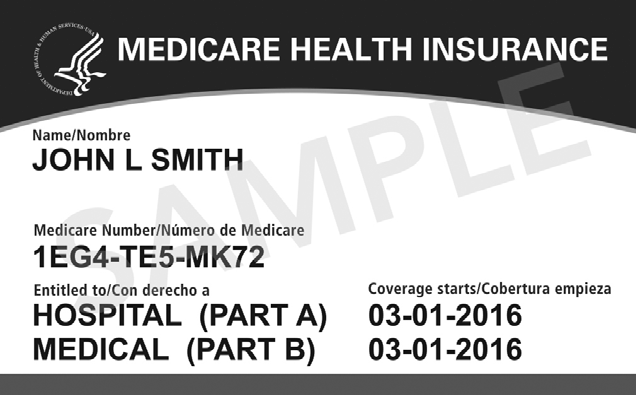
If you need to replace your card because it’s damaged or lost, visit Medicare.gov to log into (or create) your secure Medicare account to print or order an official copy of your Medicare card. You can also call 1-800-MEDICARE (1-800-633-4227)
and ask for a replacement card to be sent in the mail. TTY users can call 1-877-486-2048. If
you get Railroad Retirement Board (RRB) benefits, you can call 1-877-772-5772 to get a replacement card. TTY users can call 1-312-751-4701.
If you need to replace your card because you think that someone else is using your Medicare Number, call 1-800-MEDICARE.
State Health Insurance Assistance Programs (SHIPs)
SHIPs are state programs that get money from the federal government to give local health insurance counseling to people with Medicare. SHIPs aren’t connected to any insurance company or health plan. They provide free, personalized counseling to you and your family or caregiver to help with Medicare topics like these:
-
- Your Medicare rights
- Billing problems
- Complaints about your medical care or treatment
- Plan comparison and enrollment
- How Medicare works with other insurance
- Finding help paying for health care costs
Call a SHIP in your state to get free, personalized help with your Medicare questions, or learn how to become a volunteer SHIP counselor. Go to pages 114–117 for the phone number of your local SHIP, or visit shiphelp.org.
Find general Medicare information online
Visit Medicare.gov
-
- Get information at Medicare.gov/plan-compare about the Medicare health and drug plans in your area, including what they cost and what services they provide.
- Find Medicare-participating doctors or other health care providers and suppliers at Medicare.gov/care-compare. You can also learn about the quality of care provided by plans, nursing homes, hospitals, doctors, home health agencies, dialysis facilities, hospice centers, inpatient rehabilitation facilities, and long-term care hospitals.
- Find out what Medicare covers at Medicare.gov/coverage including preventive services (like screenings, shots or vaccines, and yearly “Wellness” visits).
- Get Medicare appeals information and forms at Medicare.gov/appeals.
Get personal Medicare information online
Create your own Medicare account
Visit Medicare.gov to log into (or create) your secure Medicare account. You can also:
-
- Add your prescriptions and pharmacies to help you better compare Medicare health and drug plans in your area.
- Sign up to get this “Medicare & You” handbook and your official Original Medicare claims statements, called “Medicare Summary Notices,” electronically.
- Review your Original Medicare claims as soon as they’re processed.
- Print a copy of your official Medicare card.
- Find a list of preventive services you’re eligible to get with Original Medicare.
- Learn about your Medicare premiums, and pay them online if you get a bill from Medicare.
Medicare’s Connected Apps Directory
Connected apps are Medicare-approved applications or websites that a third party (not Medicare) creates. When you connect to an app and log in with your Medicare.gov account information, you can use the app’s services without manually entering your health information. These third parties can
only access your Medicare data if you choose to share it with them. It’s always your choice if you want to connect (or stay connected) to a third-party app.
With these apps you can:
-
- Share your health information with doctors, caregivers, and others.
- View all of your health records in one place (like hospitalizations, lab results, and medications).
- Submit your health information to participate in clinical research studies.
Note: If you’re enrolled in a Medicare Advantage Plan, only Part D information is available through Medicare connected apps. For Part A and Part B data, check with your plan.
Remember: Treat your personal and health information the same way you treat other confidential information.
To learn about how to use Medicare-connected apps to save your Medicare claims information, visit:
Medicare is working to better coordinate your care
Medicare continues to look for ways to better coordinate your care and to make sure that you get the best health care possible.
Here are examples of how your health care providers can better coordinate your care:
Accountable Care Organizations
An Accountable Care Organization (ACO) is a group of doctors, hospitals, and other health care providers that accepts Original Medicare and works together to coordinate your health care. Visit Medicare.gov/care-compare to find Medicare providers and learn if they participate in an ACO.
Working as part of an ACO helps your doctors and other health care providers understand your health history and talk to one another about your care and your health care needs. This may save you time, money, and frustration by avoiding repeated tests and appointments. More coordination also helps prevent medical errors and unexpected drug interactions that may happen if one provider isn’t aware of what another has prescribed you.
Important! An ACO won’t limit your choice of health care providers. If your doctor or other provider is part of an ACO, you still have the right to visit any doctor, hospital, or other provider that takes Medicare at any time.
In addition, if your primary care doctor participates in an ACO, you may be able to get more benefits. For example, in some ACOs, your provider may offer more telehealth services. This means you may be able to get some services from home using technology, like your phone or a computer, to communicate in real time with your health care provider (page 51).
In addition, a doctor or other provider who is part of an ACO may be able to send you for skilled nursing facility care or rehabilitation services even if you haven’t stayed in a hospital for 3 days first, which is usually a requirement in Medicare. For you to qualify for this benefit, your doctor or other provider has to decide that you need skilled nursing facility care and meet certain other eligibility requirements.
If your primary care doctor participates in an ACO and you have Original Medicare, you’ll get a written notice and/or find a poster in their office about their ACO participation. There are now hundreds of ACOs across the country.
Sharing your health care information with Accountable Care Organizations (ACOs)
One of the most important benefits of an ACO is that your doctors and other
providers can communicate and coordinate your care. To help with that, Medicare allows your health care provider’s ACO to ask for certain information about your care. Having Medicare share your data in this way helps make sure all the people involved in your care have access to your health information when they need it to help you.
If you don’t want Medicare to share your health information with the ACO for care coordination, call 1-800-MEDICARE (1-800-633-4227) and let the representative know. TTY users can call 1-877-486-2048. Medicare may still share general information to measure provider quality.
To learn more about ACOs, visit Medicare.gov/providers-services/ coordinating-care or call 1-800-MEDICARE.
Electronic Health Records
Electronic health records are a history of your medical conditions, health care, and treatment that your doctor, other health care provider, medical office staff, or hospital keeps on a computer.
-
- They can help lower the chances of medical errors, eliminate duplicate tests, and may improve your overall quality of care.
- Your doctor’s electronic health records may be able to link to a hospital, lab, pharmacy, other doctors, or immunization information systems (registries), so the people who care for you can have a more complete picture of your health.
Electronic prescribing
This is an electronic way for your prescriber (your doctor or other health care provider who’s legally allowed to write prescriptions) to send your prescriptions directly to your pharmacy. Electronic prescribing can save you money and time, and help keep you safe.
Other ways to get Medicare information
Medicare emails
Visit Medicare.gov to create your secure Medicare account. Include your email address to get important reminders and information about Medicare.
Publications
Visit Medicare.gov/publications to review, print, or download copies of publications on different Medicare topics and in other languages. You can also call 1-800-MEDICARE. Go to page 124 for information about getting publications in accessible formats (like large print, eBooks, or braille) at no cost.
Social media
Stay up to date and connect with other people with Medicare by following us on Facebook (facebook.com/Medicare) and X, formerly known as Twitter (x.com/MedicareGov).
Videos
Find official videos about Medicare and other health care topics at
Other helpful contacts
Social Security
Visit SSA.gov to apply for and sign up for Original Medicare, and find out if you qualify for Extra Help with Medicare drug costs. Also, when you open a personal “my Social Security” account, you can review your Social Security Statement, verify your earnings, change your direct deposit information, request a replacement Medicare card, update your address, and more. Visit SSA.gov/myaccount to open your personal account.
Benefits Coordination & Recovery Center
Contact the Benefits Coordination & Recovery Center at 1-855-798-2627 to report changes in your insurance information or to let Medicare know if you have other insurance (like an employer group health plan). TTY users can call 1-855-797-2627.
Beneficiary and Family Centered Care-Quality Improvement Organization and State Survey Agency
Contact your Beneficiary and Family Centered Care-Quality Improvement Organization (BFCC-QIO) if you think Medicare coverage for your service is ending too soon (like if your hospital says that you must be discharged and you disagree). You may have the right to a fast appeal. If you have concerns about your or a loved one’s quality of care in a health care facility, or if you aren’t satisfied with your provider’s response to your concern, you may file a formal complaint directly with your state’s survey agency or the BFCC-QIO. Call 1-800-MEDICARE (1-800-633-4227) to get the phone number of your BFCC-QIO or your state’s survey agency. TTY users can call 1-877-486-2048. For more information, visit Medicare.gov/providers-services/claims-appeals- complaints/complaints.
Department of Defense
Get information about TRICARE For Life (TFL) and the TRICARE Pharmacy Program.
TFL:
1-866-773-0404, TDD: 1-866-773-0405
TRICARE Pharmacy Program:
1-877-363-1303, TTP: 1-877-540-6261
tricare.mil/pharmacy militaryrx.express-scripts.com
Department of Veterans Affairs (VA)
Contact the VA if you’re a veteran or have served in the U.S. military and you have questions about veteran benefits.
1-800-827-1000, TTY: 711
Office of Personnel Management
Get information about the Federal Employee Health Benefits Program for current and retired federal employees.
Federal retirees:
1-888-767-6738, TTY: 711
OPM.gov/healthcare-insurance/Guide-Me/Retirees-Survivors
Active federal employees:
Contact your Benefits Officer. Visit apps.opm.gov/abo for a list of Benefits Officers.
Railroad Retirement Board (RRB)
If you get benefits from the RRB, call them to change your address or name, check eligibility, sign up for Medicare, replace your Medicare card, or report a death.
1-877-772-5772, TTY: 1-312-751-4701
Have questions or comments about this handbook?
Email us at medicareandyou@cms.hhs.gov.
State Health Insurance Assistance Programs (SHIPs)
Visit shiphelp.org, or use the information below for free, personalized help with questions about appeals, buying other insurance, choosing a health plan, buying a Medigap policy, and Medicare rights and protections.
Alabama
Connecticut
State Health Insurance Assistance Program (SHIP)
1-800-243-5463
Alaska
Medicare Information Office 1-800-478-6065
TTY: 1-800-770-8973
Arizona
Arizona State Health Insurance Assistance Program (SHIP)
1-800-432-4040
Arkansas
Senior Health Insurance Information Program (SHIIP) 1-800-224-6330
California
California Health Insurance Counseling & Advocacy Program (HICAP)
1-800-434-0222
Colorado
State Health Insurance Assistance Program (SHIP)
1-888-696-7213
Connecticut’s Program for Health Insurance Assistance, Outreach, Information and Referral, Counseling, Eligibility Screening (CHOICES)
1-800-994-9422
Delaware
Delaware Medicare Assistance Bureau
1-800-336-9500
Florida
Serving Health Insurance Needs of Elders (SHINE)
1-800-963-5337
TTY: 1-800-955-8770
Georgia
Georgia State Health Insurance Assistance Program (SHIP)
1-866-552-4464 (option 4)
Guam
Guam Medicare Assistance Program (GUAM MAP)
1-671-735-7415
Hawaii
Hawaii SHIP
1-888-875-9229
TTY: 1-866-810-4379
Maine
Senior Health Insurance Benefits Advisors (SHIBA)
1-800-247-4422
Maine State Health Insurance Assistance Program (SHIP)
1-800-262-2232
Illinois
Maryland
Senior Health Insurance Program (SHIP)
1-800-252-8966
TRS: 711
Indiana
State Health Insurance Assistance Program (SHIP)
1-800-452-4800
TTY: 1-866-846-0139
Iowa
Senior Health Insurance Information Program (SHIIP) 1-800-351-4664
TTY: 1-800-735-2942
Kansas
Senior Health Insurance Counseling for Kansas (SHICK) 1-800-860-5260
Kentucky
State Health Insurance Assistance Program (SHIP)
1-877-293-7447
Louisiana
Senior Health Insurance Information Program (SHIIP) 1-800-259-5300
State Health Insurance Assistance Program (SHIP)
1-800-243-3425
Massachusetts
Serving Health Insurance Needs of Everyone (SHINE)
1-800-243-4636
TTY: 1-877-610-0241
Michigan
MMAP, Inc.
1-800-803-7174
Minnesota
Minnesota State Health Insurance Assistance Program/ Senior LinkAge Line
1-800-333-2433
Mississippi
MS State Health Insurance Assistance Program (SHIP) 1-844-822-4622
Missouri
Missouri SHIP
1-800-390-3330
Montana
Montana State Health Insurance Assistance Program (SHIP)
1-800-551-3191
North Dakota
Nebraska SHIP 1-800-234-7119
Nevada
Nevada Medicare Assistance Program (MAP)
1-800-307-4444
New Hampshire
NH SHIP – ServiceLink Resource Center
1-866-634-9412
New Jersey
State Health Insurance Assistance Program (SHIP)
1-800-792-8820
State Health Insurance Counseling (SHIC)
1-888-575-6611
TTY: 1-800-366-6888
Ohio
Ohio Senior Health Insurance Information Program (OSHIIP) 1-800-686-1578
TTY: 1-614-644-3745
Oklahoma
Oklahoma Medicare Assistance Program (MAP)
1-800-763-2828 (for state area codes 405, 918, and 580)
All other area codes: 405-521-6628
New Mexico
Oregon
New Mexico ADRC-SHIP 1-800-432-2080
Senior Health Insurance Benefits Assistance (SHIBA)
1-800-722-4134
New York
Health Insurance Information Counseling and Assistance Program (HIICAP)
1-800-701-0501
Pennsylvania Medicare Education and Decision Insight (PA MEDI)
Pennsylvania
1-800-783-7067
North Carolina
Puerto Rico
Seniors’ Health Insurance Information Program (SHIIP) 1-855-408-1212
State Health Insurance Assistance Program (SHIP)
1-877-725-4300
TTY: 1-878-919-7291
Rhode Island
Senior Health Insurance Program (SHIP)
1-888-884-8721
TTY: 401-462-0740
Virginia
South Carolina Department on Aging
1-800-868-9095
Virginia Insurance Counseling and Assistance Program (VICAP) 1-800-552-3402
South Dakota
Washington
Senior Health Information & Insurance Education (SHIINE) 1-800-536-8197
Tennessee
TN SHIP
1-877-801-0044
TTY: 1-800-848-0299
Statewide Health Insurance Benefits Advisors (SHIBA) 1-800-562-6900
TTY: 1-360-586-0241
Washington D.C.
DC SHIP
202-727-8370
Texas
West Virginia
Health Information Counseling and Advocacy Program (HICAP) 1-800-252-9240
Utah
Senior Health Insurance Information Program (SHIP) 1-800-541-7735
Vermont
Vermont State Health Insurance Assistance Program
1-800-642-5119
Virgin Islands
Virgin Islands State Health Insurance Assistance Program (VISHIP)
1-340-772-7368 St. Croix area;
1-340-714-4354 St. Thomas area
West Virginia State Health Insurance Assistance Program (WV SHIP)
1-877-987-4463
Wisconsin
WI State Health Insurance Assistance Program (SHIP) 1-800-242-1060
TTY: 711
Wyoming
Wyoming State Health Insurance Information Program (WSHIIP)
1-800-856-4398
118
Definitions
Accountable Care Organization (ACO)
Groups of doctors, hospitals, and other health care professionals working together to coordinate your care that are accountable for the quality and cost of care they provide you.
Assignment
An agreement by your doctor, other health care provider, or supplier to be paid directly by Medicare, to accept the payment amount Medicare approves for the service as payment in full, and not to bill you for any more than the Medicare deductible and coinsurance.
Benefit period
The way that Original Medicare measures your use of hospital and skilled nursing facility services. A benefit period begins the day you’re admitted as an inpatient in a hospital or skilled nursing facility. The benefit period ends when you haven’t gotten any inpatient hospital care (or skilled care in a skilled nursing facility) for 60 days in a row. If you go into a hospital or a skilled nursing facility after one benefit period has ended, a new benefit period
begins. You must pay the inpatient hospital deductible for each benefit period. There’s no limit to the number of benefit periods.
Coinsurance
An amount you may be required to pay as your share of the cost for benefits after you pay any deductibles. Coinsurance is usually a percentage (for example, 20%).
Copayment
An amount you may be required to pay as your share of the cost for benefits after you pay any deductibles. A copayment is a fixed amount, like $30.
Creditable prescription drug coverage
Prescription drug coverage that’s expected to pay, on average, at least as much as Medicare drug coverage. This could include drug coverage from a current or former employer or union, TRICARE, Indian Health Service, VA, or individual health insurance coverage.
Critical access hospital
A small facility located in a rural area more than 35 miles (or 15 miles if in mountainous terrain or in areas with only secondary roads) from another hospital or critical access hospital. This facility provides 24/7 emergency care, has 25 or fewer inpatient beds, and maintains an average length of stay of 96 hours or less for acute care patients.
Deductible
The amount you must pay for health care or prescriptions before Original Medicare, your Medicare Advantage Plan, your Medicare drug plan, or your other insurance begins to pay.
Demonstrations
Special projects, sometimes called “pilot programs” or “research studies,” that test improvements in Medicare coverage, payment, and quality of care. They usually operate only for a limited time, for a specific group of people, and in specific areas.
Extra Help
A Medicare program to help people with limited income and resources pay Medicare prescription drug program costs, like premiums, deductibles, and coinsurance.
Formulary
A list of prescription drugs covered by a prescription drug plan or another insurance plan offering prescription drug benefits. Also called a drug list.
Inpatient rehabilitation facility
A hospital, or part of a hospital, that provides an intensive rehabilitation program to inpatients.
Lifetime reserve days
In Original Medicare, these are additional days that Medicare will pay for when you’re in a hospital for more than 90 days. You have a total of 60 reserve days that can be used during your lifetime. For each lifetime reserve day, Medicare pays all covered costs except for a daily coinsurance.
Long-term care hospital
Acute care hospitals that provide treatment for patients who stay, on average, more than 25 days. Most patients are transferred from an intensive or critical care unit.
Medicaid
A joint federal and state program that helps with medical costs for some people with limited income and (in some cases) resources. Medicaid programs vary from state to state, but most health care costs are covered if you qualify for both Medicare and Medicaid.
Medically necessary
Health care services or supplies needed to diagnose or treat an illness, injury, condition, disease, or its symptoms and that meet accepted standards of medicine.
Medicare Advantage Plan (Part C)
A type of Medicare health plan offered by a private company that contracts with Medicare. Medicare Advantage Plans provide all of your Part A and Part B benefits, with a few exclusions, for example, certain aspects of clinical trials which are covered by Original Medicare even though you’re still in the plan.
Medicare Advantage Plans include:
- Health Maintenance Organizations
- Preferred Provider Organizations
- Private Fee-for-Service Plans
- Special Needs Plans
- Medical Savings Account Plans
If you’re enrolled in a Medicare Advantage Plan:
- Most Medicare services are covered through the plan
- Most Medicare services aren’t paid for by Original Medicare
- Most Medicare Advantage Plans offer prescription drug coverage
Medicare-approved amount
The payment amount that Original Medicare sets for a covered service or item. Medicare pays its share and you pay your share of that amount.
Medicare health plan
Plans offered by private companies that contract with Medicare to provide Part A, Part B, and in many cases, Part D benefits. Includes Medicare Advantage Plans and certain other types of coverage (like Medicare Cost Plans, PACE programs, and demonstrations/pilot programs).
Medicare plan
Any way other than Original Medicare that you can get your Medicare health or drug coverage. This term includes all Medicare health plans and Medicare drug plans.
Medigap
Medicare Supplement Insurance sold by private insurance companies to fill “gaps” in Original Medicare coverage.
Original Medicare
A Fee-for-Service health insurance program that has 2 parts: Part A (Hospital Insurance) and Part B (Medical Insurance). You typically pay a portion of the costs for covered services as you get them. Under Original Medicare, you don’t have coverage through a Medicare Advantage Plan or another type of Medicare health plan.
Premium
The periodic payment to Medicare, an insurance company, or a health care plan for health or prescription drug coverage.
Preventive services
Health care to prevent illness or detect illness at an early stage, when treatment is likely to work best (for example, preventive services include Pap tests, flu shots, and screening mammograms).
Primary care doctor
The doctor you go to first for most health problems. They may talk with other doctors and health care providers about your care and refer you to them.
Referral
A written order from your primary care doctor for you to visit a specialist or get certain medical services. Without a referral, your plan may not pay for services from a specialist.
Rural emergency hospital
A facility that provides emergency department service, observation care, and certain other specified outpatient medical and health services to patients that generally stay less than 24 hours.
Service area
An area you must live in for the plan to accept you as a member. For plans that limit which doctors and hospitals you may use, it’s also generally the area where you can get routine (non-emergency) services. Plans can, and in some cases must, disenroll you if you move outside their service area.
Skilled nursing facility (SNF)
A nursing facility with the staff and equipment to give skilled nursing care and, in most cases, skilled rehabilitative services and other related health services.
Skilled nursing facility (SNF) care
Skilled nursing care and therapy services provided on a daily basis in a skilled nursing facility. Examples of skilled nursing facility care include physical therapy or intravenous injections that can only be given by a physical therapist or a registered nurse.
Nondiscrimination Notice
The Centers for Medicare & Medicaid Services (CMS) doesn’t exclude, deny benefits to, or otherwise discriminate against any person on the basis of race, color, national origin, disability, sex, or age in admission to, participation in, or receipt of the services and benefits under any of its programs and activities, whether carried out by CMS directly or through a contractor or any other entity with which CMS arranges to carry out its programs and activities.
You can contact CMS in any of the ways included in this notice if you have any concerns about getting information in a format that you can use.
You may also file a complaint if you think you’ve been subjected to discrimination in a CMS program or activity, including experiencing issues with getting information in an accessible format from any Medicare Advantage Plan, Medicare drug plan, state or local Medicaid office, or Marketplace Qualified Health Plans. There are 3 ways to file a complaint with the U.S. Department of Health and Human Services, Office for Civil Rights:
- Online:
HHS.gov/civil-rights/filing-a-complaint/complaint-process/index.html
- By phone:
Call 1-800-368-1019. TTY users can call 1-800-537-7697.
- In writing: Send information about your complaint to: Office for Civil Rights
U.S. Department of Health and Human Services
200 Independence Avenue, SW Room 509F, HHH Building Washington, D.C. 20201
Accessible Communications
Medicare provides free auxiliary aids and services, including information in accessible formats like braille, large print, data or audio files, relay services and TTY communications. If you request information in an accessible format, you won’t be disadvantaged by any additional time necessary to provide it. This means you’ll get extra time to take any action if there’s a delay in fulfilling your request.
To request Medicare or Marketplace information in an accessible format you can:
- Call us:
For Medicare: 1-800-MEDICARE (1-800-633-4227) TTY: 1-877-486-2048
For Marketplace: 1-800-318-2596
TTY: 1-855-889-4325
- Email us: altformatrequest@cms.hhs.gov
- Send us a fax: 1-844-530-3676
- Send us a letter:
Centers for Medicare & Medicaid Services Offices of Hearings and Inquiries (OHI)
7500 Security Boulevard, Mail Stop DO-01-20 Baltimore, MD 21244-1850
Attn: Customer Accessibility Resource Staff (CARS)
Your request should include your name, phone number, type of information you need (if known), and the mailing address where we should send the materials. We may contact you for additional information.
Note: If you’re enrolled in a Medicare Advantage Plan or Medicare drug plan, contact your plan to request its information in an accessible format. For Medicaid, contact your state’s Medicaid office.

Looking for help in other languages?
If you, or someone you’re helping, has questions about Medicare, you have the right to get help and information in your language at no cost. To talk to an interpreter, call 1-800-MEDICARE (1-800-633-4227).
اﻟﻌرﺑﯾﺔ (Arabic) إن ﻛﺎن ﻟدﯾك أو ﻟدى ﺷﺧص ﺗﺳﺎﻋده أﺳﺋﻠﺔ ﺑﺧﺻوص Medicare ﻓﺈن ﻣن ﺣﻘك اﻟﺣﺻول ﻋﻠﻰ اﻟﻣﺳﺎﻋدة و اﻟﻣﻌﻠوﻣﺎت ﺑﻠﻐﺗك ﻣن دون أي ﺗﻛﻠﻔﺔ. ﻟﻠﺗﺣدث ﻣﻊ ﻣﺗرﺟم إﺗﺻل ﺑﺎﻟرﻗم 1-800-MEDICARE .(1-800-633-4227)
հայերեն (Armenian) Եթե Դուք կամ Ձեր կողմից օգնություն ստացող անձը հարցեր ունի Medicare-ի մասին, ապա Դուք իրավունք ունեք անվճար օգնություն և տեղեկություններ ստանալու Ձեր նախընտրած լեզվով։ Թարգմանչի հետ խոսելու համար զանգահարեք
1-800-MEDICARE (1-800-633-4227) հեռախոսահամարով։
中文 (Chinese-Traditional) 如果您,或是您正在協助的個人,有關於聯邦醫療保險的問題,您有權免費以您的母語,獲得幫助和訊息。與翻譯員交談,請致電 1-800-MEDICARE
(1-800-633-4227).
ﻓﺎرﺳﯽ (Farsi) اﮔر ﺷﻣﺎ، ﯾﺎ ﺷﺧﺻﯽ ﮐﮫ ﺑﮫ او ﮐﻣﮏ ﻣﯾرﺳﺎﻧﯾد ﺳواﻟﯽ در ﻣورد اﻋﻼﻣﯾﮫ ﻣﺧﺗﺻر ﻣدﯾﮑردارﯾد، ﺣﻖ اﯾن را دارﯾد ﮐﮫ ﮐﻣﮏ و اطﻼﻋﺎت ﺑﮫ زﺑﺎن ﺧود ﺑﮫ طور راﯾﮕﺎن درﯾﺎﻓت ﻧﻣﺎﯾﯾد. ﺑرای ﻣﮑﺎﻟﻣﮫ ﺑﺎ ﻣﺗرﺟم ﺑﺎ اﯾن ﺷﻣﺎره زﯾر ﺗﻣﺎس
.(1-800-633-4227) 1-800-MEDICARE ﯾد ﺑﮕﯾر
Français (French) Si vous, ou quelqu’un que vous êtes en train d’aider, a des questions au sujet de l’assurance-maladie Medicare, vous avez le droit d’obtenir de l’aide et de l’information dans votre langue à aucun coût. Pour parler à un interprète, composez le 1-800-MEDICARE (1-800-633-4227).
Deutsch (German) Falls Sie oder jemand, dem Sie helfen, Fragen zu Medicare haben, haben Sie das Recht, kostenlose Hilfe und Informationen in Ihrer Sprache zu erhalten. Um mit einem Dolmetscher zu sprechen, rufen Sie bitte die Nummer 1-800-MEDICARE (1-800-633-4227) an.
Kreyòl (Haitian Creole) Si oumenm oswa yon moun w ap ede, gen kesyon konsènan Medicare, se dwa w pou jwenn èd ak enfòmasyon nan lang ou pale a, san pou pa peye pou sa. Pou w pale avèk yon entèprèt, rele nan 1-800-MEDICARE (1-800-633-4227).
Italiano (Italian) Se voi, o una persona che state aiutando, vogliate chiarimenti a riguardo del Medicare, avete il diritto di ottenere assistenza e informazioni nella vostra lingua a titolo gratuito. Per parlare con un interprete, chiamate il numero 1-800-MEDICARE (1-800-633-4227).
日本語 (Japanese) Medicare (メディケア) に関するご質問がある場合は、ご希望の言語で情報を取得し、サポートを受ける権利があります (無料)。通訳をご希望の方は、1-800-MEDICARE (1-800-633-4227) までお電話ください。
한국어(Korean) 만약 귀하나 귀하가 돕는 어느 분이 메디케어에 관해서 질문을 가지고
있다면 비용 부담이 없이 필요한 도움과 정보를 귀하의 언어로 얻을 수 있는 권리가 귀하에게 있습니다. 통역사와 말씀을 나누시려면 1-800-MEDICARE (1-800-633-4227)로 전화하십시오.
Polski (Polish) Jeżeli Państwo lub ktoś komu Państwo pomagają macie pytania dotyczące Medicare, mają Państwo prawo do uzyskania bezpłatnej pomocy i informacji w swoim języku. Aby rozmawiać z tłumaczem, prosimy dzwonić pod numer telefonu 1-800-MEDICARE (1-800-633-4227).
Português (Portuguese) Se você (ou alguém que você esteja ajudando) tiver dúvidas sobre a Medicare, você tem o direito de obter ajuda e informações em seu idioma, gratuitamente. Para falar com um intérprete, ligue para 1-800-MEDICARE (1-800-633-4227).
Русский (Russian) Если у вас или лица, которому вы помогаете, возникли вопросы по поводу программы Медикэр (Medicare), вы имеете право на бесплатную помощь и информацию на вашем языке. Чтобы воспользоваться услугами переводчика, позвоните по телефону 1-800-MEDICARE (1-800-633-4227).
Español (Spanish) Si usted, o alguien que está ayudando, tiene preguntas sobre Medicare, usted tiene el derecho a obtener ayuda e información en su idioma sin costo alguno. Para hablar con un intérprete, llame al 1-800-MEDICARE (1-800-633-4227).
Tagalog (Tagalog) Kung ikaw, o ang isang tinutulungan mo, ay may mga katanungan tungkol sa Medicare, ikaw ay may karapatan na makakuha ng tulong at impormasyon sa iyong lenguwahe ng walang gastos. Upang makipag-usap sa isang tagasalin ng wika, tumawag sa 1-800-MEDICARE (1-800-633-4227).
Tiếng Việt (Vietnamese) Nếu quý vị, hay người mà quý vị đang giúp đỡ, có câu hỏi về Medicare, quý vị sẽ có quyền được giúp và có thêm thông tin bằng ngôn ngữ của mình miễn phí. Để nói chuyện qua thông dịch viên, gọi số 1-800-MEDICARE (1-800-633-4227).
Health Insurance Marketplace® is a registered service mark of the U.S. Department of Health and Human Services.
“Medicare & You” isn’t a legal document. Official Medicare Program legal guidance is contained in the relevant statutes, regulations, and rulings.
This product was produced at U.S. taxpayer expense.
Copies of this product are available free of charge at Medicare.gov